The Influence of Synthetic Light Frequencies on Creative Flow States
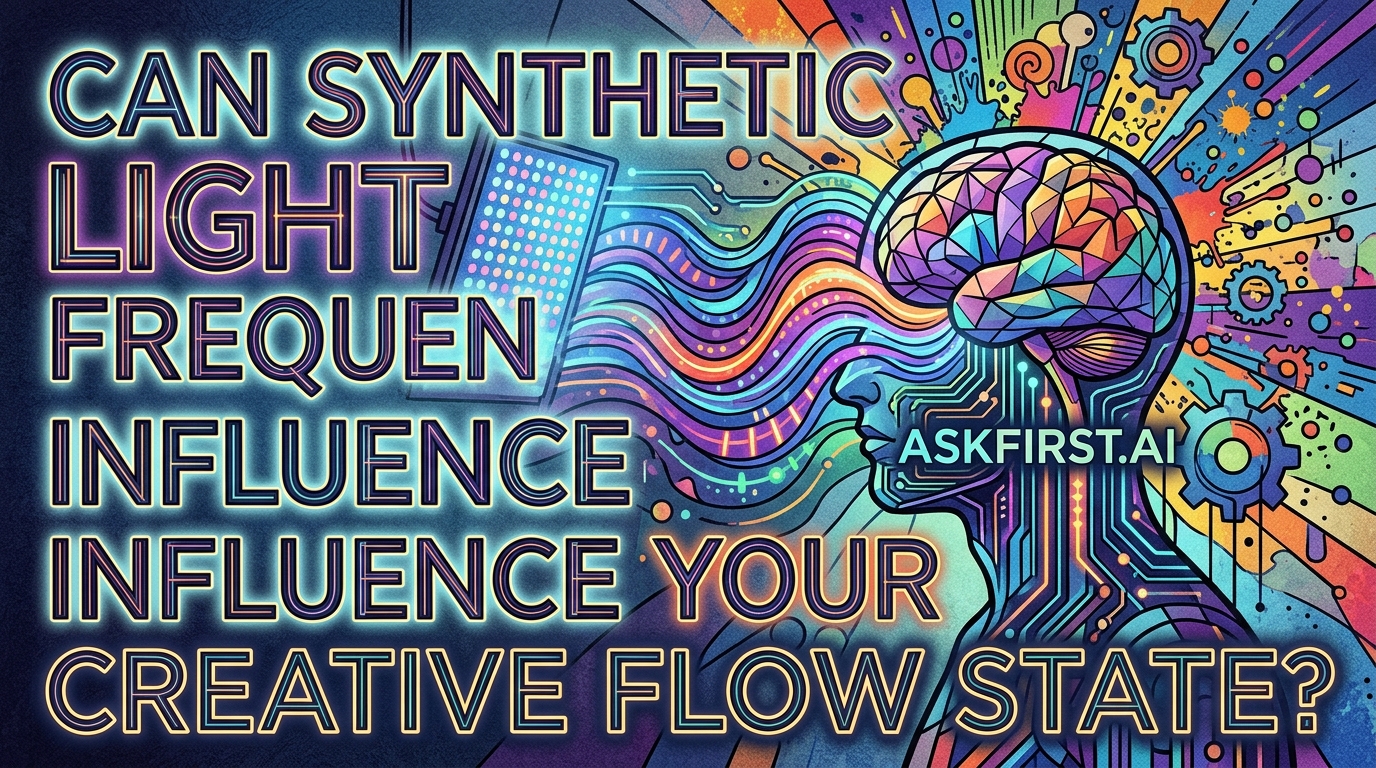
The intersection of neurobiology and environmental design suggests that synthetic light frequencies—specifically those engineered to manipulate circadian rhythms and cognitive arousal—can significantly influence the human "flow state." Flow, a concept popularized by psychologist Mihaly Csikszentmihalyi, is an optimal state of consciousness where one is fully immersed in an activity. Modern neuro-ergonomics explores how adjusting the spectral power distribution (SPD) of indoor lighting can act as a catalyst for this state.
The Neurobiology of Light and Cognition
Light does not merely enable vision; it regulates the suprachiasmatic nucleus (SCN) in the hypothalamus, which governs the body’s internal clock. Synthetic light, particularly Light Emitting Diodes (LEDs), allows for precise control over color temperature (measured in Kelvin) and melanopic lux, which affects the suppression of melatonin and the secretion of cortisol.
1. Short-Wavelength Light (Blue-Enriched, 460–480 nm)
High-frequency light, often found in "cool white" LEDs (5000K–6500K), inhibits melatonin production. This promotes alertness and cognitive speed. For creative professionals, this frequency is useful during the divergent thinking phase—the initial brainstorming stage where rapid association and high energy are required.
2. Long-Wavelength Light (Warm, 2700K–3000K)
Lower-frequency, warmer light is associated with relaxation. While this may seem counterintuitive for "work," it is essential for the convergent thinking phase or complex creative problem-solving that requires deep, sustained focus without the physiological stress response triggered by blue-enriched light.
Practical Guide: Optimizing Your Workspace
To manipulate synthetic light for creative flow, consider implementing a Circadian Lighting Protocol:
- Morning (08:00–11:00): Utilize high-intensity, cool-toned light (6000K). This signals the brain to wake up, enhancing alertness and cognitive throughput.
- Midday (11:00–15:00): Transition to neutral light (4000K). This maintains a steady state of concentration suitable for deep-work cycles.
- Late Afternoon/Evening (15:00 onwards): Gradually shift to warm, low-intensity light (2700K). This reduces eye strain and helps the brain transition into a state of "relaxed alertness," which is often where the most profound creative breakthroughs occur.
Pros and Cons of Synthetic Light Manipulation
Pros
- Enhanced Productivity: Aligning light with circadian needs reduces "brain fog."
- Customization: Smart lighting systems (e.g., Hue, LIFX) allow for granular control over the workspace environment.
- Mood Regulation: Proper lighting can mitigate Seasonal Affective Disorder (SAD) and general work-related fatigue.
Cons
- Flicker Sensitivity: Poor-quality LED drivers can cause high-frequency flickering, leading to migraines and cognitive distraction.
- Over-stimulation: Excessive exposure to blue light late in the day can disrupt sleep architecture, ultimately destroying the long-term cognitive foundation necessary for creativity.
Future Trends: Adaptive Intelligent Environments
The future of creative flow lies in Human-Centric Lighting (HCL). We are moving toward AI-driven sensors that adjust light spectra in real-time based on biometric feedback (such as heart rate variability or skin conductance). By measuring these biological markers, the environment can automatically "tune" the light to pull the user into a flow state or, conversely, signal the need for a restorative break. As we move toward 2030, integrated, adaptive lighting will likely become the standard for high-performance creative environments, treating light as a fundamental tool for cognitive engineering rather than a mere utility.