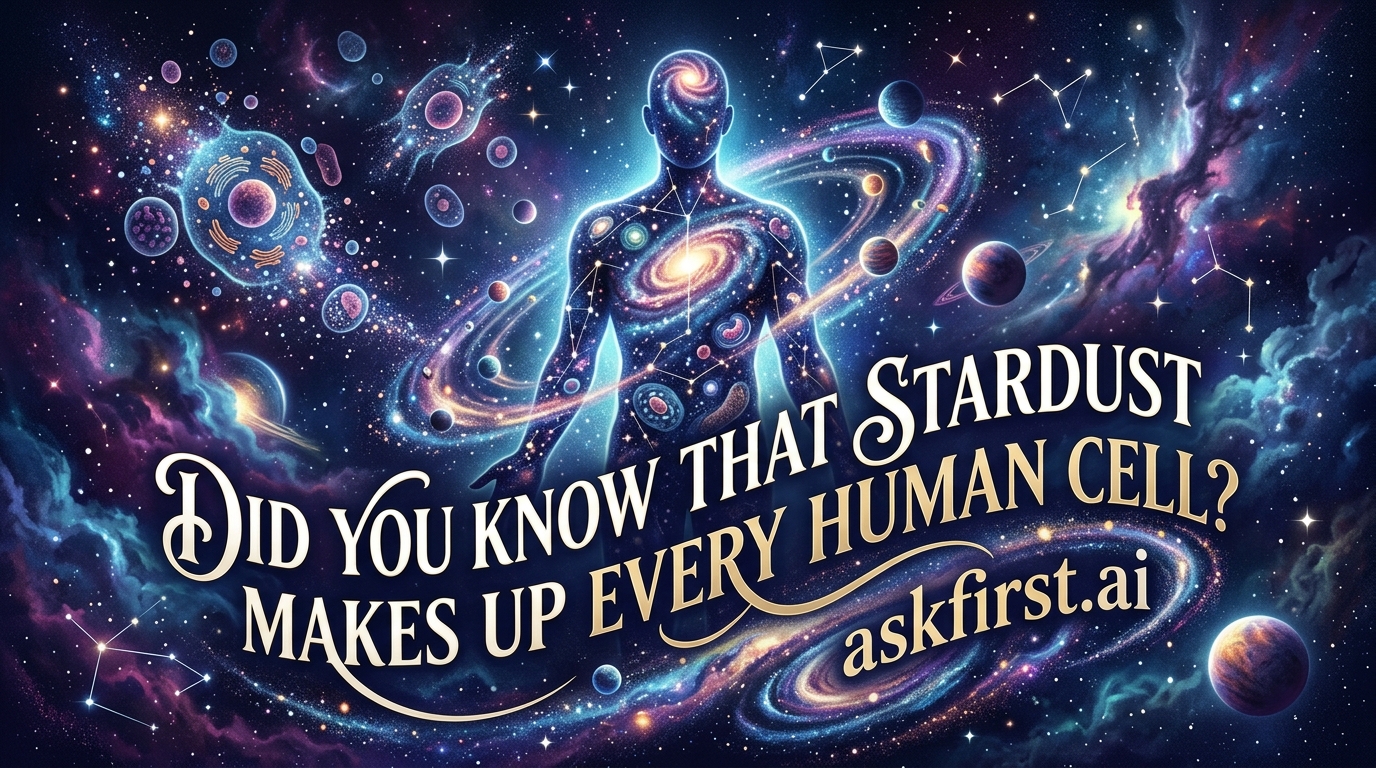
The Cosmic Origins of Human Biology: From Stars to Cells
It is a profound scientific truth that the atoms composing the human body were forged in the fiery hearts of ancient stars. While this concept may sound like poetic mysticism, it is a foundational pillar of modern astrophysics and cosmology. Every carbon atom, nitrogen atom, and oxygen atom that facilitates life on Earth was synthesized through nuclear fusion processes occurring in stellar interiors billions of years ago.
The Lifecycle of Elements
When stars reach the end of their lifecycle, they undergo violent transitions, including supernova explosions. These cataclysmic events distribute heavy elements into the cosmos. These enriched materials eventually coalesce to form new planetary systems. Science confirms that approximately 97% of the mass of a human body is made up of atoms that were created in stars. Specifically:
- Hydrogen: Primarily from the Big Bang, but processed through stars.
- Carbon, Oxygen, and Nitrogen: Forged through stellar nucleosynthesis in massive stars.
- Calcium and Iron: Produced during the late-stage burning phases and supernova events.
How Stardust Becomes Biology
Once these elements are ejected from dying stars, they become part of interstellar clouds. Over millions of years, gravity pulls this matter together to form solar systems. On Earth, complex chemical processes—often described as abiogenesis—organized these cosmic building blocks into organic molecules. These molecules eventually formed the basis of proteins, lipids, and nucleic acids like DNA. Therefore, when looking at a human cell, one is viewing a sophisticated, self-organizing arrangement of matter that originated in stellar furnace events.
Scientific Consensus and Evidence
Astronomers utilize spectroscopy to analyze the chemical composition of distant stars, confirming that the universe is made of the same materials found in our own anatomy. The Sloan Digital Sky Survey has mapped the distribution of these elements throughout the Milky Way, reinforcing the hypothesis that the human body is inextricably linked to the galactic cycle of matter. This perspective shifts the scientific understanding of life: human beings are not merely inhabitants of the universe, but rather the universe expressing itself through biological forms. The iron in hemoglobin, which transports oxygen throughout the human body, is the direct byproduct of stellar death. This discovery serves as a unifying principle in biology, linking the microscopic world of the cell to the macroscopic world of stellar evolution. By understanding this connection, humanity gains a deeper appreciation for the intricate relationship between physical law and the emergence of life, proving that our existence is the direct result of a cosmic legacy that began at the dawn of time.