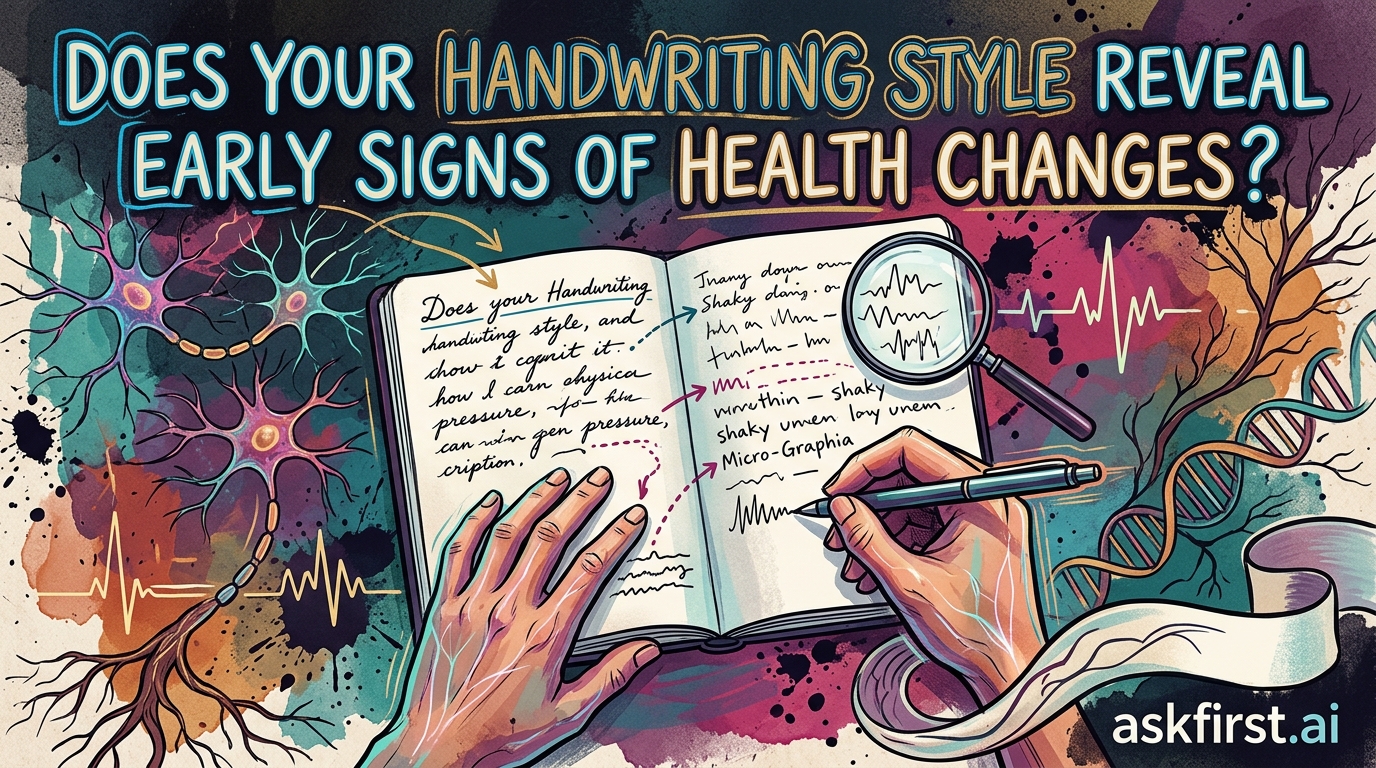
The Hidden Language of Penmanship: Decoding Biological Patterns
Handwriting is far more than a simple act of putting ink to paper; it is a complex neuro-muscular performance that requires the synchronization of fine motor skills, cognitive processing, and sensory feedback. Scientists have long observed that subtle fluctuations in the way an individual writes can provide fascinating insights into internal physiological and neurological states. While not a replacement for professional diagnostic medical testing, handwriting analysis serves as an intriguing window into the intersection of brain function and motor control.
The Neuro-Motor Connection
The act of writing originates in the motor cortex of the brain. When a person writes, the brain coordinates thousands of nerve impulses to the hand and fingers. Changes in the fluidity, pressure, or size of lettering often reflect how these neural pathways are performing. Researchers have identified that persistent changes—rather than temporary variations caused by stress or tiredness—can be markers for shifts in executive function or neuromotor efficiency.
Key Indicators in Handwriting Dynamics
- Pressure Variance: Unexpected changes in pen pressure, where the ink appears significantly heavier or lighter without a change in the writing instrument, can indicate alterations in muscle tone or grip strength.
- Size Consistency: A sudden, global trend toward micro-graphia (progressively smaller letters) is frequently studied in the context of motor control efficiency. While not definitive, scientists monitor such trends as part of a broader picture of neurological health.
- Fluidity and Rhythm: Smooth, flowing cursive requires high-level motor planning. When rhythm is disrupted or jerky, it often suggests that the brain is working harder to execute a task that was previously automatic.
- Spatial Alignment: Shifts in the baseline or the ability to stay within margins can reflect changes in spatial perception and cognitive focus.
Beyond Myths: A Scientific Perspective
It is vital to distinguish between casual variability and clinical indicators. Everyone has "bad handwriting days" due to factors like posture, the ergonomics of the desk, or even the type of pen being used. However, the science of graphonomics focuses on quantitative measurements—such as speed, stroke acceleration, and temporal pauses between letters—rather than the subjective look of the handwriting style itself. By utilizing digitizing tablets, researchers can track the invisible "air-time" of a pen, detecting tremors or hesitations that are invisible to the naked eye.
Conclusion: A Tool for Awareness
Maintaining a healthy lifestyle, including proper ergonomic habits and cognitive engagement, is essential for preserving fine motor dexterity. Handwriting acts as a sophisticated, ever-evolving mirror of the body’s internal health. By observing trends over the long term, individuals can maintain a deeper awareness of their physical coordination, emphasizing the importance of staying active and mentally sharp throughout all stages of life.