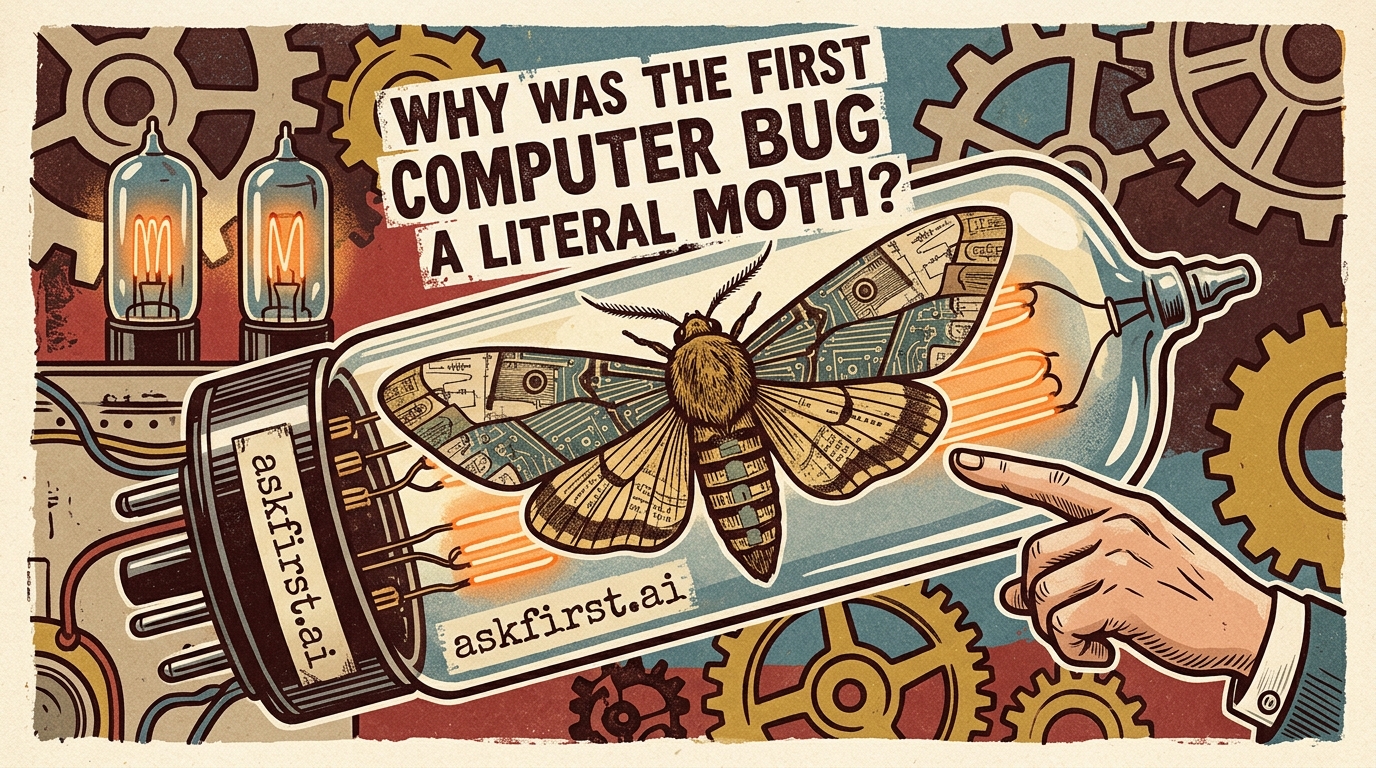
The Moth in the Machine: Decoding Computing History
Many legends in the tech world are clouded by myth, but the story of the first computer bug remains a fascinating intersection of entomology and engineering. On September 9, 1947, engineers working on the Harvard Mark II computer encountered a persistent hardware failure that refused to resolve through standard diagnostic procedures. Upon closer inspection of the electromechanical relay numbered 70, they discovered a moth trapped within the contact points. This physical obstruction prevented the relay from closing, effectively disrupting the electrical circuit and causing the system to malfunction.
A Historical Precedent for Debugging
The term "bug" to describe technical glitches predates the 1947 incident by decades. Thomas Edison famously used the term in his correspondence during the 1870s to refer to minor design flaws in his inventions. However, the discovery of the moth by Grace Hopper and her team became the most famous anecdotal evidence of the term being applied to a literal insect. The remains of the moth were taped into the team's logbook with the caption: "First actual case of bug being found." This logbook, preserved at the Smithsonian National Museum of American History, serves as a testament to the infancy of computer maintenance.
The Evolution of the Term
While "bug" was already common industry jargon, the incident helped solidify the term "debugging" as a standard practice for troubleshooting computer systems. Following the removal of the insect with a pair of tweezers, the computer returned to its optimal operating state. This event highlights several critical aspects of early computing history:
- Physicality of Early Systems: Unlike modern solid-state processors, early machines like the Mark II relied on delicate electromechanical relays that were exposed to the environment.
- The Intersection of Disciplines: The incident proved that computer operators needed to be part software analyst, part hardware technician, and occasionally, part pest controller.
- Documentation Culture: The practice of recording errors, even bizarre ones, was instrumental in developing the rigorous logs that define modern software engineering.
Why It Matters Today
Today, bugs exist as lines of code rather than organic creatures. Modern software developers navigate complex logic gates, syntax errors, and memory leaks that are far removed from the physical intrusions of the 1940s. Yet, the foundational concept remains identical: a small, overlooked detail within a massive system can cause a total operational collapse. The moth incident serves as a humble reminder of the fragility inherent in complex machines and the necessity of meticulous attention to detail. Although computing has evolved from room-sized machines to portable devices, the spirit of "debugging" remains the core activity that drives innovation, ensures system stability, and maintains the integrity of the digital infrastructure upon which the entire modern world relies.