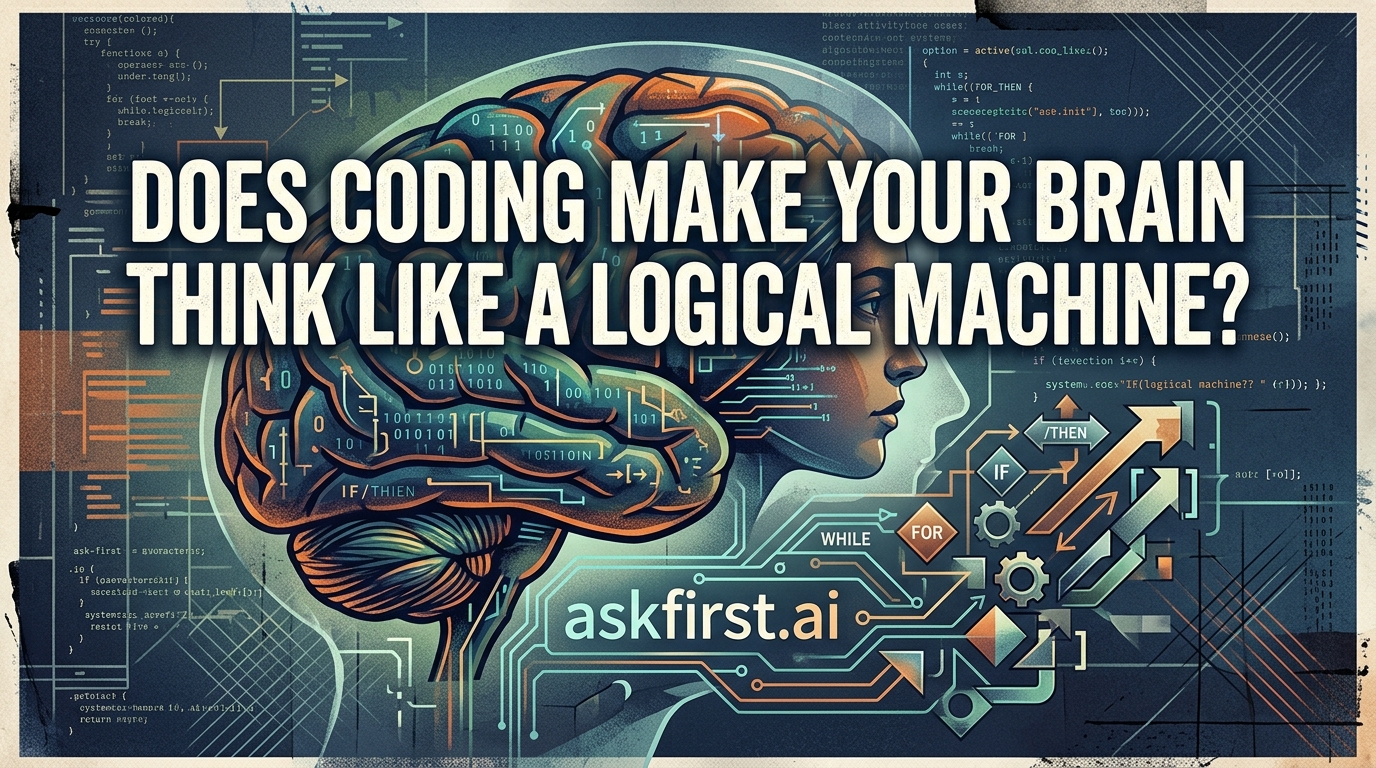
The Algorithmic Mind: Decoding the Cognitive Shift of Programming
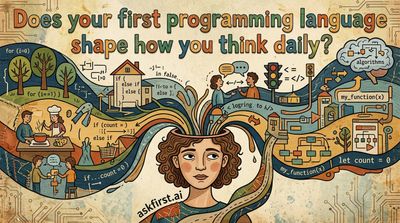
Many assume that learning to write code turns the human brain into a rigid, binary-processing engine. However, the reality is far more nuanced and fascinating. While programming enforces strict logical structures, the human mind remains an organic, creative, and intuitive powerhouse that coding enhances rather than replaces. The process of coding does not turn a person into a machine; instead, it develops a specialized cognitive framework known as computational thinking.
The Architecture of Computational Thinking
Computational thinking is not about binary arithmetic; it is about problem decomposition. When a developer faces a complex challenge, they do not approach it like a linear CPU. Instead, they utilize:
- Abstraction: The ability to ignore unnecessary details to focus on core mechanics.
- Pattern Recognition: Identifying similarities between new problems and past challenges to apply proven frameworks.
- Algorithm Design: Step-by-step reasoning that balances efficiency with readability.
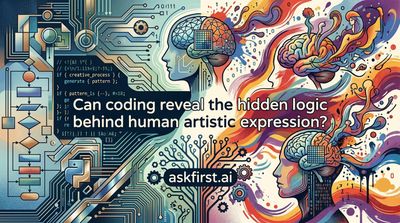
Unlike a machine, which executes instructions blindly, a human programmer must possess the creativity to envision solutions that do not yet exist. A machine cannot be innovative; it can only execute existing logic. A human programmer, conversely, uses logical constraints as a canvas for architecture.
Busting the Myth of Mechanical Logic
There is a common misconception that coding kills the imagination. In truth, the most successful developers are those who leverage lateral thinking. Debugging, for example, is less about mechanical obedience and more about investigative detective work. It requires the capacity to empathize with the system, to simulate potential failure states, and to hypothesize reasons for unexpected behavior—all of which are distinctly human traits of inductive reasoning.
Studies in neuroplasticity suggest that regular engagement with complex coding tasks improves fluid intelligence. This is not because the brain starts thinking in zeros and ones, but because it develops a higher tolerance for abstract variables. The brain learns to handle recursive complexity without succumbing to cognitive overload.
The Difference Between Human and Machine Logic
Machines thrive on deterministic systems where A always results in B. Humans thrive on heuristics—mental shortcuts that allow for rapid decision-making under uncertainty. Coding refines these heuristics. It teaches the brain to be more rigorous in its validation of evidence. When a person adopts a "coder’s mindset," they become better at spotting fallacies, identifying dependencies in their daily lives, and structure their thoughts with clarity.
Ultimately, coding is a language for expressing thought. Just as learning a foreign language alters the perception of the world, learning to code alters the perception of systems. The brain becomes a more refined, precise tool, capable of bridging the gap between imaginative conceptualization and structured execution. Far from making a person a machine, coding unlocks the potential to apply high-level logical rigor to human creativity.