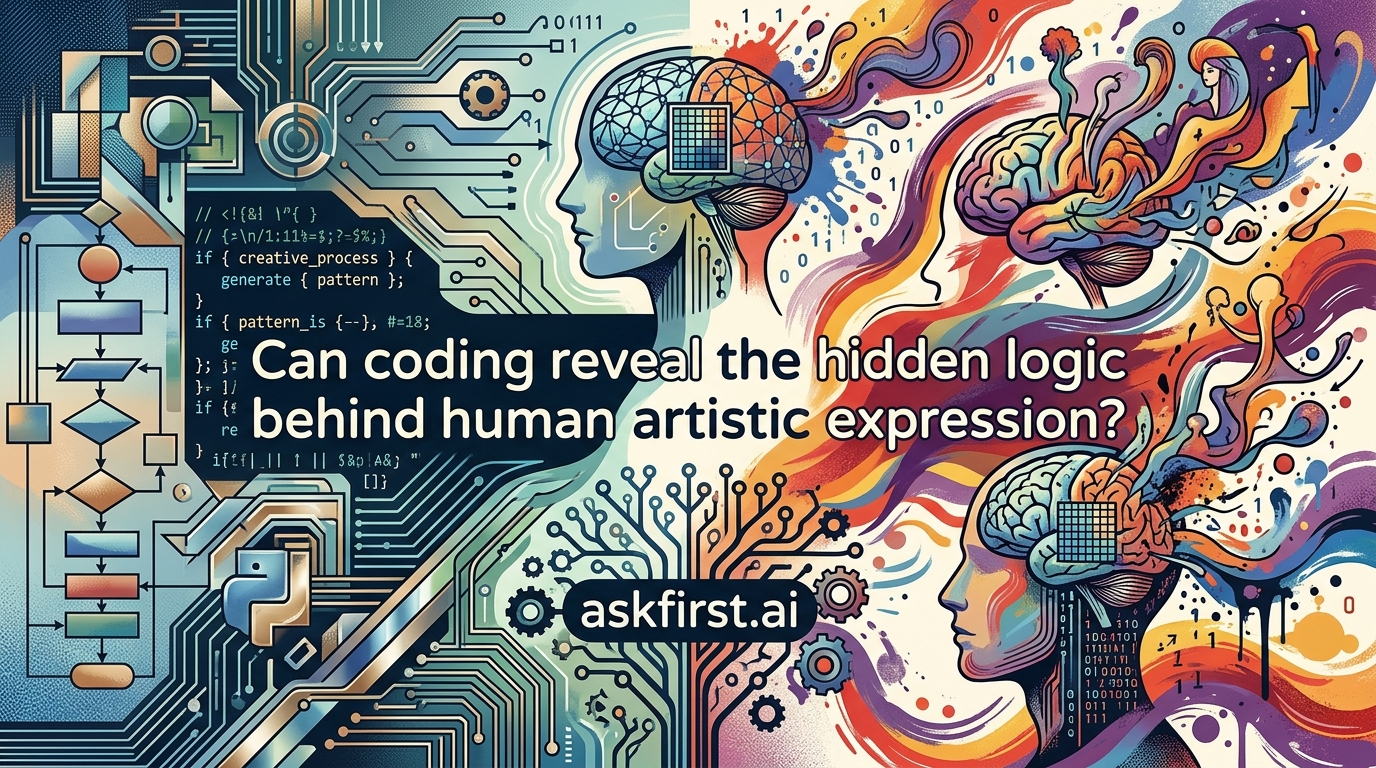
How Coding Reveals the Hidden Logic of Art
Deciphering Creativity: Is Art Just Algorithmic Complexity?
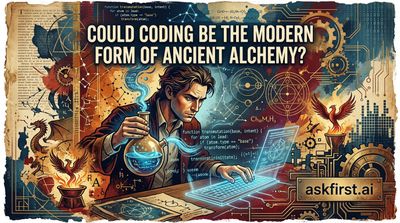
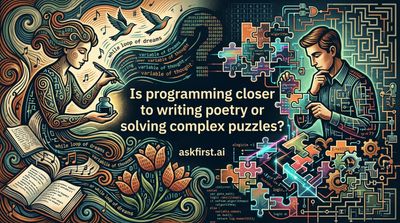
For centuries, human artistic expression has been viewed as a mystical, intuitive process—a soul-stirring manifestation of emotions that defies cold, hard logic. However, the emergence of computational aesthetics and generative models suggests that what we perceive as 'creative intuition' may actually be a highly complex, yet decipherable, mathematical process. By utilizing coding, researchers are beginning to map the patterns that constitute beauty and artistic innovation.
The Mathematical Blueprint of Aesthetics
At the core of artistic expression lies a set of underlying principles such as symmetry, fractals, color harmony, and composition. Coding provides the tools to quantify these subjective experiences. For instance, the Golden Ratio (phi) has been used for millennia to create aesthetically pleasing compositions. Algorithms can now analyze thousands of classical paintings and identify how these ratios appear across cultures and eras, proving that there is a statistical preference for specific structural arrangements that resonate with the human visual system.
Algorithmic Patterns in Human Creativity
Recent developments in machine learning and neural networks have pushed the boundaries of this investigation further. By training models on massive datasets of historical art, coding can identify 'style'—the specific distribution of brushstrokes, color palettes, and thematic motifs that define a particular artist. This reveals that much of what is considered 'individual genius' is, in fact, an intricate arrangement of learnable patterns. Key insights include:
- Feature Extraction: Neural networks break down complex imagery into primitive features—edges, textures, and geometric shapes—mirrored by the human visual cortex.
- Generative Adversarial Networks (GANs): These systems pit two algorithms against each other, allowing one to generate art and the other to critique it, mimicking the iterative improvement process human artists undergo.
- Complexity Theory: Research suggests that humans find art most appealing when it strikes a balance between order and chaos, a concept easily measured through algorithmic entropy analysis.
Challenging the Myth of Intuition
While coding can effectively model the technical aspects of production, it raises a profound question: does identifying the 'code' behind art diminish its value? On the contrary, understanding these patterns often enhances appreciation. By treating artistic expression as a data-driven phenomenon, humanity gains insight into the limitations and capacities of the human brain. Coding does not eliminate the artist; it illuminates the mechanics through which the artist communicates. When a computer approximates the emotional weight of a portrait, it is not demonstrating 'feeling' in the human sense, but it is successfully reverse-engineering the cognitive triggers that cause humans to perceive emotion. Thus, coding acts as a mirror, reflecting the structural hidden logic that humans have intuitively utilized for thousands of years to craft their greatest works.