The Algorithmic Canvas: Why Coding Is Modern Abstract Art
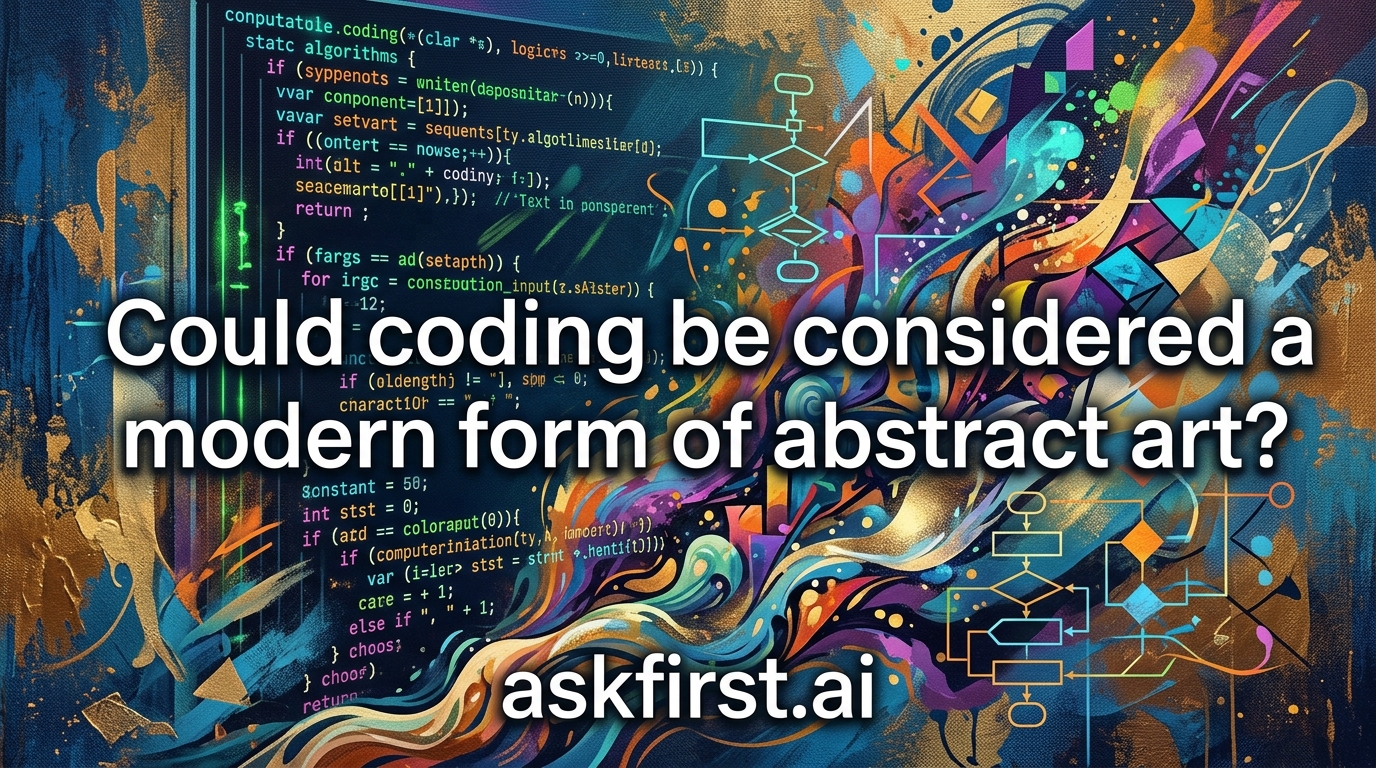
To view coding merely as a utilitarian tool for building software is to ignore the profound creative depth embedded within the syntax. When developers write code, they are not just instructing machines; they are sculpting logic, rhythm, and structure in an abstract space that is entirely intangible. Much like the transition in the 20th century where painters moved away from representing physical reality toward expressing pure emotion or concepts, programmers create 'functional abstractions' that define the architecture of our digital existence.
The Aesthetic of Efficiency
At the core of abstract art lies the reduction of complex imagery into essential forms. Similarly, the primary goal of elegant code is 'refactoring'—the art of stripping away redundancy to reveal the simplest possible expression of a complex process. This pursuit is deeply philosophical. As the famous programmer Donald Knuth suggested in The Art of Computer Programming, the craft of writing code is akin to composing music or literature, where elegance is measured by the beauty of the structure and the efficiency of the flow. A well-written recursive function can possess the same geometric symmetry found in a Mondrian painting.
Syntax as Brushstrokes
Every programming language carries its own unique 'voice,' much like different mediums in art history. Consider the following:
- C++: Often compared to oil painting, it requires intense precision and offers immense control, capable of creating massive, complex systems from scratch.
- Python: Reflects the fluidity of watercolor, prioritizing readability and speed of execution to bring an idea to life rapidly.
- Functional Languages like Haskell: Represent the minimalist movement, where code is treated as mathematical truth, stripping away the 'clutter' of variable states.
In these languages, the 'canvas' is the repository. The 'masterpiece' exists not as a tangible object, but as a living, breathing set of instructions that translates human intent into machine reality. This is digital abstraction in its purest form.
Conceptualism in Virtual Spaces
Abstract art demands interpretation from the audience. In coding, the user interface acts as the gallery, but the real work—the architecture of data—remains invisible to the casual observer. This disconnect between the hidden, complex structure and the visible output mimics the experience of looking at a minimalist sculpture. The beauty is not just in the final product (the app or website), but in the conceptual brilliance of how the underlying code solves a problem. Like a Sol LeWitt installation, where the artist writes instructions for others to follow, code is a set of rules that manifests in unpredictable, emergent ways. When a system is distributed across servers, it becomes a decentralized, ephemeral performance piece that exists in no single location, blurring the line between software engineering and avant-garde performance art.