The Timeline of Learning Basic Coding: A Comprehensive Analysis
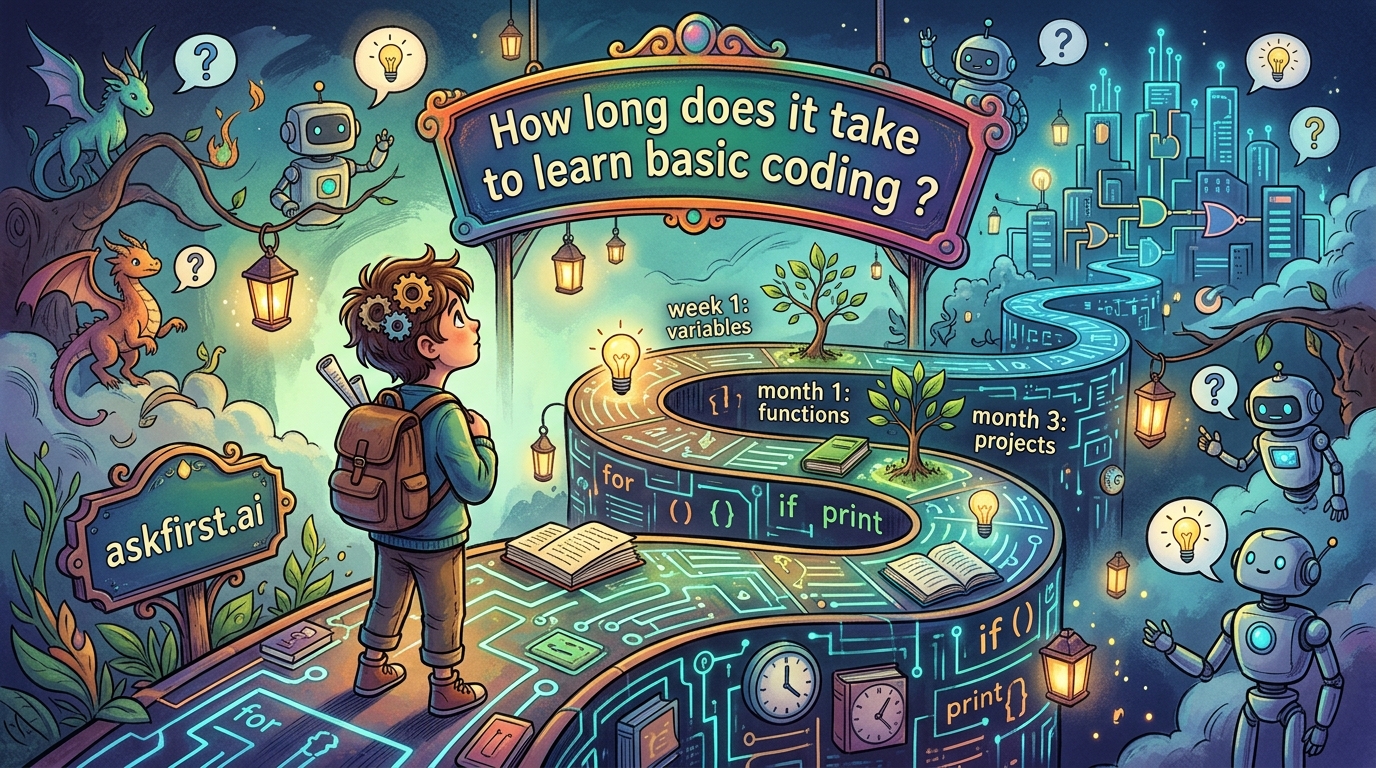
Learning to code is a journey that varies significantly depending on an individual’s prior experience, learning objectives, and time commitment. On average, achieving "basic" proficiency—the ability to write functional scripts, understand fundamental syntax, and solve simple algorithmic problems—typically takes 3 to 6 months of consistent study.
Factors Influencing the Learning Curve
The duration of your learning process is rarely linear. Several variables dictate how quickly you move from "Hello World" to building independent projects:
- Prior Experience: Individuals with backgrounds in mathematics, logic, or technical fields often grasp computational thinking faster than those starting from scratch.
- Language Choice: Python is widely considered the most accessible language due to its readable, English-like syntax. In contrast, C++ or Rust involve manual memory management and more complex paradigms, extending the learning curve.
- Intensity of Study: A student dedicating 20 hours per week will reach competency much faster than one practicing for 3 hours on weekends.
- Learning Methodology: Structured environments, such as coding bootcamps, offer accelerated paths (often 12–16 weeks), while self-taught learners may take longer due to the lack of a curated roadmap.
A Practical Roadmap to Basic Competency
To achieve basic coding literacy, learners should follow a structured progression:
Phase 1: Foundations (Weeks 1–4)
- Concepts: Variables, data types (integers, strings, booleans), and basic input/output.
- Control Flow: Learning
if/elsestatements, loops (for,while), and logical operators. - Functions: Understanding how to encapsulate logic for reuse.
Phase 2: Data Structures and Logic (Weeks 5–10)
- Collections: Lists, dictionaries, arrays, and sets.
- Algorithms: Basic sorting and searching techniques.
- Error Handling: Learning how to debug code and handle exceptions.
Phase 3: Project-Based Application (Weeks 11–24)
- Building: Creating simple web scrapers, command-line calculators, or automated file organizers.
- Version Control: Learning Git and GitHub to manage project history.
- Deployment: Understanding how code interacts with the environment.
Pros and Cons of Learning Methods
| Method | Pros | Cons |
|---|---|---|
| Bootcamps | High accountability, career support | Expensive, very intensive |
| Self-Taught | Free/Low cost, flexible pace | Easy to lose motivation, lack of guidance |
| University | Deep theoretical understanding | Slow, high tuition costs |
The Future of Coding Education
We are currently witnessing a paradigm shift with the integration of AI-assisted coding. Tools like GitHub Copilot and ChatGPT act as "pair programmers," allowing beginners to understand complex concepts by generating explanations or refactoring code in real-time. While this accelerates the learning process, experts caution that relying too heavily on AI can hinder the development of fundamental problem-solving skills.
Conclusion
"Basic" coding is not a destination but a foundation. While 3–6 months is the standard estimate for foundational knowledge, true mastery is a lifelong endeavor. The key to success is consistency over intensity; practicing for one hour every day is statistically more effective than a single ten-hour marathon session once a week. By focusing on building small, functional projects early, you will transition from a passive learner to a proficient developer far more efficiently.