The Cognitive Load of Software Engineering
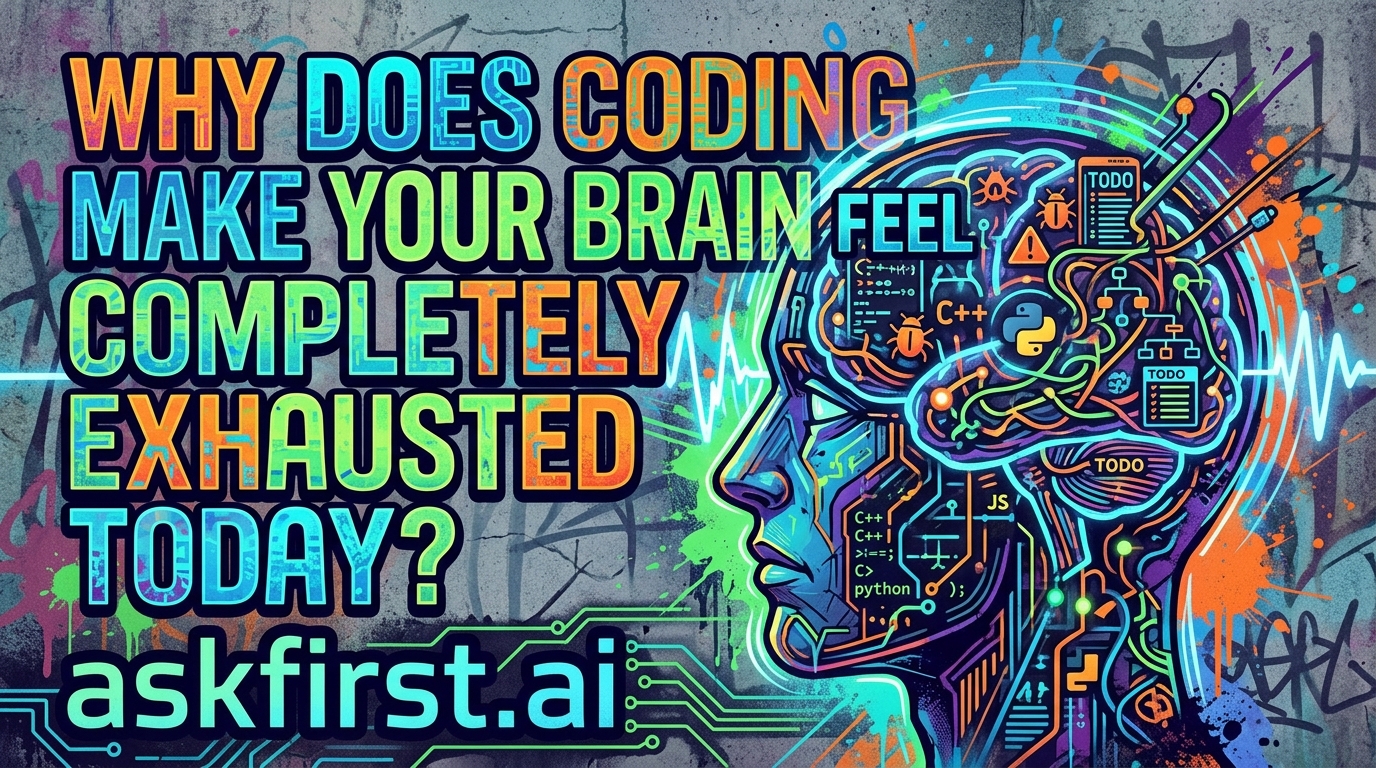
Coding is not merely typing syntax; it is an act of high-intensity cognitive processing that places unique demands on the human brain. When developers write code, they are engaged in 'Deep Work,' a term popularized by Cal Newport to describe professional activities performed in a state of distraction-free concentration that push cognitive capabilities to their limits. This process consumes massive amounts of glucose, the primary fuel for the brain, leading to a state of mental depletion often referred to as 'decision fatigue.'
The Architecture of Mental Exhaustion
Several neurological mechanisms contribute to the fatigue experienced during intense programming sessions:
- Working Memory Constraints: Programming requires maintaining complex state logic, variable relationships, and syntax rules simultaneously within the working memory. This is similar to juggling several glass balls; if the cognitive load exceeds the capacity of the prefrontal cortex, error rates spike and mental exhaustion sets in.
- Context Switching: Moving between reading documentation, debugging, writing new features, and attending meetings forces the brain to flush and reload its entire 'mental stack.' Research by Gloria Mark at the University of California indicates that regaining focus after an interruption takes an average of 23 minutes, which compounds the metabolic cost significantly.
- The Syntax-Logic Duality: Unlike natural language, coding requires perfect precision. The brain must engage in 'syntactic switching,' where it toggles between creative high-level architecture and pedantic low-level logic verification. This duality creates a friction that taxes neural pathways.
Combating Neural Burnout
To manage this fatigue effectively, professionals utilize specific strategies rooted in cognitive science:
- Pomodoro Technique: Breaking work into 25-minute intervals followed by breaks allows the brain to transition from the 'focused mode' to the 'diffuse mode.' This shift facilitates subconscious problem solving and prevents the buildup of neurotoxic byproducts in the brain cells.
- Externalization of Thought: Using pen and paper for architectural planning or flowcharts reduces the load on working memory. By offloading complex state diagrams to an external medium, the developer preserves precious mental energy for actual problem-solving tasks.
- Strategic Defragmentation: Scheduling the most difficult tasks during the brain’s peak performance hours—usually shortly after sleep—capitalizes on restored neurotransmitter levels.
Conclusion
The exhaustion felt after a day of coding is a physiological indicator of extreme mental effort. By understanding that programming consumes limited cognitive resources through constant context switching and high-load memory management, developers can better pace their efforts and implement sustainable work practices that protect their long-term productivity.