The Elegance of Code: Where Mathematics Meets Creative Expression
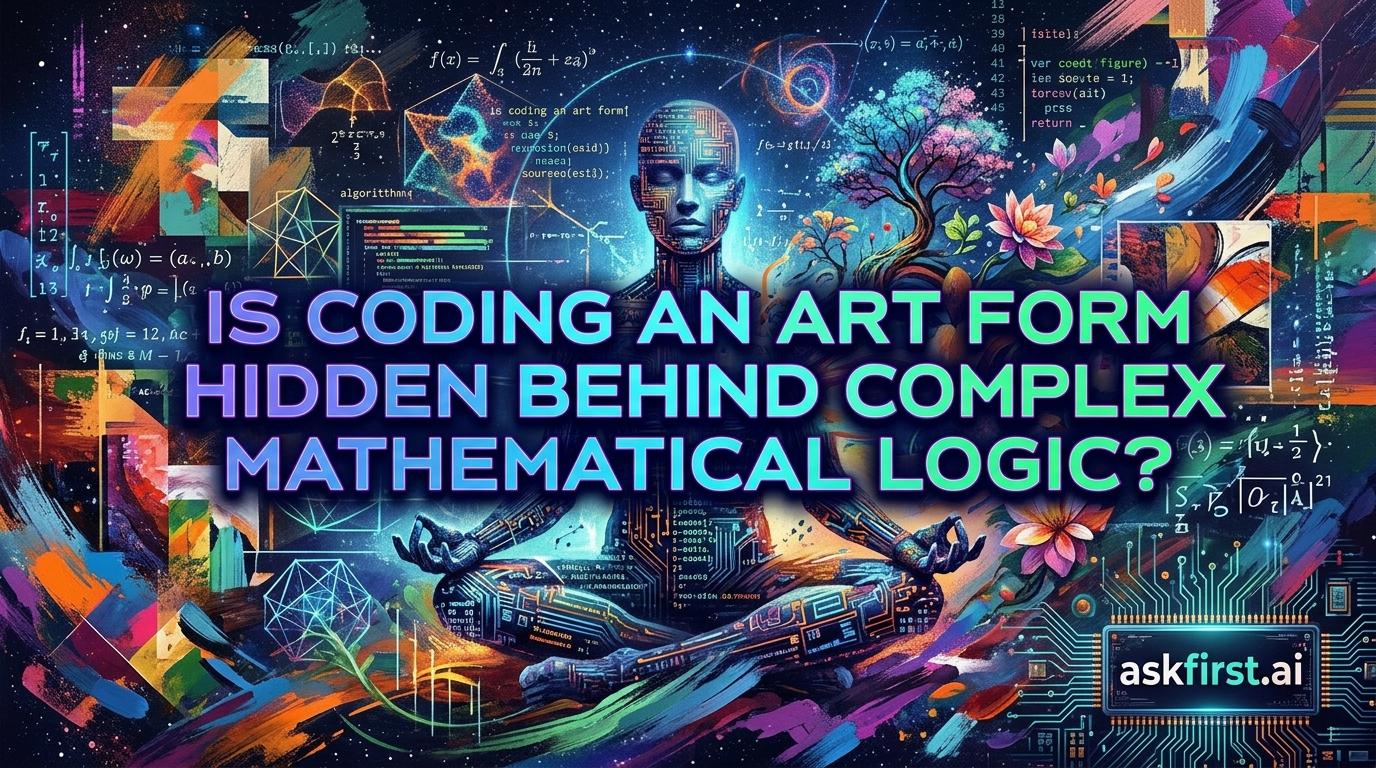
At its core, computer programming is often perceived as a rigorous discipline rooted in binary operations and strict logical syntax. However, veteran software architects frequently compare the act of building a complex system to composing a symphony or painting a mural. This duality exists because code serves two masters: the machine, which demands mathematical precision, and the human, who requires intuitive design and elegant structure.
The Mathematical Skeleton
Mathematics provides the structural integrity of every software project. Algorithms are essentially logical proofs translated into instructions that the machine interprets. Data structures act as the architecture of memory management, ensuring that information flows efficiently through the system. Without this mathematical foundation, software would collapse under the weight of its own complexity. It is the language of efficiency, ensuring that complexity is managed through predictable, repeatable, and scalable patterns.
The Artistic Soul of Programming
While the machine cares only for the outcome, the developer makes thousands of subjective decisions that dictate how a program is built. These choices define the "art" of coding:
- Design Patterns: Developers choose specific architectural styles not just for performance, but for the elegance and readability of the codebase.
- Abstraction: The process of hiding complexity behind simple interfaces is a creative act of distillation, similar to how an impressionist painter captures the essence of a scene without rendering every blade of grass.
- Naming Conventions: Choosing the right name for a function or a variable is a rhetorical exercise that communicates intent and shapes how future developers understand the system.
Why the Synthesis Matters
Viewing coding as both art and science explains why two developers given the same problem will provide fundamentally different solutions. One solution may focus on raw performance, prioritizing mathematical optimization, while another might prioritize modularity and extensibility, valuing the aesthetic quality of the code structure.
This intersection is often referred to as "Computer Craftsmanship." Like a master carpenter who understands the physics of weight and tension but focuses on the beauty of the final piece, a programmer must respect the logical constraints of the CPU while aiming for the beauty of clean, maintainable logic.
In conclusion, the artistry of coding lies not in the code itself—which is purely functional—but in the creative path taken to solve a problem. It is the balance between constraints and freedom. By embracing coding as both an engineering discipline and a form of expressive design, developers create software that is not only powerful and efficient but also deeply human in its architecture.