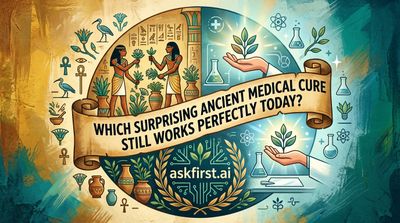
The Botanical Origins of Pain Relief: Ancient Anesthesia Revealed
Many modern medical breakthroughs have deep roots in ancient wisdom, yet the concept of "modern anesthesia"—defined by the controlled induction of reversible unconsciousness—is distinctly a product of 19th-century chemistry and pharmacology. Ancient healers did not possess the technology for general anesthesia, but they were remarkably successful at achieving local and systemic analgesia (pain suppression) using sophisticated plant-based concoctions.
The Toolkit of Antiquity
Ancient practitioners utilized a variety of potent botanicals to dampen pain during surgeries or bone setting. Notable examples include:
- Papaver somniferum (Opium Poppy): Used since at least the Sumerian era, this plant provided morphine and codeine. It acted as a powerful sedative and analgesic that made invasive procedures tolerable.
- Mandragora officinarum (Mandrake): Known in ancient Greece and Rome, mandrake roots contain scopolamine and hyoscyamine. These alkaloids induced a dreamlike state and temporary sedation, though the line between relief and toxicity was dangerously thin.
- Hyoscyamus niger (Henbane): Often combined with mandrake, henbane provided deep sedative effects. It was a staple in "soporific sponges," which were soaked in plant extracts and placed under the patient’s nose to induce lethargy.
- Cannabis sativa: Extensively documented in Chinese medical texts by figures like Hua Tuo, cannabis was utilized to induce a state of indifference to pain, often mixed with wine for enhanced absorption.
Why This Differs from Modern Anesthesia
While these extracts successfully managed pain, they lacked the precision and safety profiles of modern anesthetics. Modern anesthesia relies on synthetic compounds—like propofol or sevoflurane—that can be titrated to the milligram based on weight, age, and physiological metrics. Ancient methods were volatile; because the potency of wild-harvested plants varied wildly depending on soil and harvest time, practitioners often faced the precarious risk of accidentally causing deep coma or death instead of mere sedation.
The Legacy of Botanical Discovery
Modern medicine owes a massive debt to these early pioneers. Many modern drugs are either direct derivatives of these ancient plants or synthetic analogues designed to mimic their structure while reducing side effects. For instance, the isolation of morphine from the poppy in 1804 by Friedrich Sertürner was the catalyst for the entire field of pharmacology. By identifying the exact active molecules, scientists moved from the "hit-or-miss" application of herbal pastes to the exact, evidence-based science of modern medicine.
In conclusion, ancient healers were masters of botanical chemistry, discovering the precursors to many pain management strategies still used today. While they did not possess the "modern" mechanism of surgical unconsciousness, their mastery of plant extracts laid the essential groundwork for humanity to eventually tame the biology of pain.