Understanding Pregnancy Symptom Consistency: Do They Repeat?
It is a common misconception that every pregnancy will mirror the last. While many individuals experience similar physical markers, pregnancy symptoms are not universal across multiple gestations. Each pregnancy is a unique biological event influenced by hormonal fluctuations, the specific fetus, and your current physiological state.
The Science of Variable Symptoms
Pregnancy symptoms are primarily driven by the hormone human chorionic gonadotropin (hCG) and increased levels of progesterone and estrogen. Because your body’s baseline hormonal balance, age, and lifestyle change between pregnancies, your physical response to these hormones can shift significantly.
Factors Influencing Symptom Variance
- Hormonal Differences: The specific implantation process and the initial development of the placenta can cause different rates of hCG production.
- Age and Health: A person’s metabolic rate, weight, and overall health status at the time of conception evolve over time, directly affecting how one experiences morning sickness, fatigue, or mood swings.
- Fetal Factors: Research suggests that the sex of the fetus and its unique genetic makeup can influence the intensity of symptoms.
- Physical Memory: If you have previously been pregnant, your abdominal muscles and ligaments have already been stretched, which may cause you to "show" earlier or experience different pelvic sensations than in your first pregnancy.
Common Symptoms and Their Variability
While some people report "textbook" symptoms every time, others experience polar opposites.
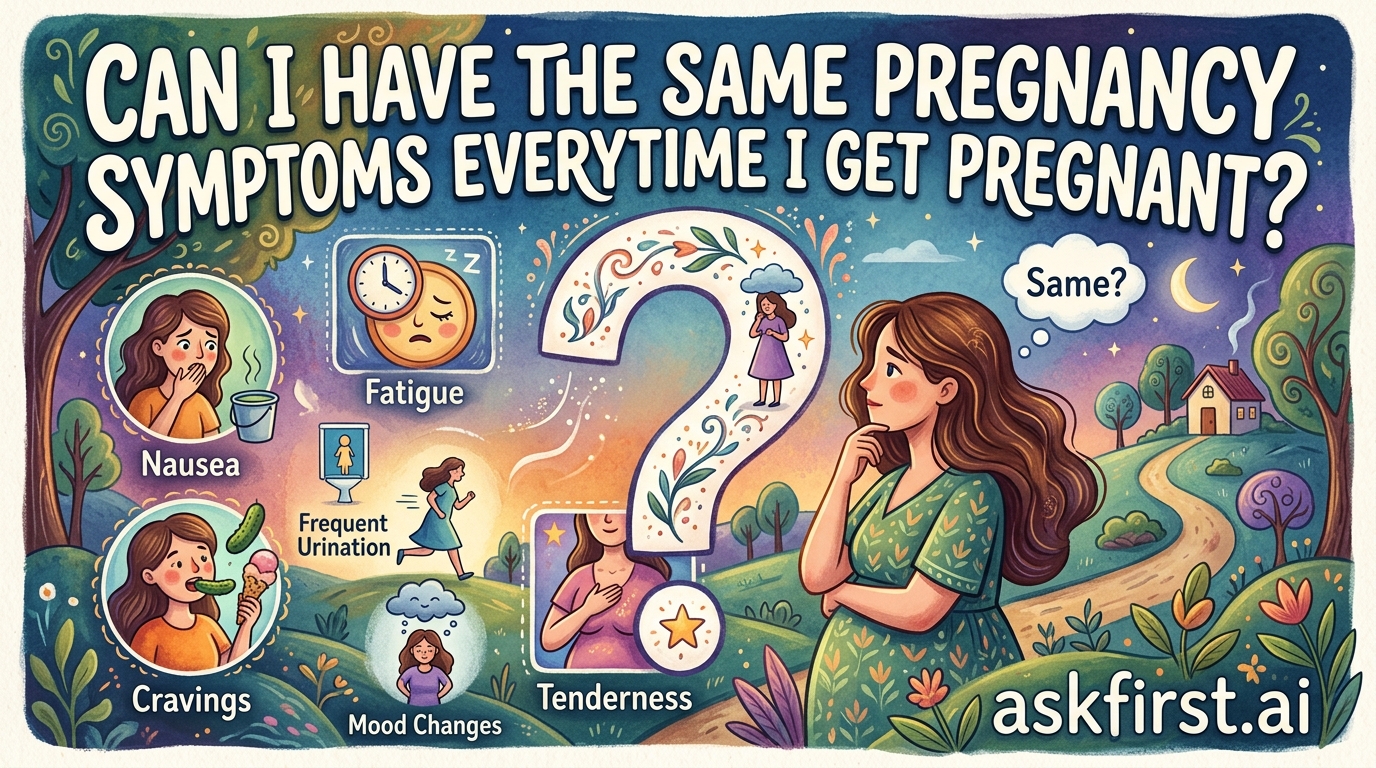
- Morning Sickness: You may suffer from severe hyperemesis gravidarum in one pregnancy and have mild to no nausea in another. Interestingly, some studies suggest that nausea levels can vary based on the gender of the fetus, though this is not a diagnostic tool.
- Fatigue: Often, the fatigue in a second or third pregnancy feels more intense simply because you are caring for other children, leading to a different subjective experience of exhaustion.
- Breast Tenderness: This is often more pronounced in first pregnancies. In subsequent ones, the tissue may have already undergone changes, potentially making symptoms less intense.
- Quickening (Fetal Movement): Experienced parents almost always feel fetal movement earlier in subsequent pregnancies because they are better at recognizing the specific sensation of internal "flutters."
Pros and Cons of Expecting Similarity
- Pros: Familiarity can help you recognize early signs (like breast sensitivity or a missed period) more quickly, allowing for earlier prenatal care.
- Cons: Expecting the same experience can lead to undue anxiety. If you had an easy first pregnancy, a more difficult second one might feel like a "warning sign," even when it is perfectly normal.
When to Consult a Professional
While variations are normal, you should always consult an OB-GYN if you experience sudden changes that deviate from your personal norm, such as severe, one-sided abdominal pain, unusual vaginal bleeding, or a complete and sudden disappearance of all symptoms, which can sometimes indicate a change in the viability of the pregnancy.
Ultimately, treat every pregnancy as a clean slate. While your body has a history, it is constantly adapting. Focus on the current symptoms rather than comparing them to previous experiences to ensure a healthier, less stressful prenatal journey.