Honey: The Golden Antimicrobial Powerhouse
While modern pharmacology has revolutionized how humanity treats ailments, certain traditional remedies have weathered the millennia, proving their efficacy through rigorous scientific scrutiny. Perhaps the most surprising example is raw, unprocessed honey, specifically varieties like Manuka. Far from being merely a sweetener, this ancient substance remains a cornerstone of modern wound care, particularly for managing infections that defy conventional antibiotics.
The Mechanisms of Action
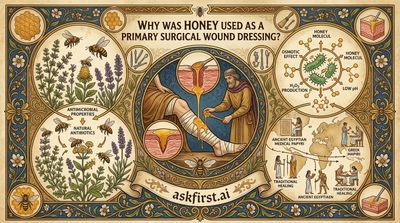
The healing prowess of honey is not merely folklore; it is rooted in unique chemical properties. Unlike other sugars, honey possesses a trifecta of antimicrobial defenses:
- Osmotic Pressure: Honey has high sugar content and low moisture, which draws water out of bacteria cells, effectively dehydrating and destroying them.
- Hydrogen Peroxide: Bees introduce an enzyme called glucose oxidase. When honey meets a wound, this enzyme creates low-level, steady releases of hydrogen peroxide, acting as a potent antiseptic.
- Low pH: With a natural acidity (pH between 3.2 and 4.5), honey creates an environment hostile to the majority of harmful pathogens.
A Clinical Resurgence
In the era of antibiotic resistance, clinical researchers have turned back to honey as a viable therapeutic agent. Manuka honey, derived from the nectar of the Leptospermum scoparium shrub, contains a specific compound known as methylglyoxal (MGO). This compound is highly effective against biofilm-producing bacteria, such as Staphylococcus aureus. Because honey attacks bacteria via multiple pathways simultaneously, it is significantly harder for microbes to develop the same resistance they often build against single-target antibiotics.
How It Is Used Today
Medical-grade honey is not the same as the jars found in supermarket aisles. To be used safely in a healthcare setting, honey must undergo gamma irradiation to remove clostridium botulinum spores, which can be dangerous in open wounds. Once sterilized, it is applied as a primary dressing for:
- Ulcers and Pressure Sores: It promotes granulation and epithelialization, accelerating the closing of complex wounds.
- Surgical Wounds: It helps minimize scarring and inflammation, serving as an effective post-operative barrier.
- Burns: Due to its cooling nature and antimicrobial defense, it is highly effective in managing minor to moderate burns.
Why It Remains Relevant
As we look toward 2030 and beyond, the integration of ancient wisdom with modern medicine becomes increasingly vital. Honey serves as a testament that nature provided tools for healing long before the discovery of penicillin. By bridging the gap between historical practice and biological science, society secures a sustainable, effective method for wound management that does not contribute to the global crisis of antimicrobial resistance.