The Golden Secret: Why Honey Was Nature's Original Surgical Dressing
For millennia, across ancient civilizations from Egypt to Greece and even the traditional practices of Indigenous cultures, honey served as the premier treatment for wounds. While modern medicine often prioritizes synthetic antibiotics, the resurgence of medical-grade honey—specifically Manuka honey—highlights why this sticky substance was, and remains, a powerhouse of wound care.
The Triple-Action Defense
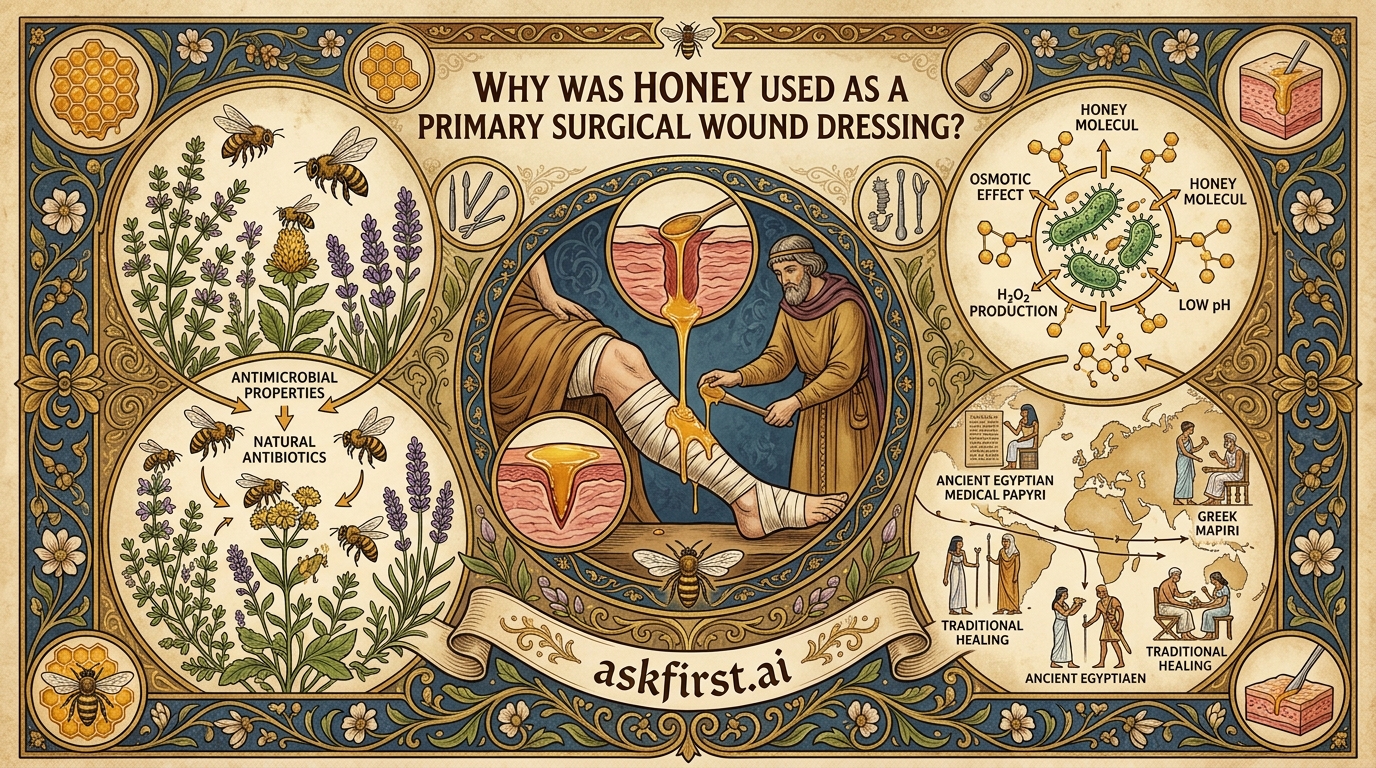
Honey functions as a complex, multi-modal biological agent. Its efficacy in wound healing is not accidental but stems from three primary mechanisms:
- Osmotic Effect: Honey has an incredibly high sugar content and low moisture content. When applied to a wound, it draws water out of bacterial cells through osmosis, effectively dehydrating and killing pathogens.
- Low pH Levels: Honey is naturally acidic, typically ranging between 3.2 and 4.5. Most pathogenic bacteria, which thrive in a neutral pH environment, struggle to survive or multiply in this acidic landscape.
- Hydrogen Peroxide Production: Many honeys contain the enzyme glucose oxidase. When honey interacts with wound exudate (the fluids leaking from a wound), this enzyme facilitates the slow release of hydrogen peroxide, providing a continuous, low-concentration antimicrobial effect that is potent yet gentle on healthy tissue.
More Than Just Antibacterial
Beyond keeping infection at bay, honey creates an ideal environment for tissue regeneration. Because of its viscosity, it forms a protective barrier over the wound, preventing cross-contamination and shielding the delicate healing surface from the air. Furthermore, honey is non-adherent; unlike dry gauze, which often rips away new skin cells during removal, honey-impregnated dressings peel away easily, preventing the trauma that typically sets back the healing process.
The Role of Phytochemicals
Research indicates that specific honeys, particularly those derived from the Manuka bush (Leptospermum scoparium), contain unique non-peroxide compounds. These phytochemicals provide an additional layer of defense that remains active even when other honey types might lose their potency. This discovery has led to the development of medical-grade honey, which is sterilized via gamma irradiation to ensure the absence of spores, such as Clostridium botulinum, while maintaining the natural chemical integrity required for clinical applications.
Clinical Application in the Modern Era
In modern healthcare, honey is frequently utilized for chronic, hard-to-heal wounds, such as venous ulcers, pressure sores, and even surgical sites that refuse to close with conventional treatments. It is not merely a folk remedy; it is a scientifically validated bio-active material. By integrating these ancient techniques with rigorous sterilization standards, the medical community has successfully reclaimed an elegant, sustainable, and highly effective method for fostering skin recovery. Honey proves that sometimes the most sophisticated solutions are those provided by nature itself.