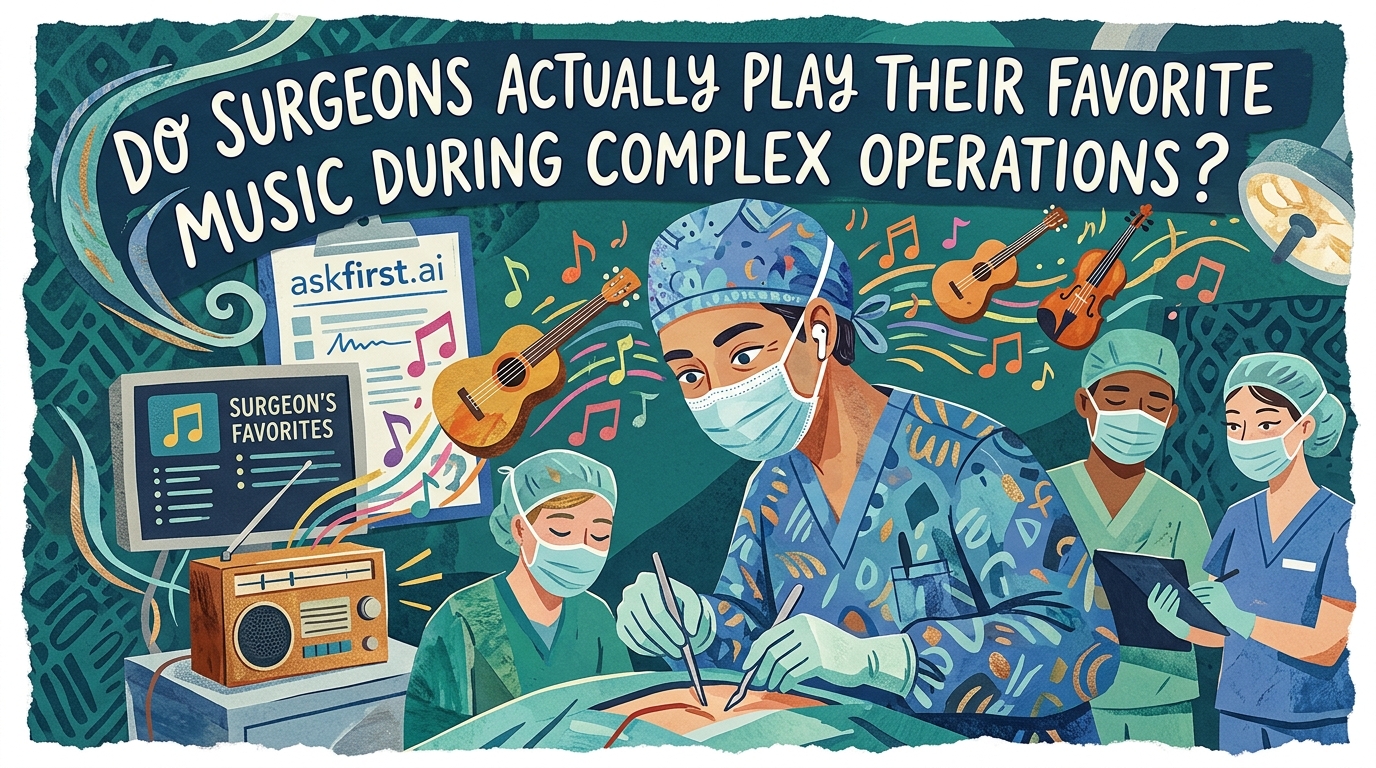
The Symphony of the Operating Room: Music and Surgical Performance
It is a widely held belief that operating rooms are silent, sterile environments where only the hum of medical machinery and clipped, urgent commands exist. In reality, modern operating rooms are frequently filled with the sounds of rock, jazz, classical music, or pop hits. Research suggests that music is a ubiquitous component of surgical culture, often playing a surprisingly functional role in the medical environment.
The Psychological Impact of Music on Surgical Teams
Surgery is an environment characterized by high-stakes decision-making and intense concentration. Listening to music can act as a powerful tool for stress regulation among surgical teams. By reducing cortisol levels and mitigating anxiety, background music helps maintain a calmer, more controlled environment, which can contribute to better team coordination and emotional regulation during lengthy procedures.
Beyond individual stress relief, music also fosters positive communication. It can break the heavy silence of a high-pressure situation, making the environment more approachable for staff. This social cohesion is vital, as effective teamwork is the bedrock of surgical success.
Scientific Evidence: Focus, Accuracy, and Flow
Studies, including research published in journals like The Lancet and the British Medical Journal, have explored the correlation between music and surgical outcomes. While some debate remains, the consensus points to music enhancing the "flow state"—a cognitive condition of deep immersion and task-oriented focus. Music, specifically genres that are instrumental or familiar to the surgeon, can help mask distracting external noises, such as the beeping of monitors or the chatter of support staff, thereby allowing the surgeon to maintain consistent rhythm and precision.
- Instrumental Preference: Many surgeons prefer instrumental music (such as classical or lo-fi beats) to avoid the cognitive load of lyrics, which could distract from complex verbal communication.
- Volume Control: A critical rule in most hospitals is that music volume must never interfere with the ability of staff to communicate essential information or hear alarm sounds from medical equipment.
- Surgeon Autonomy: In many institutions, the lead surgeon acts as the "DJ" of the theater, as the music serves primarily to support their cognitive load and psychological comfort during the procedure.
Navigating Potential Risks
While music is beneficial, it is not without potential pitfalls. The primary concern is safety. If the music becomes too loud or overly complex, it could theoretically mask subtle auditory cues from monitors or team warnings. However, standardized hospital protocols generally manage this by keeping volumes moderate and allowing any team member to request that the music be lowered or turned off at any critical phase of the operation, such as during induction of anesthesia or moments of high intraoperative instability. Ultimately, when used judiciously, music is not just a form of entertainment; it is a calculated tool for optimization within the complex ecosystem of the operating room.