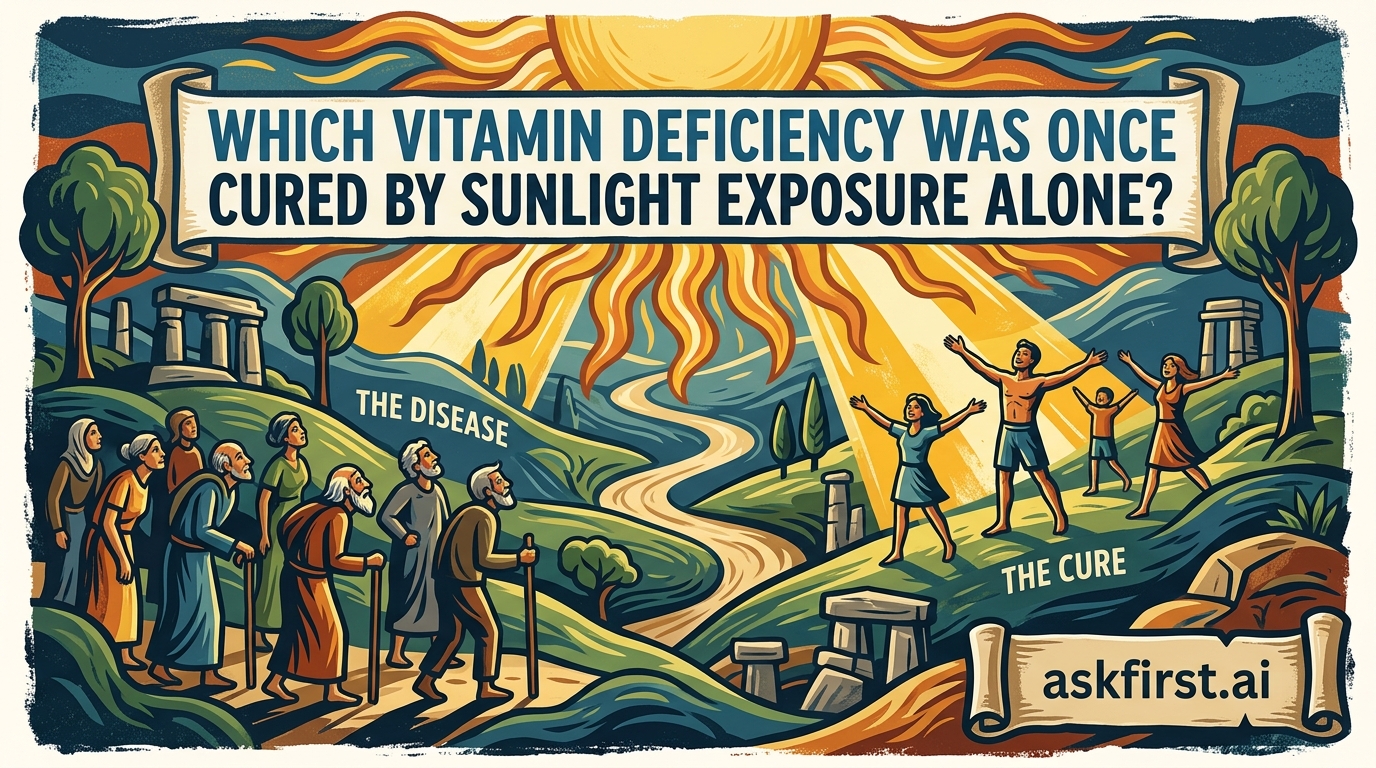
The Solar Cure: How Vitamin D Defeated Rickets Through Sunlight
For centuries, the medical community stood baffled by a devastating skeletal condition known as rickets, which caused brittle bones, bowed legs, and stunted growth in children. It was not until the early 20th century that researchers uncovered the miracle of Vitamin D, often dubbed the "sunshine vitamin," revealing that this pervasive health crisis could be reversed simply by harnessing ultraviolet rays from the sun.
The Discovery of the Solar Connection
In the late 1800s, Polish physician Jędrzej Śniadecki first hypothesized that children living in the dense, smog-filled cities of Europe were suffering because they lacked adequate exposure to sunlight. He observed that children in rural areas, who spent significant time outdoors, rarely developed rickets compared to their urban counterparts. While his initial findings were met with skepticism, further research eventually confirmed that ultraviolet (UVB) radiation converts 7-dehydrocholesterol in the skin into cholecalciferol, or Vitamin D3.
Why Sunlight Acts as a Nutrient
Vitamin D is unique because it is technically a pro-hormone rather than just a dietary vitamin. When the skin absorbs UVB rays, it initiates a complex biochemical process. This vitamin is essential for calcium absorption, which is the primary driver of bone mineralization. Without sufficient levels of Vitamin D, the body cannot absorb enough dietary calcium, leading to soft bones that bend under the weight of the developing body—a phenomenon that caused the classic "bow-legged" look associated with historical cases of rickets.
The Paradigm Shift: From Sunshine to Science
During the Industrial Revolution, the rise of factory pollution in cities like London and Chicago significantly blocked sunlight, leading to a surge in rickets among the urban poor. Health pioneers eventually realized that artificial UV lamps, or heliotherapy, could achieve the same results as direct sunlight. By the 1920s, scientists like Harry Steenbock discovered that irradiating foods, such as milk, could fortify them with Vitamin D, effectively eradicating rickets as a major public health menace in many developed nations.
Maintaining Bone Health Today
While rickets is largely considered a disease of the past in most Western nations due to food fortification, the importance of Vitamin D remains a cornerstone of modern nutrition. The process of skin synthesis remains the most efficient way to generate the required levels. Experts suggest that a moderate amount of daily sunlight—often as little as 10 to 30 minutes, depending on skin tone and geographic location—is vital for maintaining robust skeletal integrity throughout the lifespan. By understanding this relationship between light and biology, humanity successfully turned a mysterious ailment into a manageable and preventable condition through the power of basic physiology.