The Psychology of Minimalist Wealth: Why the Elite Dress Simply
There exists a fascinating psychological phenomenon among the ultra-wealthy: the intentional rejection of ostentatious fashion in favor of uniform, understated minimalism. While popular media often associates extreme affluence with luxury brands and flashy logos, the reality is frequently the opposite. This shift toward a "stealth wealth" aesthetic is grounded in cognitive efficiency, status signaling, and the preservation of mental energy.
The Concept of Decision Fatigue
The most prominent reason for simplified wardrobes is the battle against decision fatigue. High-stakes executives, innovators, and entrepreneurs make hundreds of high-impact choices daily. By automating mundane tasks—like choosing a wardrobe—they conserve precious mental bandwidth for complex, value-generating decisions. Steve Jobs, often cited for his black turtlenecks and blue jeans, explicitly stated that his uniform served to streamline his morning routine, ensuring his creative energy was spent on product design rather than aesthetic curation.
Signaling: The Shift from Bling to Breeding
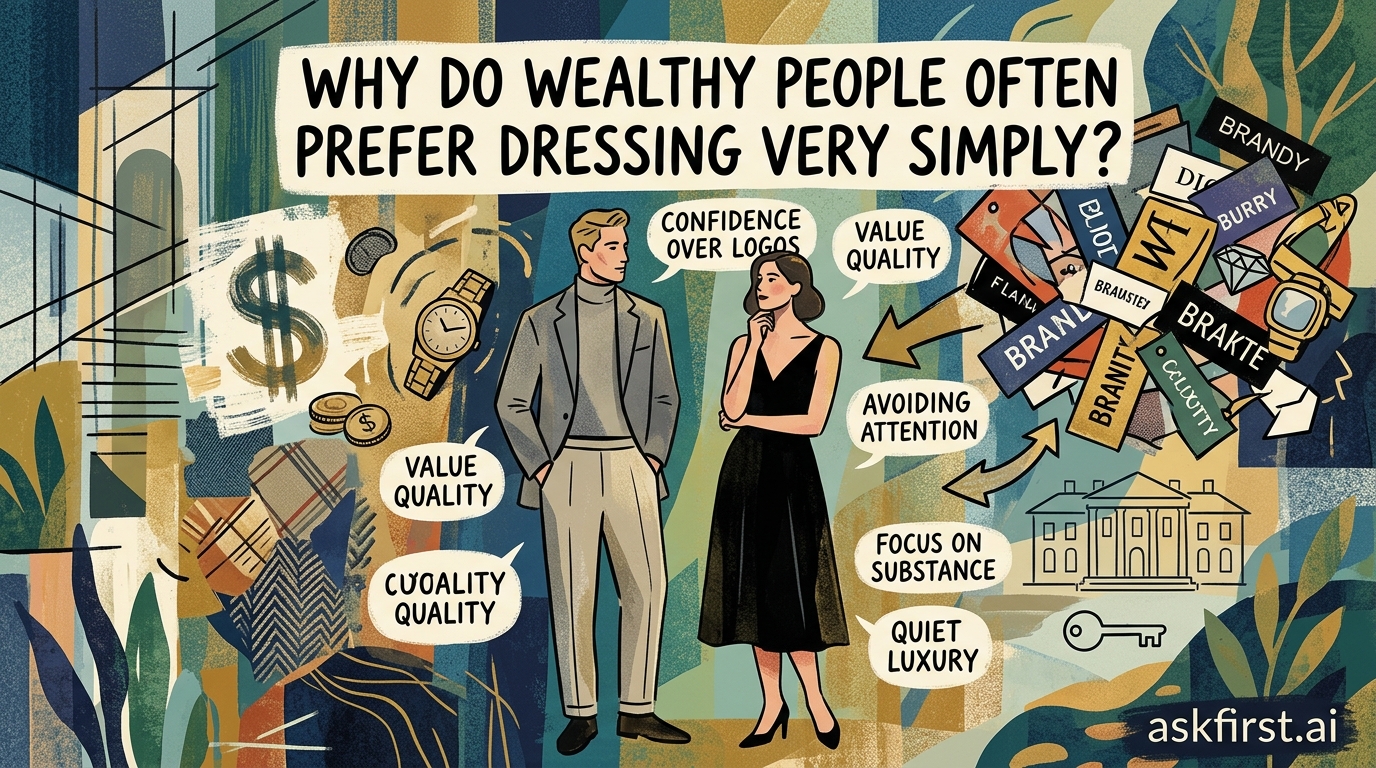
In sociology, Thorstein Veblen introduced the theory of "conspicuous consumption," but in the modern era, the elite have pivoted to "conspicuous leisure" and "inconspicuous consumption." When wealth becomes common among a specific social circle, displaying brand logos becomes a signal of "new money" rather than established influence. Simply dressing requires a high degree of confidence; it acts as an internal signal that the wearer no longer needs to prove their worth through external markers. Knowledgeable observers recognize the subtle indicators of luxury—such as superior tailoring, proprietary fabrics (like vicuña or cashmere), and perfect fit—which remain invisible to the untrained eye.
The Uniform as a Branding Tool
Beyond psychology, a simplified wardrobe serves as a powerful personal branding tool. By wearing the same style consistently, individuals become visually iconic. This creates an association between the person and their work, reinforcing their personal brand identity. Mark Zuckerberg’s gray T-shirts and hoodies are not merely clothing choices; they are a visual shorthand for a specific professional persona centered on accessibility, technological focus, and engineering rigor. This consistency helps external audiences build trust, as the individual appears steady, predictable, and singularly focused on their mission.
Focus on Utility and Longevity
Wealthy individuals often prioritize the longevity of a garment over ephemeral fashion trends. A curated collection of timeless essentials eliminates the need for constant shopping. This approach aligns with the principle of quality over quantity. By investing in a small number of high-grade pieces, these individuals cultivate a wardrobe that is sustainable, functional, and inherently stylish regardless of current trends. Ultimately, dressing simply is not a lack of interest in fashion, but rather a mastery of it—shifting the focus from the clothing itself to the character and achievements of the person wearing it.