Financial Resilience: Surviving a 30-Day Income Interruption
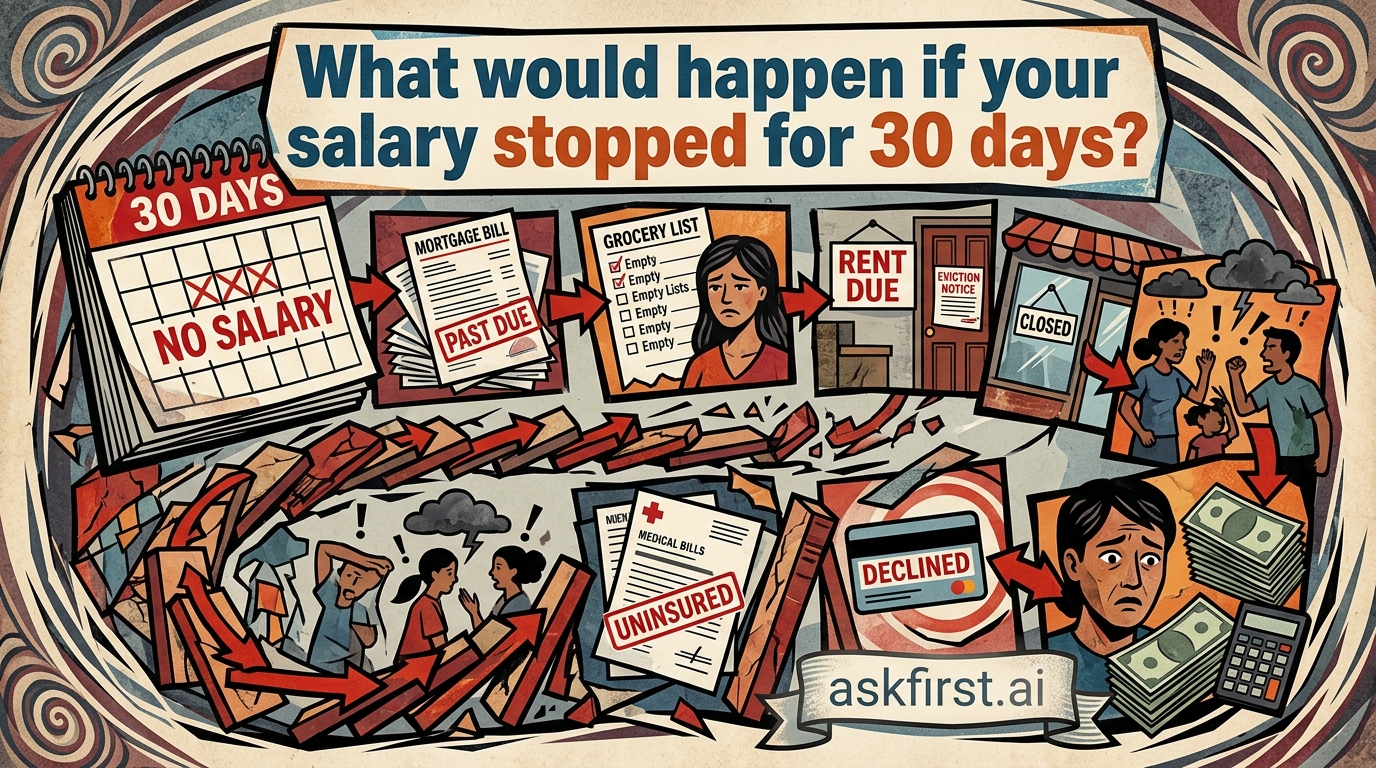
The sudden cessation of a monthly salary serves as a critical stress test for personal financial health. According to recent economic data, approximately 60% of households in developed nations live paycheck-to-paycheck, meaning a 30-day income gap can trigger a domino effect of financial distress, credit score degradation, and psychological strain.
The Immediate Economic Impact
When income stops, the first 30 days are defined by the mismatch between fixed obligations and liquid assets.
- Cash Flow Deficit: Most individuals have recurring costs—mortgage/rent, utilities, insurance, and debt servicing—that do not pause when employment ends. Without an emergency fund, these payments become delinquent within 15–30 days.
- Credit Implications: Many lenders offer a "grace period," but most credit card issuers and utility providers will report late payments to credit bureaus after 30 days of non-payment. A single missed payment can drop a high credit score by 50 to 100 points, increasing future borrowing costs.
- The "Survival Mode" Pivot: Households typically pivot to "necessity-only" spending. Non-essential categories like dining out, entertainment, and subscriptions are the first to be cut, often resulting in a 20–40% reduction in variable monthly expenditure.
The Psychology of Financial Shock
Beyond the ledger, a 30-day salary stoppage induces significant cognitive load. Studies indicate that financial instability reduces "bandwidth"—the mental capacity required for decision-making. This often leads to "scarcity mindset," where individuals make short-term, high-cost decisions (like payday loans or high-interest cash advances) to solve immediate liquidity issues, further exacerbating long-term instability.
Strategic Mitigation: A Step-by-Step Guide
To insulate against a 30-day income gap, financial experts recommend the following protocol:
- Audit Fixed Costs: Identify "nondiscretionary" expenses. If a salary stops, contact service providers immediately to request hardship deferments or payment extensions.
- The Emergency Liquidity Threshold: Aim for a "buffer" account containing 3–6 months of essential living expenses. This is the gold standard for personal finance.
- Asset Liquidation: If an emergency fund is absent, consider the liquidity of assets. Stocks, bonds, or secondary items can be sold, though one must be wary of capital gains taxes or market timing.
- Leverage Unemployment Benefits: In most jurisdictions, filing for government assistance is a legal right. Do not delay; the processing time for these applications often exceeds 14 days.
Pros and Cons of a "Lean" Financial Strategy
- Pros: Maintaining a lean budget encourages fiscal discipline and forces a re-evaluation of lifestyle creep.
- Cons: Relying on credit to bridge the gap creates a "debt trap," where interest accumulation makes the original 30-day problem a multi-year recovery effort.
Future Trends and Resilience
The rise of the "Gig Economy" has shifted the paradigm. Freelancers often experience irregular income, forcing them to adopt "income smoothing" techniques, such as setting aside a percentage of all earnings into a high-yield savings account. As we move toward 2026, the integration of automated personal finance AI is helping households predict cash flow gaps before they occur, allowing for proactive adjustments rather than reactive desperation. Ultimately, a 30-day salary stop is not merely a financial event; it is a wake-up call regarding the necessity of diversification and liquid reserves in a volatile global economy.