The Nature vs. Nurture Debate in Polyamory and Polygamy
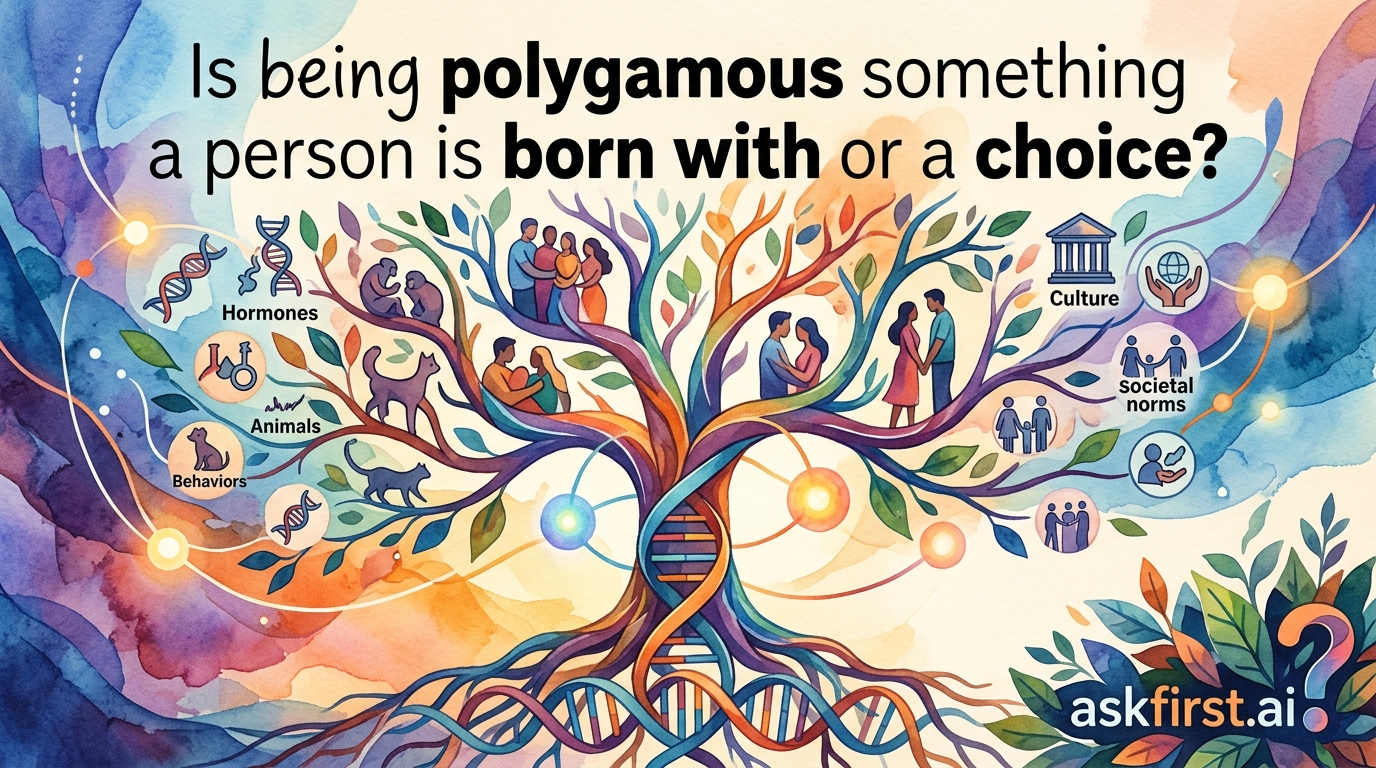
The question of whether being polygamous—or more broadly, practicing consensual non-monogamy (CNM) or polyamory—is an innate biological trait or a conscious lifestyle choice is a subject of intense debate among psychologists, sociologists, and evolutionary biologists. To understand this, one must distinguish between polygamy (the legal or social practice of having multiple spouses) and polyamory (the philosophy or state of being open to multiple romantic relationships).
Biological and Evolutionary Perspectives
From an evolutionary standpoint, some researchers argue that human beings are not strictly "monogamous by nature." Evolutionary psychologists often point to sexual dimorphism and the history of human mating systems as evidence that humans have historically engaged in various forms of pair-bonding.
- Genetic Predispositions: Some studies on the vasopressin receptor gene (AVPR1A) have suggested links between specific genetic markers and pair-bonding behaviors. While no "polygamy gene" has been identified, variations in neurobiology—specifically regarding dopamine and oxytocin receptors—may influence an individual’s capacity for attachment and their desire for novelty or multiple partners.
- Hormonal Influences: The "Coolidge Effect" in biology describes the phenomenon where males (and to a lesser extent, females) exhibit renewed sexual interest whenever a new female is introduced. Proponents of the biological argument suggest that the drive for sexual variety is a hard-wired evolutionary mechanism to ensure reproductive success.
The Argument for Choice and Social Constructivism
Conversely, many sociologists argue that the desire for multiple partners is a complex psychological and social construct rather than a simple biological imperative.
- Cultural Conditioning: In many cultures, monogamy is the default "script." When individuals reject this script, it is often framed as a conscious decision to align their relationships with their personal values, such as autonomy, radical honesty, and the rejection of possessive norms.
- Psychological Needs: For many, the choice to practice polyamory is driven by a desire for diverse emotional fulfillment. This is often viewed as a "relationship orientation"—a framework one adopts to navigate romantic life, similar to how one might choose a career path or a spiritual belief system.
- Agency: Unlike sexual orientation (e.g., being gay or straight), which most researchers agree is not a choice, many polyamorous individuals describe their lifestyle as an active, ongoing negotiation. It requires constant communication, scheduling, and emotional labor, which are hallmarks of a deliberate life choice.
Practical Implications: How to Determine Your Path
If you are questioning whether you are "born" to be non-monogamous, consider the following reflective steps:
- Self-Assessment: Ask yourself if your desire for multiple partners is rooted in a fundamental discomfort with exclusivity or a specific desire for different types of emotional connections.
- Values Alignment: Does non-monogamy align with your core values of freedom and communication? If so, it is likely a chosen ethical framework.
- The "Orientation" Model: Some individuals feel they have a "poly" identity that is as inherent as their sexual orientation. If you have always felt out of place in monogamous structures despite trying to adapt, you may identify more strongly with the "nature" argument.
Future Trends and Conclusion
As society moves toward more diverse definitions of family, the distinction between "nature" and "choice" is becoming increasingly fluid. Most experts now suggest that human beings possess a plasticity in their relationship needs. Much like sexual orientation exists on a spectrum, the capacity for and desire for non-monogamy may be influenced by both genetic predispositions and environmental circumstances. Ultimately, whether innate or chosen, the practice of polyamory is increasingly recognized as a valid, ethical, and legitimate way to structure human intimacy in the 21st century.