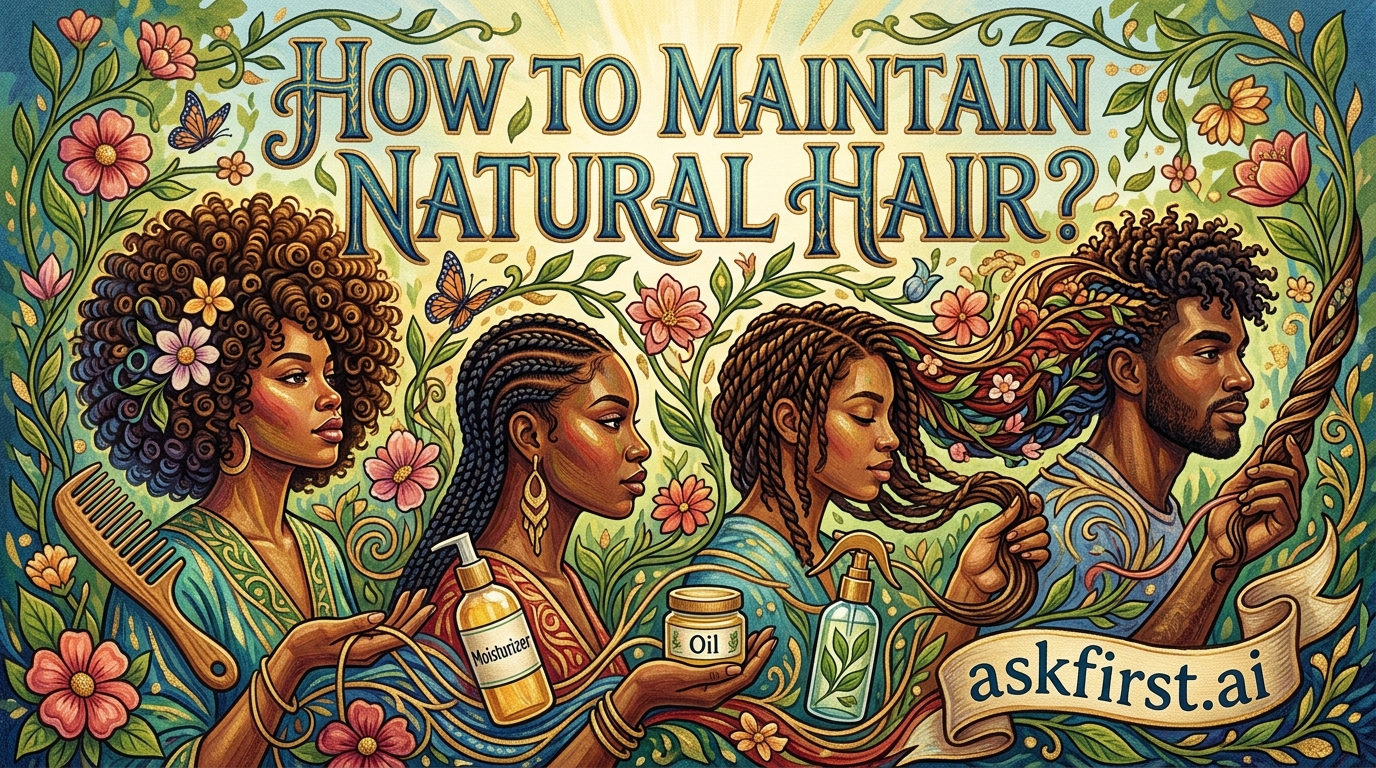
Comprehensive Guide to Maintaining Natural Hair
Maintaining natural hair—defined as hair that has not been chemically straightened or altered—is a journey of understanding hair porosity, texture, and moisture requirements. Because natural hair is structurally more prone to dryness due to the coily or curly structure that prevents sebum from traveling down the hair shaft, a rigorous maintenance regimen is essential.
1. The Core Pillars of Maintenance
To maintain healthy natural hair, one must prioritize three fundamental pillars: Moisture, Protection, and Gentle Handling.
Moisture and Hydration
- The LOC/LCO Method: This is the gold standard for hydration.
- L (Liquid): Use a water-based leave-in conditioner to hydrate the shaft.
- O (Oil): Apply a lightweight oil (like jojoba or argan) to seal the cuticle.
- C (Cream): Apply a butter-based cream to lock in moisture.
- Deep Conditioning: Engage in weekly deep conditioning sessions. Ingredients like hydrolyzed wheat protein or keratin help strengthen the hair, while humectants like glycerin or honey draw moisture into the strands.
Protection
- Nighttime Routine: Friction causes breakage. Always sleep on a satin or silk pillowcase or wear a satin bonnet. Cotton absorbs moisture and creates friction, leading to split ends.
- Protective Styling: Styles like twists, braids, or bantu knots protect the ends—the oldest and most fragile part of the hair—from environmental damage.
2. Practical Step-by-Step Cleaning Routine
- Detangling: Never detangle dry hair. Use a conditioner or specialized detangler to provide "slip," starting from the ends and working your way up to the roots using a wide-tooth comb or your fingers.
- Cleansing: Use a sulfate-free shampoo to cleanse the scalp without stripping natural oils. Focus the lather on the scalp rather than the ends to prevent excessive dryness.
- Conditioning: Apply a rinse-out conditioner, focusing on the mid-lengths and ends. Allow it to sit for 5–10 minutes to soften the hair cuticle.
3. Pros and Cons of Natural Hair Maintenance
| Pros | Cons |
|---|---|
| Versatility: Can be worn in various textures. | Time-Intensive: Requires significant time for styling. |
| Health: Free from harsh chemical relaxers. | Cost: High-quality natural products can be expensive. |
| Growth Potential: Retaining length is easier without chemical breakage. | Environmental Sensitivity: High humidity can cause reversion or frizz. |
4. Statistics and Scientific Context
According to dermatological studies, African-textured hair has a flatter, elliptical cross-section compared to the circular cross-section of straight hair. This structure creates "points of tension" along the hair strand, making it physically weaker at the curves. Statistics suggest that the average natural hair growth rate is approximately 0.5 inches per month, but length retention is the true marker of success, which is achieved only through consistent moisturizing and protective care.
5. Future Trends
The industry is moving toward "Scalp-First" care, emphasizing that hair health begins at the follicular level. Innovations in scalp scrubs, probiotic-infused serums, and pH-balanced cleansers are becoming standard. Furthermore, AI-driven hair analysis apps are emerging to help users track their specific porosity and elasticity, allowing for a hyper-personalized maintenance schedule that evolves as the hair changes over time.
By adhering to these evidence-based practices, you ensure the structural integrity, elasticity, and overall luster of your natural hair.