The Mask of Professionalism: Decoding Your Work Persona
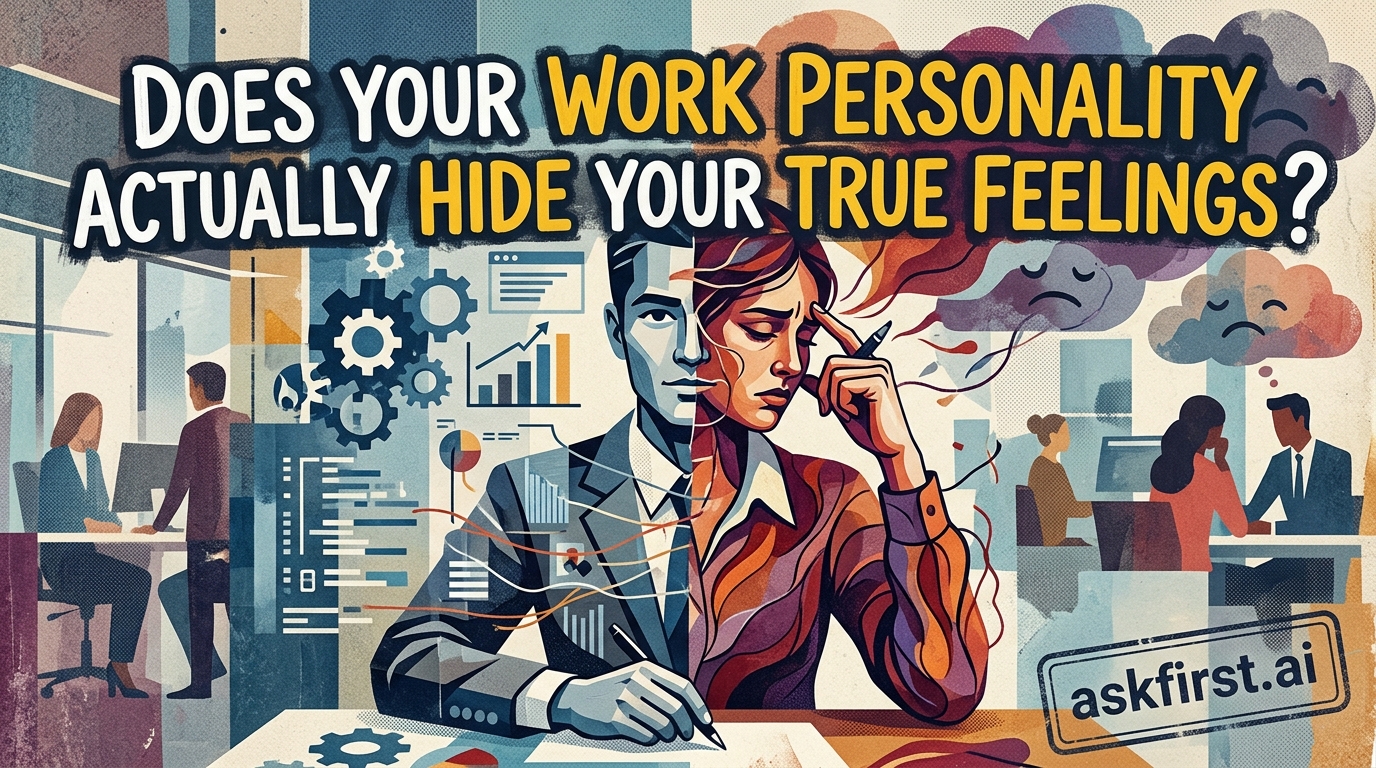
Many professionals operate under the assumption that a dedicated work personality is merely a tool for efficiency, but research suggests it functions as a sophisticated psychological barrier. This "work self" often acts as a protective layer, shielding internal emotional states from the scrutiny of colleagues and management.
The Anatomy of the Professional Persona
The phenomenon often described as "emotional labor" involves the regulation of feelings and expressions to satisfy organizational requirements. According to psychologist Arlie Hochschild, who pioneered this concept, individuals frequently engage in two types of regulation: surface acting and deep acting.
- Surface Acting: The act of displaying emotions that are not genuinely felt, such as smiling through a frustrating client call or maintaining composure during a tense meeting.
- Deep Acting: The cognitive effort to actually alter internal feelings to align with expected professional behaviors, such as actively finding reasons to empathize with a difficult stakeholder.
Why We Conceal Our True Feelings
The tendency to hide true feelings is rarely malicious. Instead, it is an adaptive mechanism driven by the desire for professional stability. Several key psychological factors explain this behavior:
- Social Norms and Expectations: Workplace culture often dictates specific emotional scripts. Displaying vulnerability or strong frustration is frequently perceived as unprofessional or a sign of weakness in competitive environments.
- Psychological Safety: Employees often gauge the level of trust within a team. If the environment does not foster safety, concealing one's true state becomes a risk-mitigation strategy to avoid judgment or negative performance reviews.
- Efficiency and Cognitive Load: By compartmentalizing emotions, individuals attempt to preserve their mental bandwidth for technical tasks. This detachment allows for the completion of complex duties without the interference of personal sentiment.
The Cost of the Hidden Self
While this protective mask can facilitate professional success in the short term, the sustained suppression of authentic feelings carries risks. Research into emotional exhaustion highlights that consistent suppression can lead to burnout, increased stress, and a diminished sense of self-identity. When the persona becomes too rigid, the gap between the "work self" and the "true self" widens, potentially impacting long-term mental well-being.
Strategies for Sustainable Authenticity
Modern management theories suggest that high-performing workplaces encourage a moderate level of authenticity. Creating an environment where employees feel secure enough to express concern or frustration constructively can lead to higher engagement levels. Organizations that prioritize psychological safety benefit from reduced turnover and improved innovation. By fostering a culture of transparency, the need to maintain an impenetrable mask diminishes, allowing for a more genuine and productive workforce experience.