The History and Evolution of Whistling
Whistling—the act of producing a musical or signal sound by forcing breath through a small hole formed by the lips, teeth, or fingers—is a universal human behavior that spans biology, culture, and linguistics. While humans are anatomically predisposed to whistle, its history is a complex tapestry of survival, communication, and artistry.
Evolutionary and Biological Origins
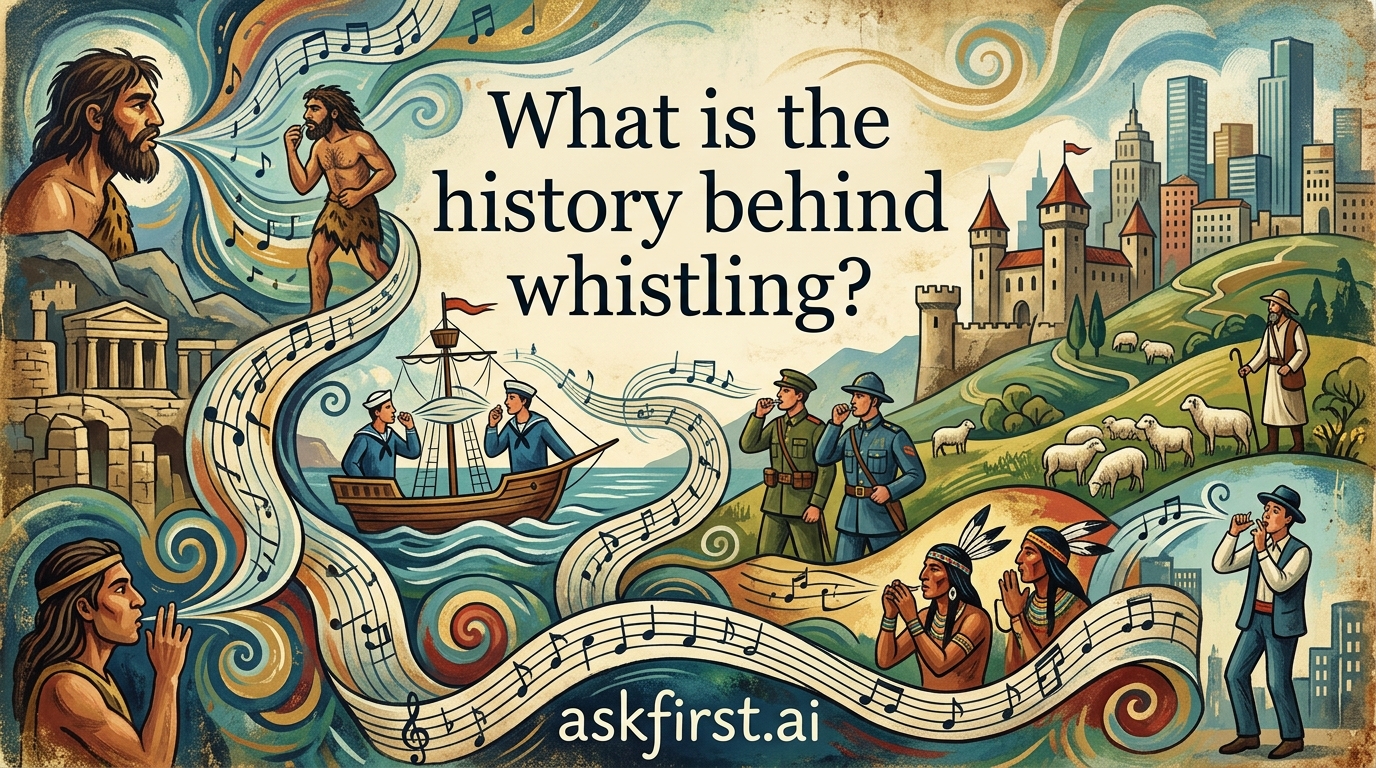
Biologically, whistling is an extension of our vocal apparatus. Unlike speech, which relies on the complex vibration of vocal cords, whistling utilizes the Bernoulli principle: air is forced through a restricted opening, creating turbulence that produces a high-pitched tone. Evolutionary biologists suggest that early hominids may have used whistling as a non-verbal signaling mechanism for hunting, enabling communication over distances without alerting prey to the complexities of human speech.
Whistled Languages: A Linguistic Phenomenon
One of the most fascinating historical developments is the emergence of whistled languages. These are not independent languages, but rather "whistled registers" of spoken languages.
- Silbo Gomero (Canary Islands): Perhaps the most famous, this whistled form of Spanish was developed by indigenous Guanches to communicate across the deep ravines of La Gomera. It was preserved through centuries and is now protected by UNESCO.
- Kuş Dili (Turkey): The "Bird Language" of the Pontic Mountains allowed farmers to communicate across steep valleys. It mimics the phonology of Turkish and remains in use today as a cultural heritage practice.
- Hmong and Mazatec: Various cultures in Southeast Asia and Mexico have historically used whistling to transmit complex information, including warnings, trading details, and social gossip, across environments where sound would otherwise dissipate.
Whistling in Global Culture
Historically, whistling has occupied a polarized space in human culture, oscillating between reverence and superstition.
Superstitions and Taboos
In many maritime and theatrical traditions, whistling was historically considered bad luck. Sailors believed that whistling into the wind would "summon a storm," a superstition rooted in the fear that whistling could anger the wind gods. In the theater, whistling was often discouraged because stagehands—who historically used whistles as cues for flying scenery—might accidentally trigger a drop if they heard a stray whistle from the audience or an actor.
Artistry and Entertainment
In the 19th and early 20th centuries, "artistic whistling" became a popular form of vaudeville entertainment. Performers like Agnes Woodward and Fred Lowery gained international fame, recording classical pieces and popular tunes using only their lips. This era solidified whistling as a legitimate, albeit niche, musical performance art.
Practical Guide: How to Master the Technique
To produce a consistent whistle, follow these steps:
- Lip Positioning: Curl your lips inward over your teeth to protect the airflow.
- Tongue Placement: Keep the tongue arched toward the roof of the mouth, creating a small chamber behind the lips.
- Airflow: Blow a steady, focused stream of air. The key is not force, but the precision of the aperture.
- Adjustment: Slightly adjust the shape of your lips or the position of your tongue until the sound begins to "lock in" and resonate.
Future Trends and Conclusion
Today, whistling continues to evolve. While technological communication has rendered whistled languages less necessary for survival, they are seeing a resurgence as symbols of cultural identity. Simultaneously, modern research into "human-machine interaction" explores how whistling might be used as a hands-free input method for digital devices. Whether as a tool for communication or a form of artistic expression, whistling remains a testament to the human ability to manipulate the physical environment for social connection.