The Concept of True Love: Biological Reality vs. Cultural Construct
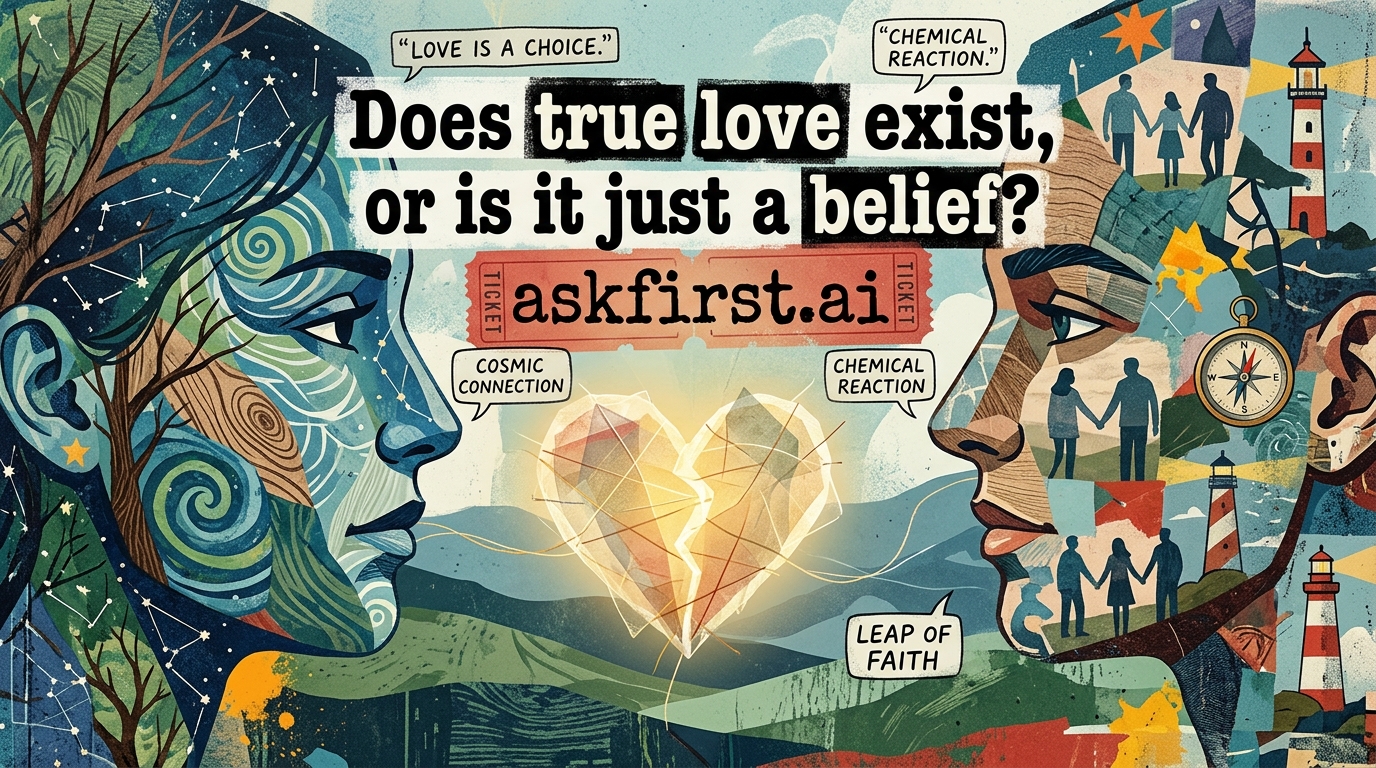
The question of whether "true love" exists is one of the most enduring inquiries in human history, bridging the gap between evolutionary biology, psychology, philosophy, and sociology. Whether it is a fundamental human experience or a romanticized social construct depends heavily on how one defines the term.
1. The Biological Perspective: Chemistry and Evolution
From a scientific standpoint, love is not merely a poetic notion but a complex neurochemical process. Evolutionary psychologists argue that what we call "true love" is an adaptive mechanism designed to ensure species survival.
- Neurotransmitters: When individuals experience deep affection, the brain releases a cocktail of chemicals, including dopamine (reward and motivation), oxytocin (bonding and trust), and vasopressin (long-term commitment).
- Evolutionary Utility: The "pair-bonding" mechanism evolved to encourage humans to stay together long enough to raise offspring, who require a significant period of dependency. Thus, "true love" can be viewed as the brain’s way of incentivizing long-term cooperation and parental investment.
2. The Psychological Framework: Sternberg’s Triangular Theory
Psychologist Robert Sternberg proposed the Triangular Theory of Love, which categorizes love into three components: Intimacy, Passion, and Commitment.
- Consummate Love: Sternberg defines this as the highest form—where all three components (intimacy, passion, and commitment) are present. Many scholars argue that this "consummate love" is the closest empirical equivalent to the popular concept of "true love."
- The Belief Factor: Psychology suggests that the belief in true love acts as a "self-fulfilling prophecy." Individuals who hold a "growth mindset" regarding relationships—believing that love is something built over time—are statistically more likely to maintain long-term, satisfying partnerships compared to those who believe in "destiny" or "soulmates," which can lead to disillusionment when conflict inevitably arises.
3. Philosophical and Historical Context
Historically, the concept of "true love" has shifted dramatically. In ancient Greece, philosophers like Plato focused on Eros (passionate love) and Agape (unconditional, selfless love). It was not until the Middle Ages, with the rise of the troubadours and courtly love, that the Western world began to link romantic love with marriage. Prior to this, marriage was largely a socio-economic contract.
4. Pros and Cons of the "True Love" Ideal
- Pros: It provides emotional security, fosters altruistic behavior, and creates a sense of meaning and belonging. It acts as a buffer against life's stressors.
- Cons: The "Disneyfied" expectation of perfection can lead to relationship dissatisfaction. When people view love as a destination rather than a process, they are more likely to abandon healthy relationships when the initial "spark" fades, unaware that mature love requires active effort.
5. Conclusion: A Synthesis
Is true love a reality or a belief? The answer is that it is both. It is a biological reality in the form of deep attachment and chemical bonding, but it is a belief in the sense that its meaning is constructed by the individuals involved. "True love" is not a static state one "finds," but an active, ongoing practice of empathy, sacrifice, and commitment. It is the conscious choice to prioritize another person's well-being alongside one's own, sustained by the neurobiological capacity for attachment.