The Paradox of Price: Decoding Gift Valuation Psychology
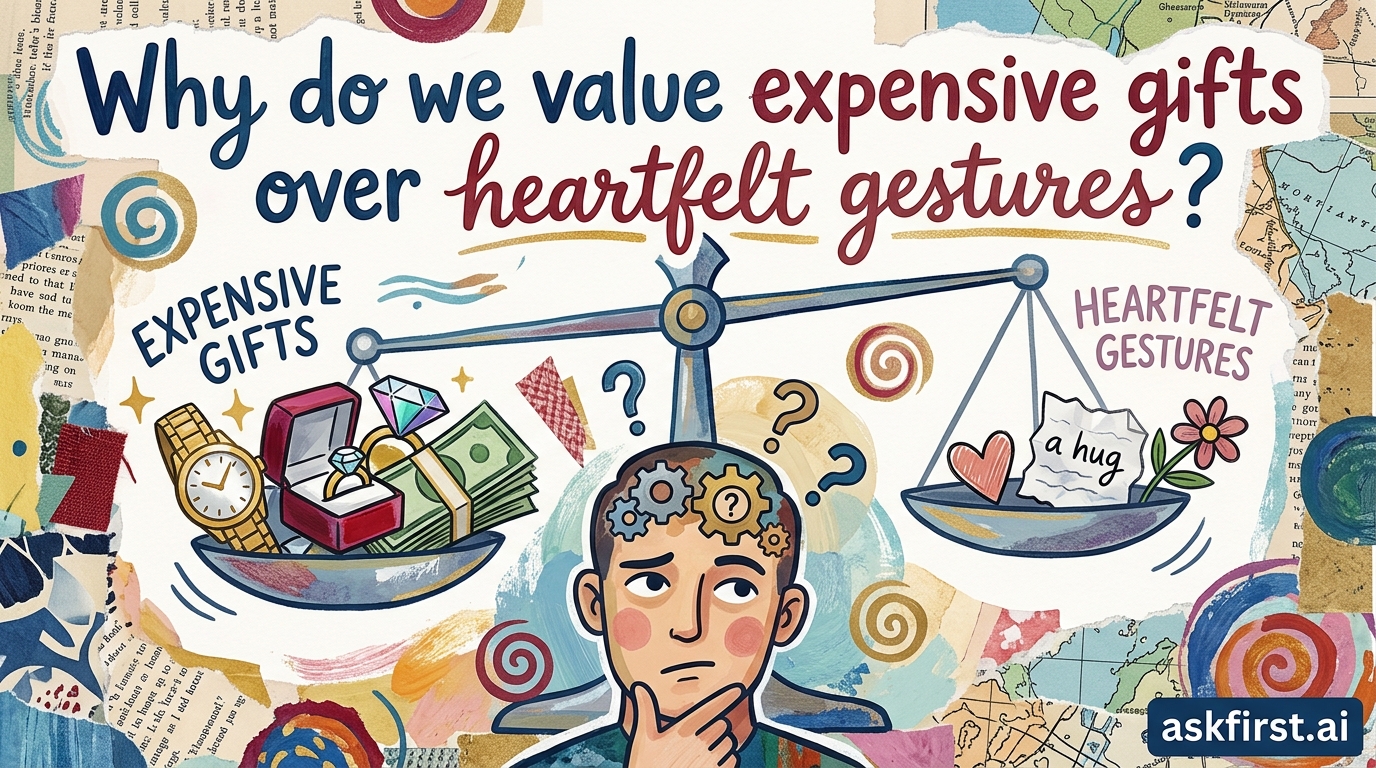
Human behavior often defies logic, especially when it comes to the exchange of gifts. While sentimentalists argue that it is the thought that counts, social psychology suggests that humans frequently succumb to the "price-tag bias," perceiving expensive items as inherently more valuable or indicative of affection. This phenomenon is rooted in evolutionary biology, social signaling, and cognitive processing.
The Evolutionary Signal
From an evolutionary standpoint, resources translate to survival. According to signaling theory, an expensive gift acts as a "costly signal." Much like the peacock’s tail, which requires immense energy to grow, an extravagant gift serves as an indicator of the giver's resourcefulness and commitment to the recipient's well-being. By bestowing a high-value item, the giver demonstrates their ability to provide, which subconsciously signals loyalty and reliability to the receiver. This ancient instinct persists in modern life, often overriding the nuanced appreciation of a handwritten note.
The Cognitive Price-Tag Bias
Neuroscience research indicates that our brains struggle to decouple the price of an object from its subjective value. Studies have demonstrated that participants often report enjoying wine more when they are told it is expensive, compared to when they believe it is cheap. This carries over into gift-giving; the brain registers the "cost" as a proxy for the effort and time invested by the giver. When someone presents an expensive gift, the recipient instinctively calculates the labor required to earn that money, attributing a higher level of "sacrificial care" to the purchase than to a free or low-cost gesture.
Social Capital and Reciprocity
Human relationships are often governed by the law of reciprocity. An expensive gift creates a strong social obligation; the receiver feels a moral pressure to return the favor with something of equal or greater value to maintain the equilibrium of the relationship. Heartfelt gestures, while emotionally resonant, do not trigger the same "economic anxiety" associated with expensive gifts. Because society often measures success through visible displays of wealth, high-cost items serve as external validation of the relationship's importance, confirming the status of the bond within a larger social context.
Bridging the Gap
While the attraction to expensive gifts is biologically and socially programmed, the deepest satisfaction often comes from a synthesis of the two approaches. The most powerful gifts combine the "costly signal" (the financial commitment) with a deeply personalized touch. True long-term relationship fulfillment relies on understanding the receiver's "love language." For some, a lavish gift provides security, whereas for others, a thoughtful, labor-intensive gesture provides the emotional intimacy they crave. Recognizing that society rewards outward displays of value while the heart requires inward displays of intimacy is the key to mastering the art of meaningful exchange.