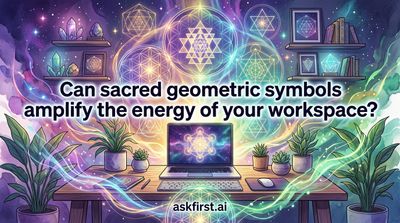
The Psychological Power of Sigils: Decoding Mental Performance
Ritualistic sigils are symbolic representations of intent that have been utilized for millennia across diverse cultures. While often associated with esoteric traditions, their function aligns remarkably well with modern cognitive science, specifically concerning the mechanisms of priming, intent manifestation, and selective attention. At their core, sigils serve as external anchors for internal mental states, potentially revolutionizing how one approaches personal productivity and focus.
The Neuroscience of Symbolic Anchoring
From a psychological perspective, a sigil operates as a potent visual trigger for the reticular activating system (RAS). The RAS is the part of the brain that filters information, allowing the mind to focus on what it deems important while ignoring background noise. When an individual creates a unique sigil for a specific productivity goal, they are essentially programming their brain to recognize that symbol as a signal for deep, undistracted work. By focusing on the symbol, the user facilitates a transition into a 'flow state,' the psychological condition where peak performance and creative output occur.
Mechanisms for Enhanced Productivity
To leverage these symbolic tools for daily efficiency, one can follow these structural guidelines:
- Intent Formalization: The process begins by clearly articulating a goal, such as "I am focused and efficient." This clarity alone reduces cognitive dissonance.
- Visual Compression: The goal is distilled into a non-representational image. This acts as a shorthand for the subconscious, bypassing linguistic analysis which can often lead to overthinking.
- The Priming Effect: Displaying the sigil in a workspace acts as a constant reminder of the set intent. This utilizes "priming," a phenomenon where exposure to a stimulus influences a subsequent response, keeping the brain aligned with the primary objective throughout the day.
Busting Common Myths
There is a common misconception that sigils are inherently "supernatural" or mystical. However, the true power lies in the psychology of self-directed neuroplasticity. By deliberately associating a shape with a specific productive output, the user is building a neural pathway. The more frequently the sigil is paired with deep work sessions, the faster the brain learns to switch into a productive gear upon viewing the symbol.
Practical Application for Daily Success
- Design: Create a simple, abstract mark that feels representative of the goal.
- Association: Utilize this symbol strictly during deep work sessions, ensuring the brain never links it to distraction or leisure.
- Consistency: Consistent application creates a strong Pavlovian response. Over time, the mere sight of the sigil can initiate a physiological relaxation response, lowering stress and clearing mental clutter.
In conclusion, whether viewed as an ancient artistic tool or a modern psychological hack, sigils provide a robust framework for managing intent and attention. By externalizing cognitive goals into tangible visual forms, individuals can achieve a significantly higher degree of mental clarity, focus, and sustained daily productivity.