The Intersection of Numerology and Interpersonal Dynamics
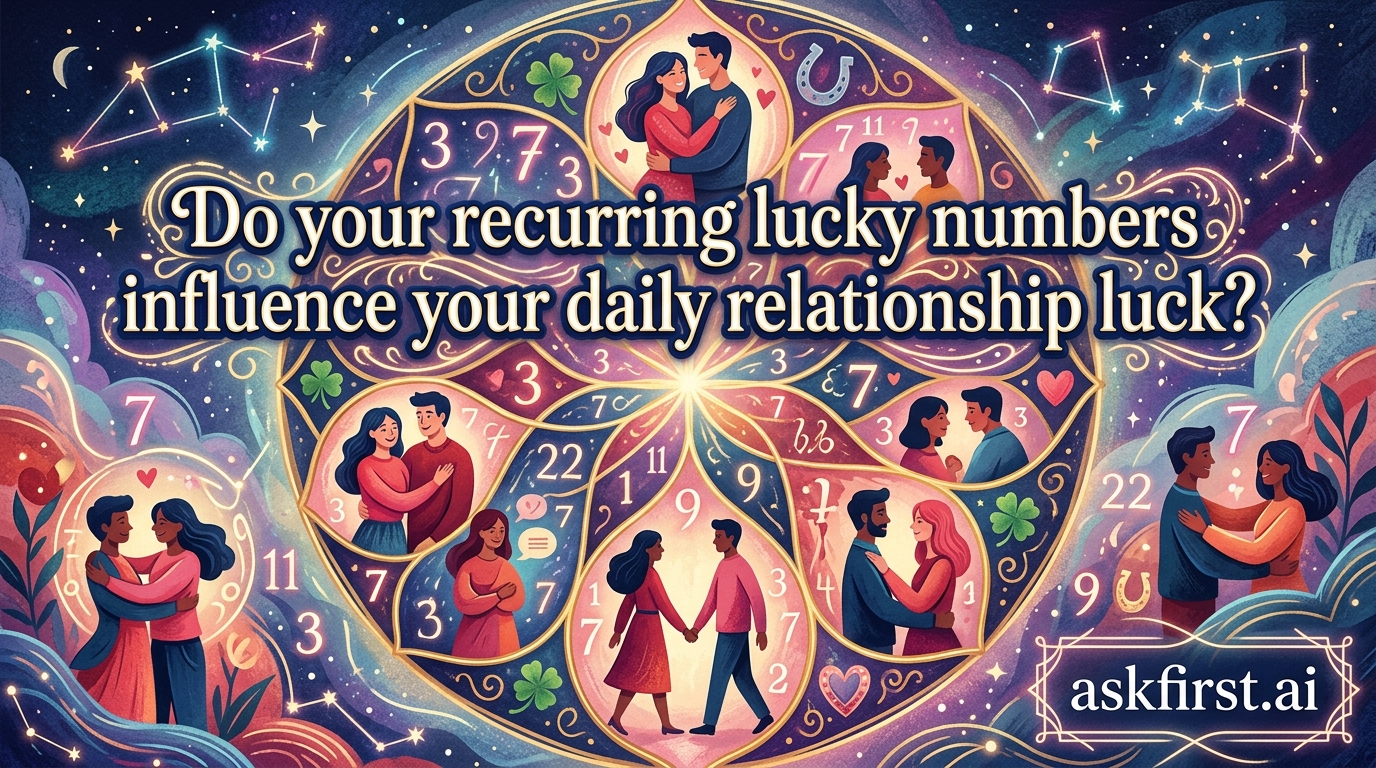
The concept that recurring "lucky" numbers can influence daily relationship luck is a subject that bridges the gap between numerology, psychological cognitive biases, and subjective experience. While there is no empirical, peer-reviewed scientific evidence to suggest that specific digits possess inherent metaphysical properties capable of altering human attraction or social outcomes, the practice remains a significant cultural and psychological phenomenon.
1. The Psychological Mechanism: The Baader-Meinhof Phenomenon
The belief that recurring numbers influence your life is largely rooted in the Frequency Illusion, also known as the Baader-Meinhof phenomenon. Once an individual designates a set of numbers as "lucky," the brain begins to selectively filter sensory input to notice these figures in everyday environments.
- Pattern Recognition: Humans are evolutionarily wired to seek patterns. When you view a number as lucky, you are more likely to associate it with positive emotional states.
- Confirmation Bias: If you see your "lucky number" on a digital clock or a license plate before a positive interaction with a partner, you subconsciously attribute the success to the number, reinforcing the belief system.
2. The Role of Numerology in Relationships
In historical and esoteric traditions, numerology—the study of the occult significance of numbers—is often applied to interpersonal compatibility. Practitioners calculate the "Life Path Number" of both partners by summing the digits of their birth dates.
- The Calculation: For instance, if a person is born on June 20, 1996, the digits are added (6+2+0+1+9+9+6 = 33; 3+3 = 6).
- Application: Proponents argue that comparing these numbers helps predict relationship friction, communication styles, and long-term harmony. While this serves as a diagnostic tool for believers, it functions more as a psychological framework for self-reflection than a predictive science.
3. Practical Guide: Using "Lucky" Numbers as Psychological Anchors
If you choose to integrate lucky numbers into your relationship, they are best utilized as psychological anchors rather than magical talismans. Here is how to use them effectively:
- Shared Rituals: Create a shared "lucky number" with a partner. Use it for small, intentional moments, such as meeting at a specific time or choosing table numbers. This fosters a sense of "us vs. the world" and strengthens the bond through shared secret meaning.
- Mindfulness Triggers: Treat the appearance of your lucky number as a prompt for mindfulness. When you see it, take a moment to express gratitude for your partner. This Pavlovian conditioning shifts your focus toward positivity.
- Decision Making: Use numbers to break decision-making paralysis. If you cannot decide on a venue, let the number dictate the choice. This reduces stress, which indirectly improves your relationship luck by minimizing conflict.
4. Pros and Cons of Numerical Belief
- Pros: Increased intentionality, improved mindfulness, and the creation of unique, bonding rituals that act as "social glue."
- Cons: Potential for superstitious dependency, where an individual feels anxious or "cursed" if the number does not appear, or when they over-rely on external signs rather than active communication.
5. Future Trends
As we move further into the digital age, algorithms often curate our experiences based on data points. We are seeing a rise in "Tech-Numerology," where individuals look for patterns in timestamps, social media engagement numbers, and digital interactions. While these are merely data points, the human desire to imbue them with meaning remains a constant, evolving aspect of the modern human experience. Ultimately, your "luck" is a reflection of your perception; numbers are simply the lens through which you choose to view it.