The Phenomenon of Recurring Dreams: Psychological and Symbolic Perspectives
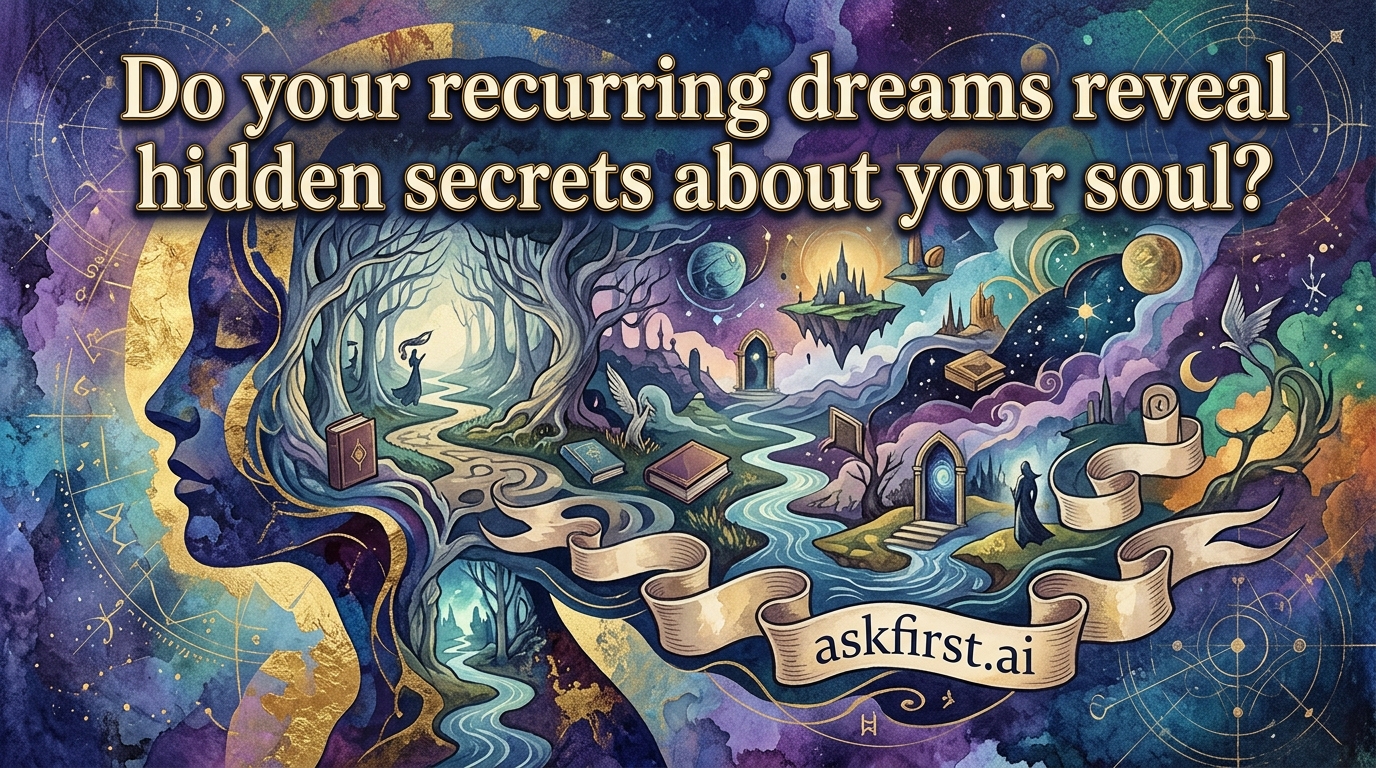
Recurring dreams—repetitive narrative sequences that replay throughout an individual’s life—have long been a subject of intense fascination in both clinical psychology and metaphysical philosophy. While the notion that they reveal "hidden secrets about your soul" is a subjective interpretation rooted in spiritualism, scientific inquiry offers a more grounded, albeit equally complex, explanation involving memory consolidation, emotional processing, and subconscious problem-solving.
Historical and Psychological Context
The study of recurring dreams gained prominence through the work of Sigmund Freud and Carl Jung. Freud famously posited that dreams are the "royal road to the unconscious," suggesting that recurring themes represent repressed desires or unresolved childhood conflicts. Conversely, Jung argued that recurring dreams are manifestations of the "Collective Unconscious," suggesting that the psyche uses archetypal imagery to signal a state of imbalance or an urgent need for psychic integration.
In modern cognitive science, the prevailing theory is the Continuity Hypothesis, which posits that dreams are a reflection of our waking concerns. When a person experiences a recurring dream, it often indicates that the brain is attempting to process a "stuck" emotional state or a persistent real-world stressor that has not yet been resolved or understood.
Why Dreams Recur: The "Unfinished Business" Theory
Recurring dreams act as a psychological alarm system. They often center on themes of being chased, losing teeth, public failure, or inability to move. These are not necessarily mystical revelations, but rather metaphorical representations of emotional stagnation.
- Emotional Regulation: If a traumatic event remains unprocessed, the brain may repeatedly activate the associated neural pathways during REM sleep, attempting to integrate the memory into long-term storage.
- Cognitive Problem Solving: The brain uses the dream state to simulate "what-if" scenarios. A recurring dream about a specific conflict may be the mind’s way of practicing a resolution to a real-life dilemma.
- Physiological Triggers: Sometimes, recurring dreams are linked to physical sensations—such as sleep apnea or environmental noises—which the brain interprets through the lens of a familiar nightmare narrative.
Practical Guide: Decoding Your Recurring Dreams
If you wish to explore the "secrets" your dreams hold, follow this systematic approach:
- Step 1: Document the Narrative. Keep a dream journal by your bed. Write down the dream immediately upon waking, focusing on the emotions felt rather than just the visuals.
- Step 2: Identify the Trigger. Look for correlations between the dream and your waking life. Does the dream appear during periods of high stress? Does it occur when you are avoiding a difficult conversation?
- Step 3: Analyze the Archetypes. If you dream of being chased, ask yourself: "What am I running from in my daily life?" If you dream of being unprepared for an exam, ask: "Where do I feel like an imposter?"
- Step 4: Active Imagination. Apply the Jungian technique of "Active Imagination," where you consciously re-enter the dream state while awake and dialogue with the recurring characters to seek a resolution.
Pros and Cons of Dream Interpretation
- Pros: Increased self-awareness, emotional catharsis, and the ability to identify hidden anxieties before they manifest as physical burnout.
- Cons: Over-analyzing can lead to unnecessary fixation. It is vital to distinguish between symbolic guidance and clinical conditions like PTSD, which may require professional therapeutic intervention.
Future Trends and Conclusion
As neuro-imaging technology advances, we are moving toward a biological map of dreaming. While we may never "prove" the existence of the soul through dreams, we are proving that the mind is a highly active, self-correcting system. Whether you view recurring dreams as messages from your soul or as the brain’s "debugging" process, they remain an invaluable tool for self-reflection. By treating them as data points rather than omens, you can transform these repetitive cycles into a roadmap for personal growth and psychological maturity.