Mastering the Mind: Applying Hermetic Laws to Corporate Strategy
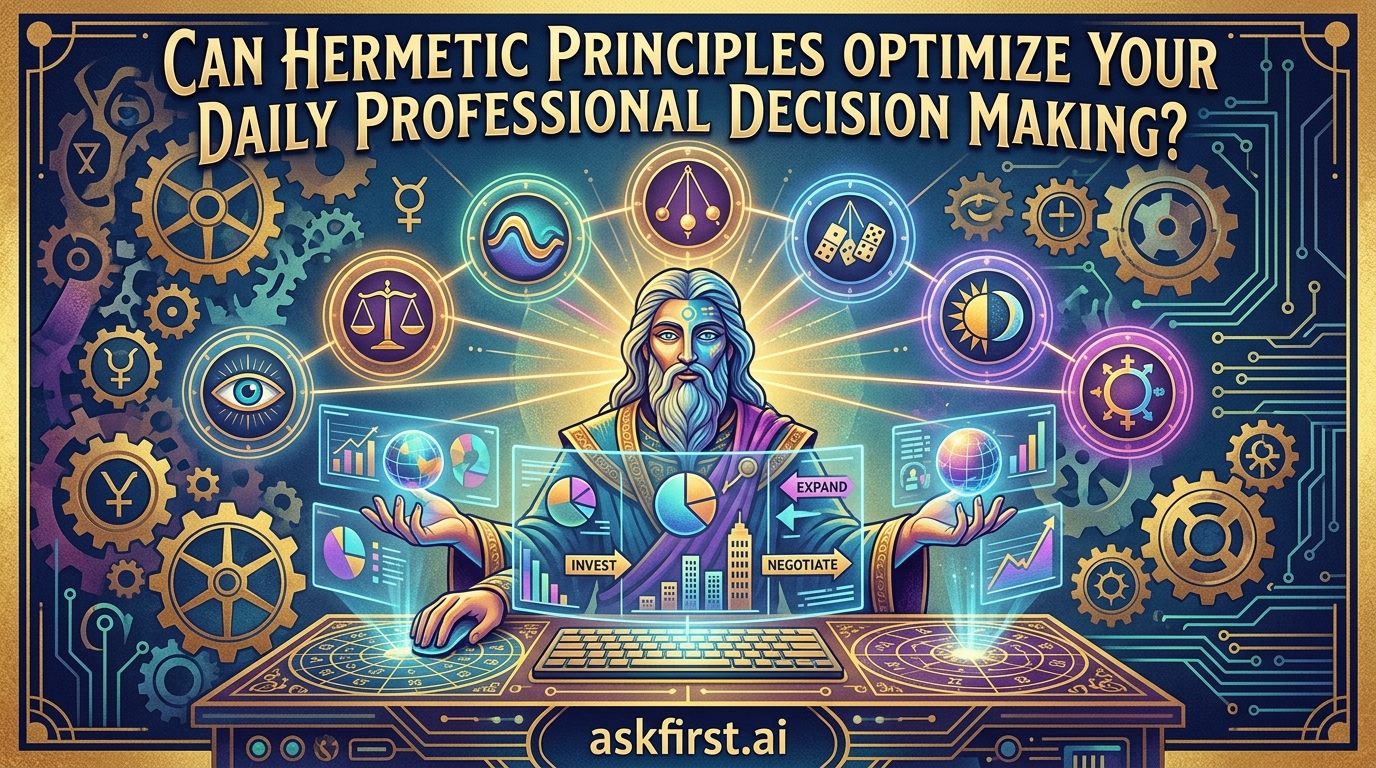
Ancient wisdom, long relegated to the fringes of esoteric study, offers surprisingly robust frameworks for modern professional life. The Hermetic tradition, encapsulated in the Kybalion, provides seven universal principles that function as psychological and strategic tools. By integrating these axioms, professionals can refine their decision-making processes, emotional intelligence, and long-term planning.
The Principle of Mentalism: Reality Is Created in Thought
The fundamental Hermetic tenet, "The All is Mind; the Universe is Mental," posits that professional outcomes originate within one's internal framework. In a business context, this means that every strategy, product, or negotiation is a manifestation of an underlying mental model. Professionals who master this recognize that changing a corporate culture or overcoming a market hurdle requires shifting the mental perspective of the collective or individual leadership before physical changes can occur.
The Principle of Correspondence: Patterns Across Scales
"As above, so below; as below, so above." This suggests that universal laws operate across all scales, from international markets to personal team dynamics. When facing complex project hurdles, applying this principle involves identifying fractal patterns. If a business unit is suffering from internal friction, it often reflects a misalignment in executive vision. Solving the micro-problem of communication often resolves the macro-problem of structural efficiency, provided one observes the same logic at play in both spheres.
The Principle of Vibration: Controlling the Professional Frequency
"Nothing rests; everything moves." Emotional intelligence is essentially the management of vibrational states. When a team operates in a state of fear or stagnation, productivity drops. Successful leaders use this principle to consciously shift the environment from one of static rigidity to one of innovation. By altering the focus of a meeting—shifting from "problem-based" vibrations to "solution-oriented" rhythms—the entire trajectory of a project can be elevated.
The Principle of Polarity and Rhythm: Managing Change
Business is a cyclical endeavor of expansion and contraction. The Principle of Polarity states that everything has two poles, and the Principle of Rhythm notes that everything flows like a pendulum. Expert decision-making involves understanding that during a market downturn (a downward swing), the seeds of the next upturn are being sown. Rather than reacting with panic, an optimal decision-making framework accounts for these swings, ensuring that resources are preserved during contractions so that the organization can capitalize on the inevitable return of the swing.
Integrating the Laws into Daily Workflow
To optimize professional decision-making, start by mapping current challenges against these principles. If a project is stalling, ask: Is the vibration too low? Is the rhythm of our output sustainable? By viewing professional life through this ancient, objective lens, one detaches from emotional reactivity and gains a clear, strategic advantage that transcends temporary market trends.