Beyond The Stars: Decoding The Truth About Astrological Compatibility
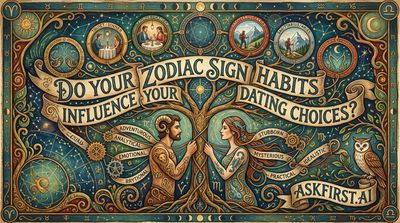
For centuries, humanity has turned to the celestial movements to decipher the complexities of human connection. The question of whether zodiac signs determine romantic compatibility remains one of the most persistent inquiries in modern relationships. While pop astrology suggests that certain signs are destined for harmony or conflict, the scientific and psychological reality is significantly more nuanced.
The Psychological Underpinnings of Astrology
Astrology operates primarily through the Barnum Effect, a psychological phenomenon where individuals believe generic personality descriptions are highly accurate and tailor-made for them. When people read that a Taurus is "stubborn" or a Scorpio is "intense," they often engage in confirmation bias, selectively noticing traits that align with their sign while ignoring contradictions. From a psychological perspective, compatibility is determined by:
- Shared Values and Goals: Successful long-term partnerships thrive on fundamental alignment regarding life vision.
- Attachment Styles: Attachment theory, developed by John Bowlby, suggests that romantic success is rooted in how individuals bond, regardless of their celestial birth chart.
- Communication Patterns: The ability to resolve conflict and express needs is a learned behavior, not a planetary influence.
Scientific Reality vs. Cultural Tradition
There is no empirical evidence to support the claim that planetary positions at the time of birth influence human personality or relationship success. Scientific studies, most notably those conducted by researchers like Shawn Carlson in 1985, have rigorously tested astrological predictions against objective criteria and found no statistically significant correlation. In the realm of sociology, "astrological compatibility" is often viewed as a social tool. It provides a shorthand framework for partners to discuss personality differences, acting more as a therapeutic medium for communication than as a deterministic predictive model.
The Role of Compatibility Tools
Instead of celestial alignment, relationship experts prioritize the Big Five personality traits—Openness, Conscientiousness, Extraversion, Agreeableness, and Neuroticism. Research consistently shows that while opposites may initially attract, similarity in personality traits—specifically high levels of Agreeableness—is the strongest predictor of relationship longevity. If two people identify as "compatible" via their horoscopes, they are essentially practicing a form of self-fulfilling prophecy: by believing they are meant for each other, they may subconsciously invest more effort into the relationship's success.
Conclusion: A Narrative of Choice
Ultimately, zodiac signs serve as a captivating lens through which people view their romantic experiences. They offer a language to navigate personal traits and interpersonal dynamics. However, the true architect of an ideal romantic partnership is not found in the stars, but in the conscious, daily choices made by the individuals involved. Compatibility is an active process of negotiation, empathy, and growth rather than a static decree written in the heavens.