The Hidden Language of Prestige
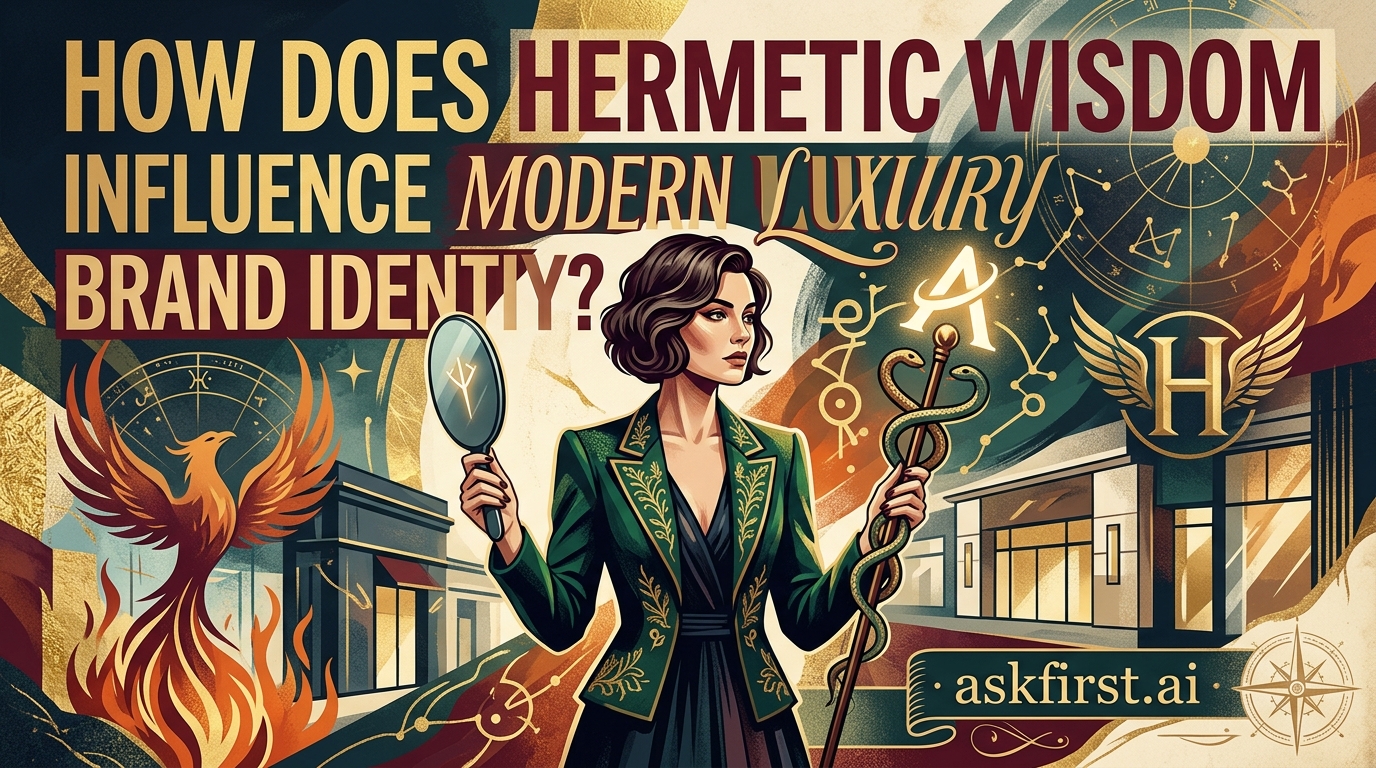
Modern luxury brands function as secular temples, and their identity is often rooted in Hermetic principles—the ancient esoteric tradition attributed to Hermes Trismegistus. The core Hermetic axiom, 'As above, so below,' serves as the blueprint for high-end branding. This principle suggests that a luxury brand creates a bridge between the celestial (the ideal, the aspirational, the eternal) and the terrestrial (the physical product, the consumer experience, the status symbol).
The Principle of Correspondence
Luxury houses often craft narratives that rely on the 'Principle of Correspondence.' By framing a product as an artifact of a 'higher' order—whether through artisanal mastery, rare materials, or historical lineage—brands elevate mundane items into objects of veneration. Consider the meticulous storytelling behind heritage brands like Hermès or Patek Philippe. They do not sell products; they curate a mythos that aligns the consumer's self-image with a higher state of being. This mirrors the Hermetic goal of spiritual refinement, where the object acts as a catalyst for individual transformation.
The Alchemy of Desire
Alchemical transformation is perhaps the most potent influence of Hermetic thought in luxury marketing. In alchemy, the transmutation of lead into gold is a metaphor for the evolution of the soul. Modern luxury marketing operates on a similar psychological alchemy. The 'lead' is the raw commodity, while the 'gold' is the brand identity, value, and exclusivity conferred upon it. By controlling scarcity and maintaining strict gatekeeping of their distribution channels, luxury houses utilize the alchemical process of purification to ensure their products remain untarnished by mass market saturation.
Sacred Geometry and Visual Branding
Design aesthetics in luxury often lean into 'sacred geometry' and balanced proportions, concepts deeply embedded in the Hermetic tradition. Minimalist logos, the Fibonacci sequence in retail architecture, and the precise golden ratios used in jewelry and handbag design are not accidental. These mathematical harmonies trigger an intuitive sense of beauty and 'rightness' in the human brain. This alignment creates a subconscious feeling of stability and divinity, allowing the brand to appear as an unchanging anchor in an uncertain, shifting world.
The Principle of Mentalism
Finally, the 'Principle of Mentalism'—that the universe is mind-created—is the foundation of brand equity. A brand is essentially a shared mental construction sustained by collective belief. Luxury houses excel at managing this mental landscape, ensuring that the 'aura' of the brand remains consistent across all touchpoints. Through visual symbols, sensory retail environments, and evocative advertising, they occupy a permanent, sacred space in the consumer’s imagination, effectively proving that the most valuable part of any luxury asset is the idea of it held in the mind.