The Psychological Architecture of Symbols
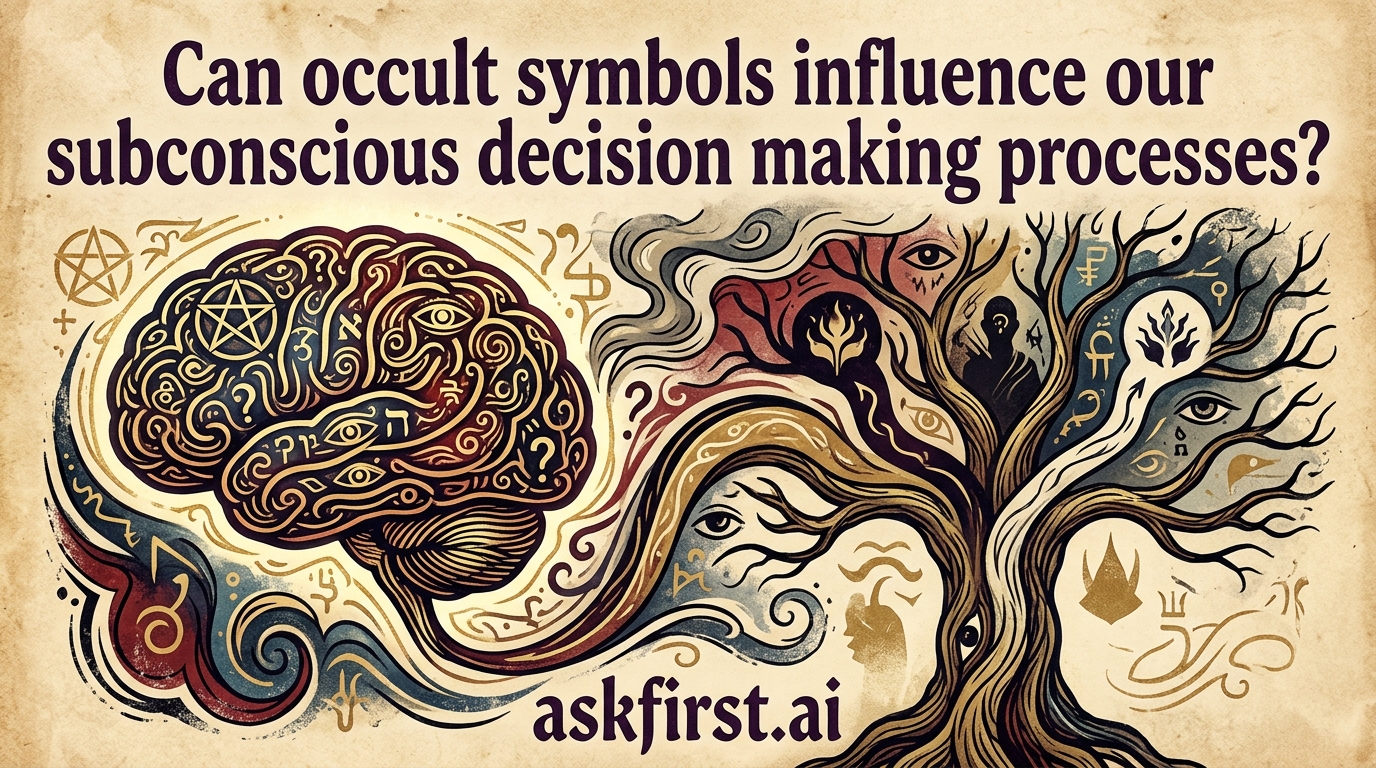
Symbols are more than mere visual shorthand; they are potent linguistic triggers that reside deep within the human collective unconscious. Occult symbols, often rooted in ancient geometry, mysticism, and archetypal figures, exert a psychological influence that functions independently of conscious belief. This phenomenon, known as priming, suggests that exposure to specific visual stimuli can bias subsequent thoughts and behaviors without the observer realizing the connection.
How Priming Operates
Research in behavioral psychology demonstrates that the brain consistently processes visual symbols through associative memory networks. When a person encounters a shape—such as a pentagram, a hexagram, or specific alchemical sigils—the brain retrieves emotional and historical connotations linked to those forms.
- Archetypal Resonance: Many occult symbols rely on universal geometric constants that appear throughout nature, known as sacred geometry. These forms trigger biological familiarity, making the brain more receptive to the underlying message associated with the symbol.
- Subliminal Association: By embedding these shapes into marketing or design, creators can invoke feelings of mystery, authority, or stability. A consumer might choose a product not for its utility, but because its logo utilizes patterns that trigger a subconscious sense of 'ancient wisdom' or 'destined success.'
The Role of Cognitive Biases
Human decision-making is heavily reliant on cognitive shortcuts or heuristics. Occult symbols often tap into the Authority Bias and the Halo Effect. If a symbol is perceived as having historical significance or hidden depth, the human mind often assigns a higher value to the entity associated with that symbol. This bypasses critical analysis, pushing the decision-making process toward a more emotional, intuitive state rather than a logical one.
Examining the Evidence
Studies on visual semiotics and neuro-marketing indicate that human reaction times and preference ratings are altered when exposed to imagery carrying strong cultural or symbolic weight. For instance, the deliberate use of symmetry and repetitive geometric patterns in architecture or branding can create a sense of 'hallowed space' or 'institutional power,' which makes individuals more likely to comply with instructions or favor a specific brand identity. This process is not 'magic' in the supernatural sense, but rather a sophisticated application of evolutionary psychology where the brain prioritizes patterns that suggest survival advantages or social hierarchies.
Conclusion: The Informed Observer
While occult symbols do not possess innate mystical powers to control human will, they function as high-efficiency signals that shape perception. By recognizing the symbolic architecture within our environment, individuals can move from being passive subjects of these influences to active, conscious participants in their own decision-making processes. Understanding the mechanics of these symbols provides a shield against manipulative visual rhetoric, allowing for greater cognitive autonomy in an image-saturated world.