The Scientific Reality vs. Celestial Archetypes
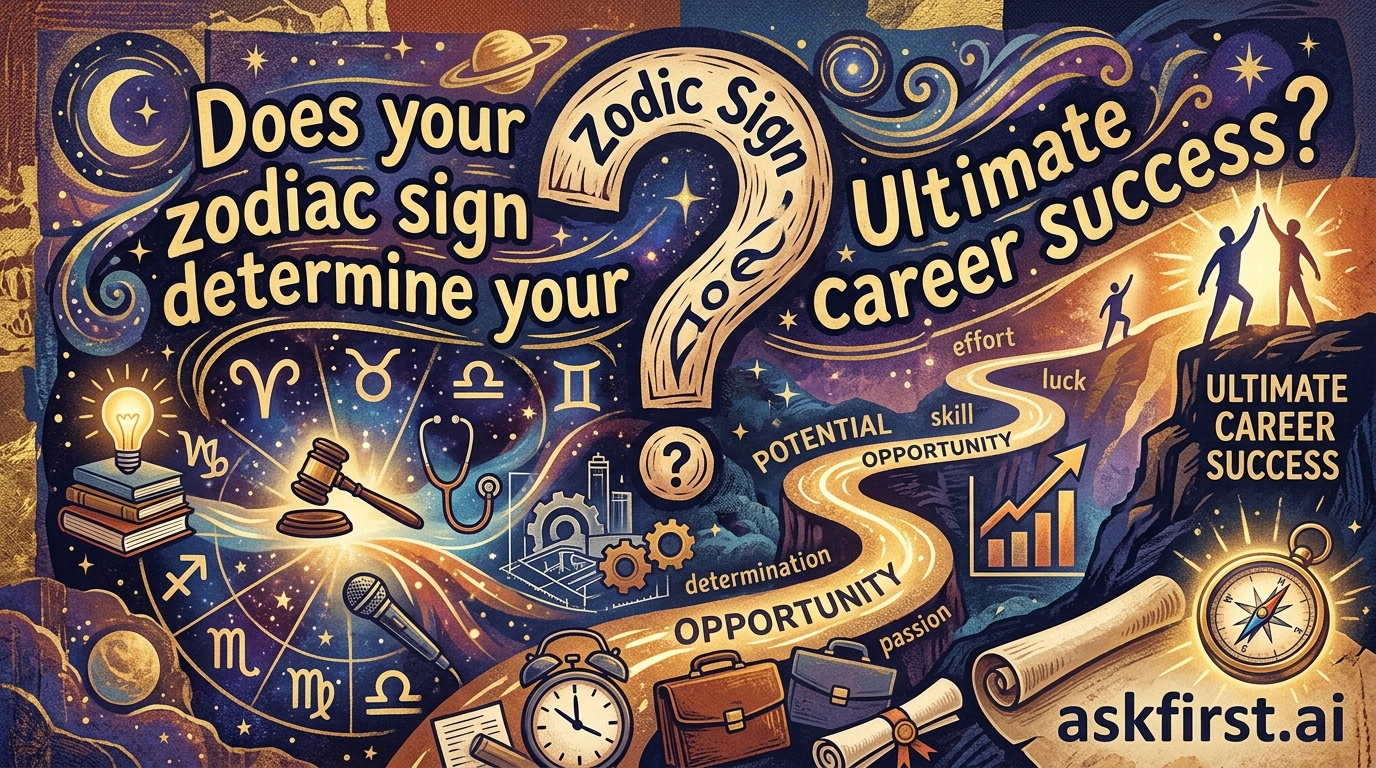
Many individuals often seek guidance from the stars when navigating the complexities of career progression. While the allure of astrological archetypes is compelling, modern empirical science offers a distinct perspective. Zodiac signs are based on the position of the sun at the time of birth, a practice dating back thousands of years. However, when evaluating professional success, longitudinal data and psychological assessments provide far more reliable metrics.
The Role of Psychological Traits
Research in industrial-organizational psychology suggests that career success is largely determined by the Big Five personality traits: openness, conscientiousness, extraversion, agreeableness, and neuroticism. These traits, combined with environmental factors, education, and social networks, constitute the foundation of professional trajectory.
- Conscientiousness: Highly linked to productivity and goal achievement across all sectors.
- Openness: Correlates with innovation and the ability to adapt to changing market dynamics.
- Extraversion: Frequently associated with leadership roles that require high levels of social interaction.
Challenging the Myth
There is no peer-reviewed evidence suggesting that individuals born under a specific sign, such as Leo or Capricorn, possess an innate advantage in executive leadership or wealth accumulation. Statistically, the distribution of high-achievers is uniform across all twelve signs. The perceived correlation between signs and careers often falls under the Barnum Effect, where individuals identify with vague, universal personality descriptions that could apply to anyone. For instance, labeling a specific sign as 'natural-born leaders' overlooks the fact that leadership is a skill honed through mentorship, failure, and deliberate practice.
Practical Factors of Success
Professional success is far more accurately predicted by the following measurable indicators:
- Cognitive Ability: General intelligence remains one of the strongest predictors of complex job performance.
- Emotional Intelligence (EQ): The ability to manage emotions and navigate social complexities is crucial in modern corporate environments.
- Skill Acquisition: Mastery of high-demand technical or soft skills significantly outweighs the influence of one's birth date.
Conclusion: Navigating Your Own Path
While reading a horoscope can be a source of personal reflection or entertainment, relying on it for strategic career planning is not supported by data. Success is a dynamic outcome of personal agency, environmental opportunity, and consistent effort. Instead of looking to the stars to dictate potential, focus on cultivating a growth mindset, building high-value skills, and fostering a strong professional network. True career mastery is an inside-out process, driven by the individual's dedication and strategic choices rather than the celestial alignment at the moment of birth. By shifting focus from astrology to self-improvement, individuals gain agency over their professional future.