The Intersection of Sexuality and Spirituality
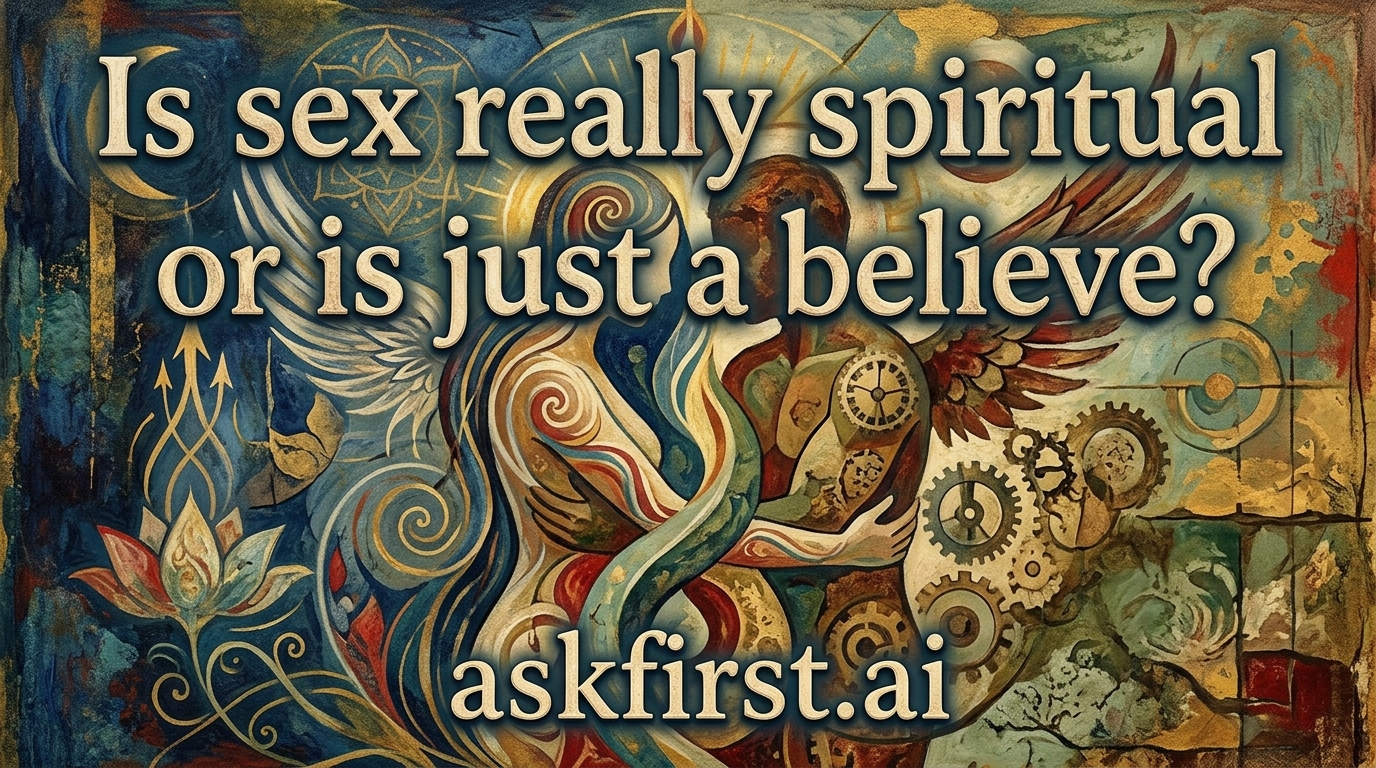
The question of whether sex is "spiritual" or merely a biological function is a subject that traverses thousands of years of human philosophy, theology, and evolutionary biology. There is no singular, objective answer; rather, the perception of sex as a spiritual act is a cultural construct that varies significantly across different belief systems, while the physiological aspect remains an undeniable biological reality.
Historical and Religious Perspectives
Throughout history, the dichotomy between the physical and the spiritual has been viewed through different lenses:
- Tantric Traditions: Originating in India, Tantra views sexual energy as a manifestation of the divine. In this framework, the physical act is a vehicle for transcending the ego, facilitating a state of "oneness" with the universe. It is not viewed as a distraction from the spirit, but as an essential pathway to enlightenment.
- Abrahamic Traditions: Conversely, many interpretations within Christianity, Judaism, and Islam have historically viewed sex through the lens of morality, procreation, or covenantal commitment. While often framed as a "sacred union" between spouses, it is frequently distinguished from the "higher" spiritual life, sometimes viewed as a potential source of temptation that requires regulation.
- Modern Secular Spirituality: In contemporary Western society, many individuals decouple spirituality from organized religion. They view sex as spiritual when it involves profound emotional intimacy, vulnerability, and the dissolution of self-boundaries, often citing the release of hormones like oxytocin—the "bonding hormone"—as a biological basis for this spiritual-like connection.
The Biological Reality
From a strictly scientific perspective, sex is a reproductive strategy driven by evolutionary imperatives. The release of dopamine, oxytocin, and vasopressin creates intense feelings of euphoria and attachment. Critics of the "spiritual" view argue that what people label as a "spiritual experience" is simply the brain’s neurochemical reward system functioning as intended to ensure pair-bonding and species survival.
Is It a Belief or a Reality?
Whether sex is "spiritual" is ultimately a subjective experience. If an individual defines spirituality as an experience of profound connection, transcendence, or meaning-making, then sex is arguably one of the most potent ways humans achieve this.
- The Argument for Belief: If one defines spirituality as an interaction with the supernatural or a divine realm, then the spiritual nature of sex is a belief system—a framework imposed upon a biological act to imbue it with higher moral or metaphysical significance.
- The Argument for Reality: If one defines spirituality as "human depth" or "interconnectedness," then the spiritual nature of sex is an emergent property of the human consciousness. In this view, the intensity of the experience is so profound that it naturally transcends the mundane, making it "spiritual" by definition.
Practical Implications
For those seeking to integrate spirituality into their sexual lives, the following steps are often practiced:
- Mindfulness: Removing distractions to focus entirely on the present moment and the partner.
- Intention Setting: Entering the act with a conscious desire for connection rather than mere physical release.
- Vulnerability: Engaging in radical honesty and emotional openness, which often triggers the psychological state commonly referred to as "spiritual."
Future Trends
As society continues to move away from rigid religious dogmas, the definition of "spiritual sex" is becoming increasingly personalized. We are seeing a rise in "somatic spirituality," where the focus is on body-based awareness and the healing potential of sexual energy. Whether one views it as a cosmic connection or a chemical surge, the consensus remains that sex is a uniquely powerful human experience that touches the deepest facets of our identity.