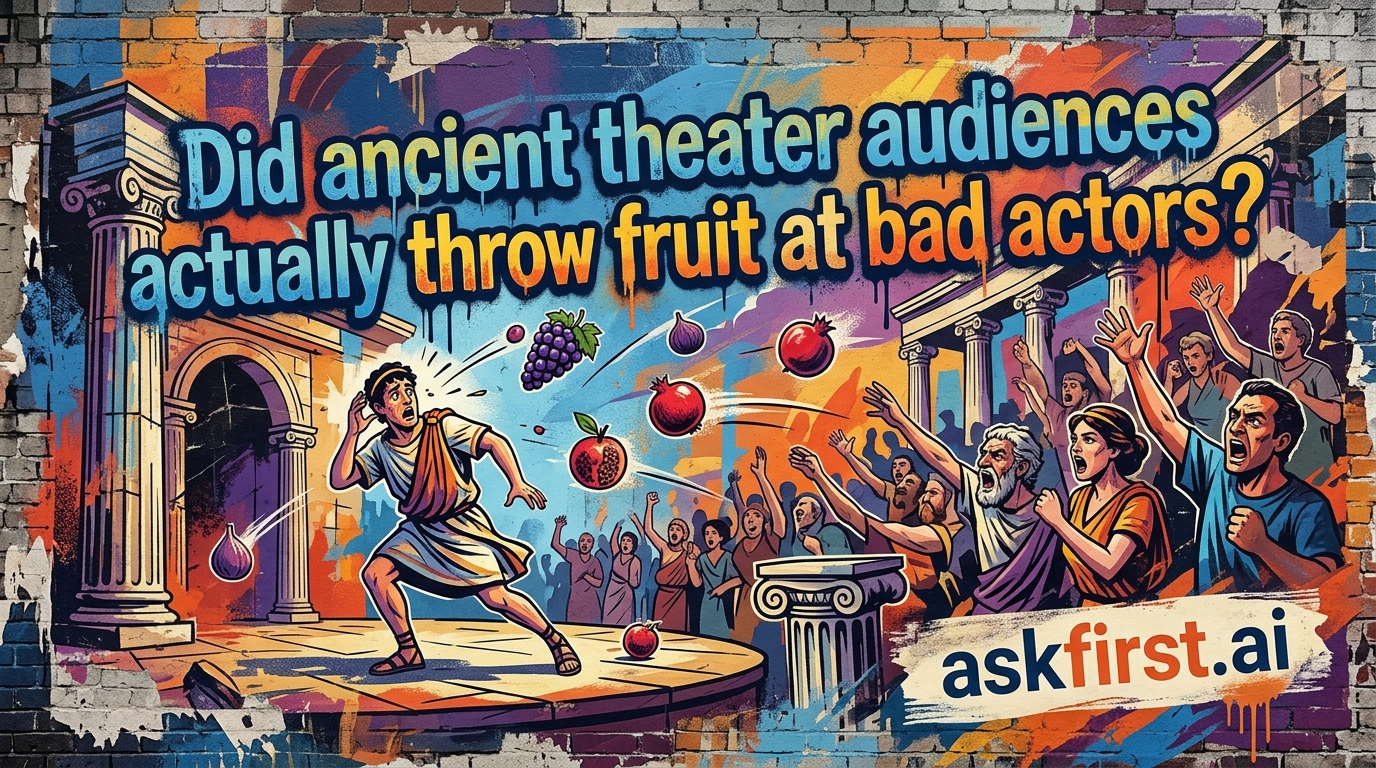
The Myth of Rotten Tomatoes: What Did Ancient Audiences Really Throw?
Modern culture frequently depicts the theater of the past as a volatile arena where disgruntled patrons launched rotten produce at sub-par performers. This image of the "hook" pulling a bad actor off stage or a barrage of decaying vegetation has become a staple of slapstick comedy tropes. However, historical evidence presents a more nuanced reality regarding audience behavior in classical antiquity.
The Greek and Roman Perspective
In Ancient Greece, specifically during the festival of the Great Dionysia, theater was a religious and civic ritual. The environment was highly structured, and audiences were generally expected to behave with a degree of decorum befitting a sacred event. While accounts exist of boisterous behavior, historical records from authors like Plutarch or Aeschines do not support the systematic throwing of food. Greeks were far more likely to express their displeasure through vocal protests, rhythmic stomping, or shouting insults at the performers, rather than through physical projectiles like fruit.
Roman theater, while significantly rowdier and more populist than its Greek predecessor, still prioritized the performance over target practice. Although Romans were notoriously vocal—sometimes hissing, jeering, or demanding specific segments of a play be repeated—the throwing of food was not a codified or common practice. If an actor performed poorly, they risked professional ostracization and loss of favor with their troupe or patrons, rather than being pelted with groceries.
Origins of the Myth
So, where did the "rotten fruit" image originate? The trope seems to be a conflation of later developments in medieval and early modern European street performance. During the Middle Ages, itinerant players and performers working in town squares faced audiences that were often much less formal than the ticketed spectators of antiquity. In these crowded, unstructured public settings, physical outbursts were more common. By the 18th and 19th centuries, the caricature of the "rotten produce" barrage became a literary device, popularized in cartoons and theatrical plays to symbolize universal disapproval.
Cultural Signifiers
- Vocal Disapproval: The primary tool for an unhappy audience was noise. Hissing was a common sign of disdain in Roman times, effectively drowning out the performers.
- Economic Consequences: Actors were tied to guilds or wealthy sponsors. A bad performance meant a lack of future work, which served as a more effective deterrent than being hit by a tomato.
- Logistical Reality: Tomatoes, specifically, are an anachronism for antiquity. Native to the Americas, they were not introduced to Europe until the 16th century, making it physically impossible for an ancient Roman to throw one.
In conclusion, the image of ancient audiences tossing fruit is largely a modern invention. The historical reality was a dynamic, loud, and intense social dialogue between actors and spectators, characterized by verbal feedback rather than the launching of dinner ingredients.