The Psychology of Interruption: Why We Chatter During Movies
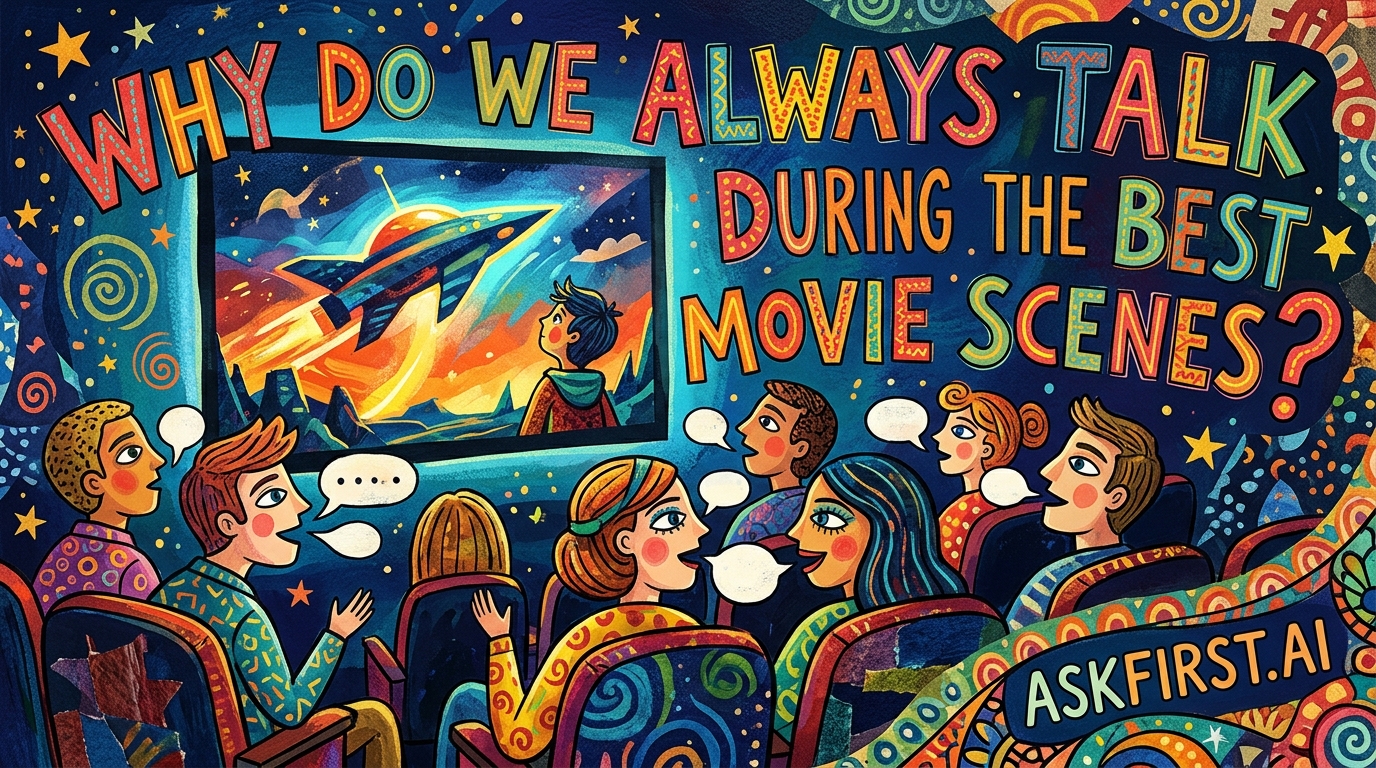
Humans are fundamentally social animals, and this biological drive often clashes with the modern cultural ritual of quiet movie viewing. When the screen demands total focus during a climactic or high-tension moment, the urge to whisper, comment, or share a reaction becomes nearly irresistible for many individuals.
The Need for Shared Experience
Psychologically, shared attention creates a stronger bond between individuals. When viewers watch a movie, the brain experiences "neural coupling" with the characters, but there is also a secondary, powerful need for "social validation" with the people sitting nearby. Sharing a comment about a scene is a way of saying, "I am here, you are here, and we are experiencing this together." This act of verbalizing a reaction transforms a passive solo activity into an active social performance, reinforcing the group dynamic.
The Anxiety of High-Tension Scenes
Interestingly, the most common time for disruptions is during the most intense movie scenes. This is not coincidental; it is a subconscious coping mechanism. When a scene becomes incredibly stressful, sad, or shocking, the body experiences a rise in cortisol and physiological arousal. Talking serves as a "tension-release valve." By making a comment, even a trivial one, the viewer interrupts the intensity of the scene, effectively grounding themselves back in the safety of their current environment. It is a way of distancing the self from the high-stakes emotional reality of the film.
The Illusion of Control
In a darkened theater or a quiet living room, the viewer is entirely at the mercy of the director and the editor. The film controls the pacing, the volume, and the emotional trajectory. For some, this lack of control can feel restrictive. By talking during the film, the viewer reclaims a sense of agency. The commentary effectively punctures the immersive bubble, reminding the self and others that the viewer is an active participant in the environment rather than a passive observer. It is a way to prove that the individual is not completely consumed by the spectacle.
Cognitive Overload
Finally, there is the phenomenon of cognitive processing. When a movie scene is visually and auditorily complex, the brain tries to categorize and synthesize the information. For some, verbalizing these thoughts is an essential part of the cognitive processing cycle. These viewers are not intentionally trying to be disruptive; they are "externalizers" who need to hear their own thoughts out loud to fully understand or appreciate the nuances of the narrative. This suggests that the impulse to talk may be a byproduct of how different brains prioritize information and engage with complex stimuli during active consumption.