The Art of Hand-Painted Cinema
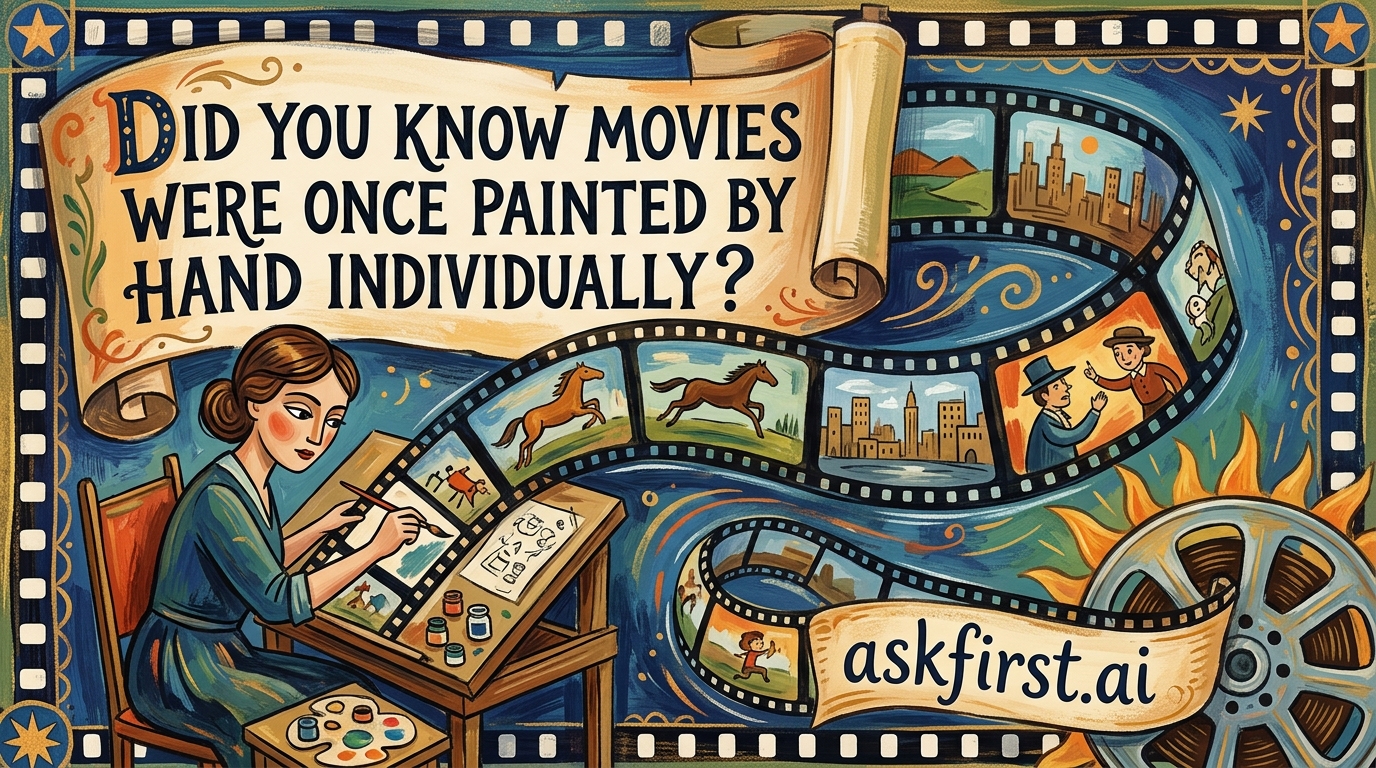
In the infancy of motion pictures, the absence of color film technology did not stop visionary filmmakers from seeking vibrant visuals. Between the late 1890s and the 1920s, the process known as hand-coloring was a meticulous craft employed to bring monochromatic films to life. Each individual frame of a celluloid strip was painted using tiny brushes, stencils, or specialized dyes. Since a standard film reel consists of 16 to 24 frames per second, the labor required to color a feature-length production was nothing short of monumental.
Historical Context and Methods
The most prominent practitioner of this art was Georges Méliès, the French illusionist and director. His studio employed dozens of workers, primarily women, tasked with painting hundreds of thousands of frames by hand. This was not merely a cosmetic choice; it served as a narrative tool to differentiate objects, highlight magical transitions, or evoke specific moods. Several distinct techniques emerged:
- Hand-Painting: Artists applied dyes directly to the film surface frame by frame. This resulted in a soft, impressionistic aesthetic.
- Stencil Coloring: Introduced by Pathé Frères, this process involved cutting stencils for each color. This allowed for more precise, reproducible results and faster production times.
- Tinting and Toning: Often combined with hand-painting, tinting involved dipping entire scenes into dye baths, while toning altered the metallic silver in the film to create monochromatic hues.
The Evolution of Film Technology
As the industry matured, the demand for color grew alongside the complexity of storytelling. However, the sheer cost and time involved in painting frames by hand made the process unsustainable for long-form narrative features. The development of Technicolor in the 1930s—which utilized a three-strip camera process to capture distinct color separations—effectively ended the era of individual frame painting. Technicolor provided a more realistic, consistent, and efficient way to reproduce the spectrum of life, signaling a transition from manual artistic interpretation to optical color science.
Legacy and Preservation
Today, the hand-painted frames of early cinema are viewed as priceless relics. Film historians and archivists view these works as the intersection of traditional painting and modern technology. These surviving prints provide a window into a time when human hands, rather than computer algorithms, dictated the visual identity of motion pictures. The patience required to execute such a task remains an inspiration for animators and digital colorists, who now use software to emulate the whimsical, tactile quality of early hand-tinted masterpieces. This era proves that human creativity has always sought to push the boundaries of what is possible on screen, turning every frame into a miniature canvas.