The Silent Revolution: How Moving Pictures Rewrote Human Cognition
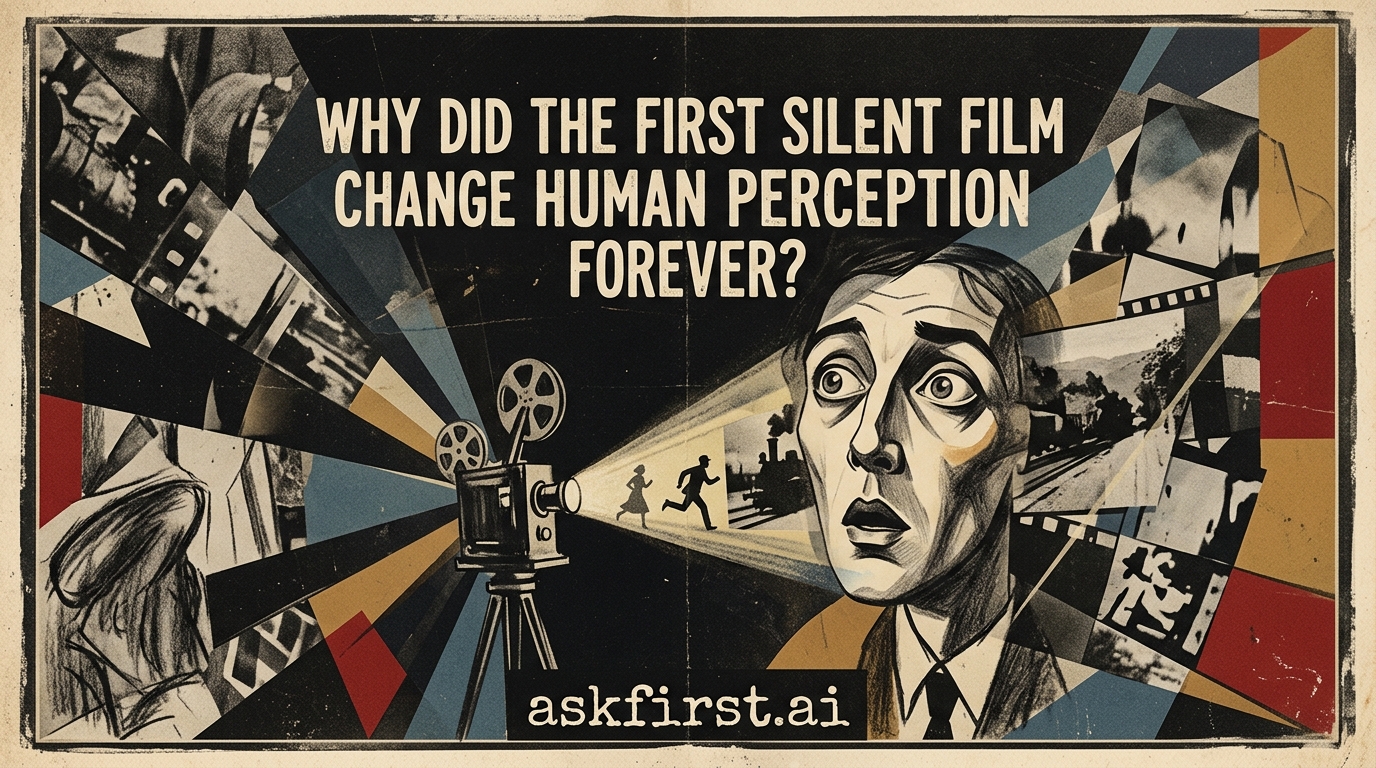
Before the late 19th century, human beings experienced narrative through static art, literature, or live performance. The advent of the silent film medium did not simply provide a new form of entertainment; it fundamentally restructured the human capacity for spatial perception, temporal awareness, and visual communication. By removing audio, early filmmakers forced audiences to develop new neurological pathways to interpret emotional intent.
The Language of Visceral Expression
Without spoken dialogue, the burden of communication shifted entirely onto the shoulders of the actors and the visual composition. Pioneers like Charlie Chaplin and Buster Keaton demonstrated that the human body could act as a universal vessel for complex emotions. This shift compelled the human brain to heighten its sensitivity to body language and micro-expressions, essentially formalizing a global visual syntax that transcended linguistic barriers. As argued by film historians, this phenomenon birthed the 'international language of cinema,' where a furrowed brow or a subtle gesture became a reliable surrogate for complex dialogue.
Time, Space, and the Montage Effect
Perhaps the most radical change in human perception stemmed from the discovery of the montage. Directors such as D.W. Griffith and Sergei Eisenstein proved that two separate images, when placed in sequence, generate a third, entirely new meaning in the viewer's mind. This practice forced the audience to synthesize information at a pace that was entirely impossible in traditional static art. It changed how humans perceive time: for the first time, society began to understand the 'cinematic cut,' a concept that effectively shattered the linear experience of reality. The ability to jump between distant locations in mere milliseconds trained the collective mind to associate disparate spatial points, accelerating the speed of human cognitive processing.
Neurological Adaptation and Literacy
This era marked the transition from linguistic dominance to visual-linguistic integration. Psychologists note that silent film acted as a catalyst for high-speed information consumption. When the brain is denied audio, the visual cortex experiences a spike in activity to compensate, leading to a heightened state of 'active observation.' Viewers had to become detectives of the screen, deciphering symbols, intertitles, and movement simultaneously. This training did not just make better moviegoers; it fundamentally sharpened human observational skills in daily life, teaching people to extract profound meaning from minimal visual cues.
A Legacy of Universal Connectivity
In retrospect, the silent era taught humanity that empathy is not dependent on words. By stripping away sound, these films exposed the raw, shared anatomy of human experience—desire, fear, joy, and sorrow. This period fundamentally expanded the reach of human emotional connection across borders, proving that if a story is told with enough visual clarity, it resonates in the heart of every observer regardless of their native language. Consequently, silent films acted as the precursor to our modern, hyper-visual digital age.