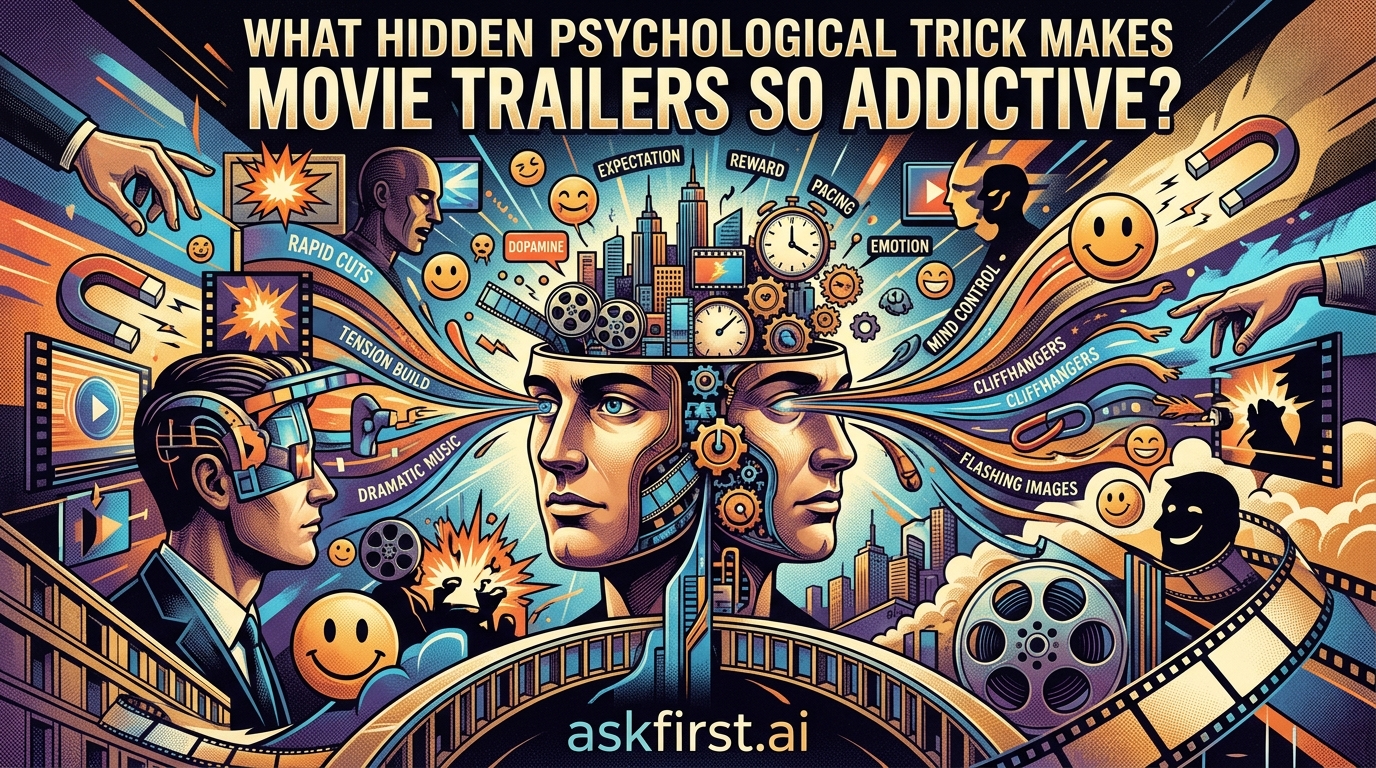
The Science of the Anticipatory Gap
Movie trailers function as masterclasses in neurological stimulation, primarily leveraging a psychological phenomenon known as the curiosity gap. This concept, popularized by behavioral economist George Loewenstein, suggests that when individuals perceive a void between what they know and what they want to know, they experience a state of mental deprivation. Trailers are engineered to pique this curiosity by providing just enough visual and narrative information to establish a hook, while simultaneously withholding the resolution.
The Role of Dopamine Rewards
At the core of this addiction is the brain's dopaminergic reward system. When a viewer watches a trailer, the rapid-fire editing and climactic music triggers a release of dopamine—the chemical associated with pleasure and motivation. Because the brain is hardwired to predict outcomes, the unresolved narrative arcs in a trailer create a sense of 'incomplete business.' The brain desires closure, prompting the viewer to mentally project the outcome of the story. This cognitive engagement is physically rewarding, turning the act of watching into an interactive experience rather than passive consumption.
Strategic Structural Elements
Trailer producers utilize specific psychological shortcuts to maximize engagement:
- The Zeigarnik Effect: Humans remember uncompleted or interrupted tasks better than completed ones. By cutting a story mid-action, trailers force the brain to keep thinking about the movie long after the screen goes dark.
- Auditory Priming: The use of iconic 'braam' sounds or rising crescendos creates an immediate physiological stress response, mimicking the feeling of impending significance. This keeps the heart rate elevated and attention locked on the screen.
- Loss Aversion: Trailers often frame films as 'must-see' events, tapping into the fear of missing out (FOMO) on cultural touchstones. This social pressure adds an extra layer of urgency, pushing the viewer to commit their time.
Cognitive Mapping and Predictive Modeling
When consuming a trailer, the human mind engages in predictive modeling. Viewers unconsciously analyze symbols, color palettes, and tropes to categorize the genre and forecast the film’s quality. This categorization process provides a sense of mastery and competence. When the trailer aligns with familiar patterns but introduces a unique visual twist, the brain experiences a 'prediction error'—a spike in activity that demands further attention to resolve the discrepancy. This blend of the familiar and the novel is the hallmark of high-quality entertainment. By mastering these invisible psychological levers, studios transform two minutes of promotional footage into a powerful engine for behavioral change, ensuring audiences feel compelled to buy tickets long before the film is even released.