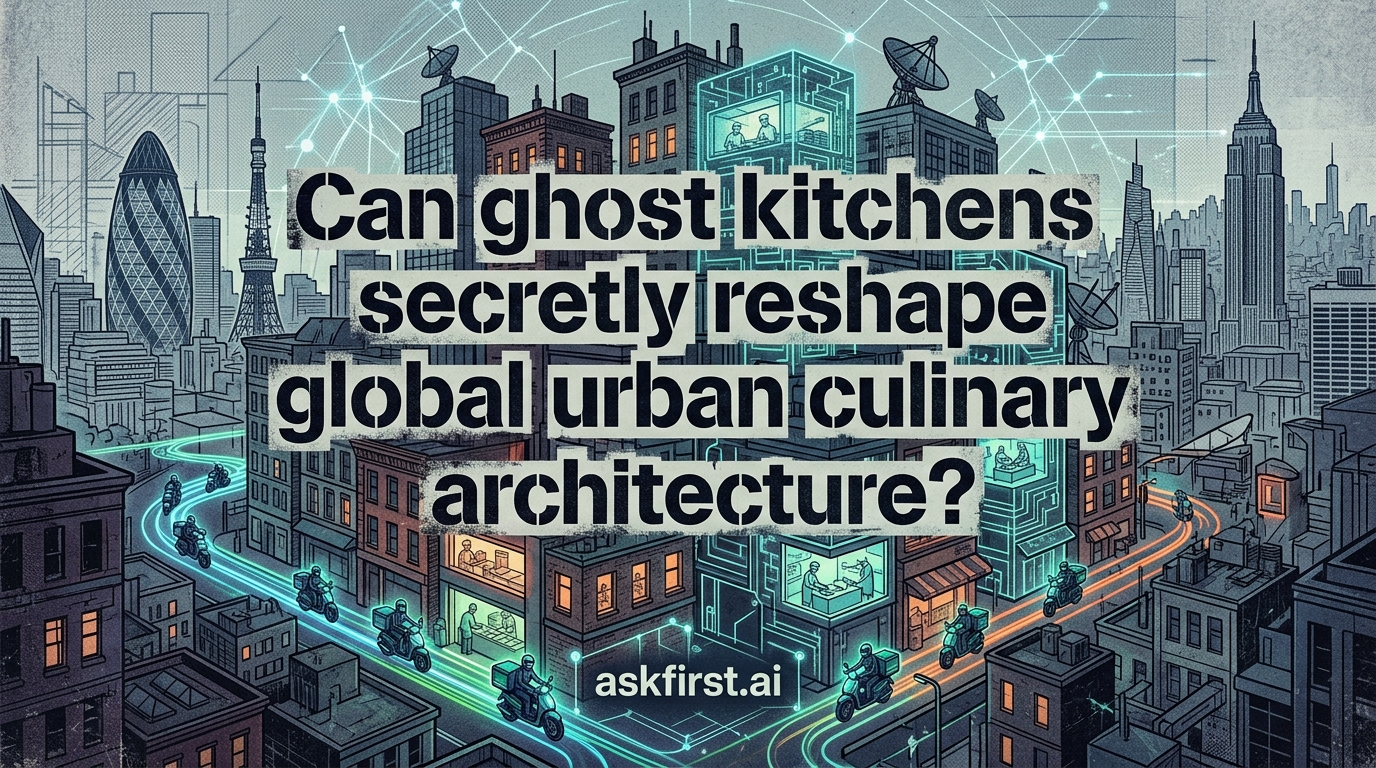
The Invisible Culinary Revolution: How Ghost Kitchens Remodel Cities
Ghost kitchens, or cloud kitchens, represent a fundamental shift in how urban spaces are conceptualized and developed. By decoupling the act of food preparation from the traditional customer-facing storefront, these facilities are quietly dismantling the established rules of urban zoning and commercial real estate development.
Decoupling Diners from Design
Historically, restaurant architecture was anchored by the "front-of-house" experience. Prime real estate was a prerequisite for success, demanding high-footfall locations with glass facades and sidewalk access. Ghost kitchens eliminate this requirement entirely. Because these facilities rely exclusively on delivery platforms, they can operate out of industrial warehouses, repurposed shipping containers, or subterranean levels of residential towers. This transition allows culinary businesses to bypass expensive retail premiums, effectively moving the heart of the restaurant into the city’s "invisible" infrastructure.
The New Zoning Paradigm
As ghost kitchens proliferate, urban planners face a structural dilemma. Traditional zoning laws often separate industrial zones from high-density commercial or residential areas. However, the rise of cloud kitchens creates a hybrid operational model that disrupts these boundaries. Cities are witnessing the conversion of secondary-tier real estate into high-efficiency culinary production hubs. This shift enables:
- Asset Optimization: Underutilized real estate, such as basement levels or older industrial buildings, is transformed into high-revenue generators.
- Reduced Traffic Congestion: By placing production hubs closer to residential clusters, delivery routes are shortened, theoretically easing the burden on core city arteries.
- Increased Density: With less space dedicated to dining rooms, urban footprints become more efficient, allowing for a greater concentration of diverse culinary options within a smaller geographical radius.
Architecting for Efficiency
Architects are now tasked with designing "delivery-first" spaces. These structures prioritize kitchen flow, cold storage optimization, and logistics throughput over ambiance. In many instances, the exterior design is entirely functional, lacking any signage or aesthetic appeal meant to lure pedestrians. This creates a fascinating trend where some of the most influential food hubs in a city are literally invisible to the casual passerby.
A Global Transformation
This trend is not isolated to specific markets; it is a global evolution in urban metabolism. From the high-tech kitchen clusters in Seoul to the adaptive reuse of warehouses in London, the architecture of food is becoming decentralized. The legacy of the traditional restaurant is not disappearing, but it is being bifurcated. Fine dining will remain a premium "destination" experience, while the vast majority of everyday consumption is moving toward an efficient, architecturally anonymous production system. This shift ensures that even the most land-constrained urban centers can support a vast array of global cuisines, fundamentally changing the flavor of city life forever.