The Placebo Economy: Harnessing Expectation for Medical Breakthroughs
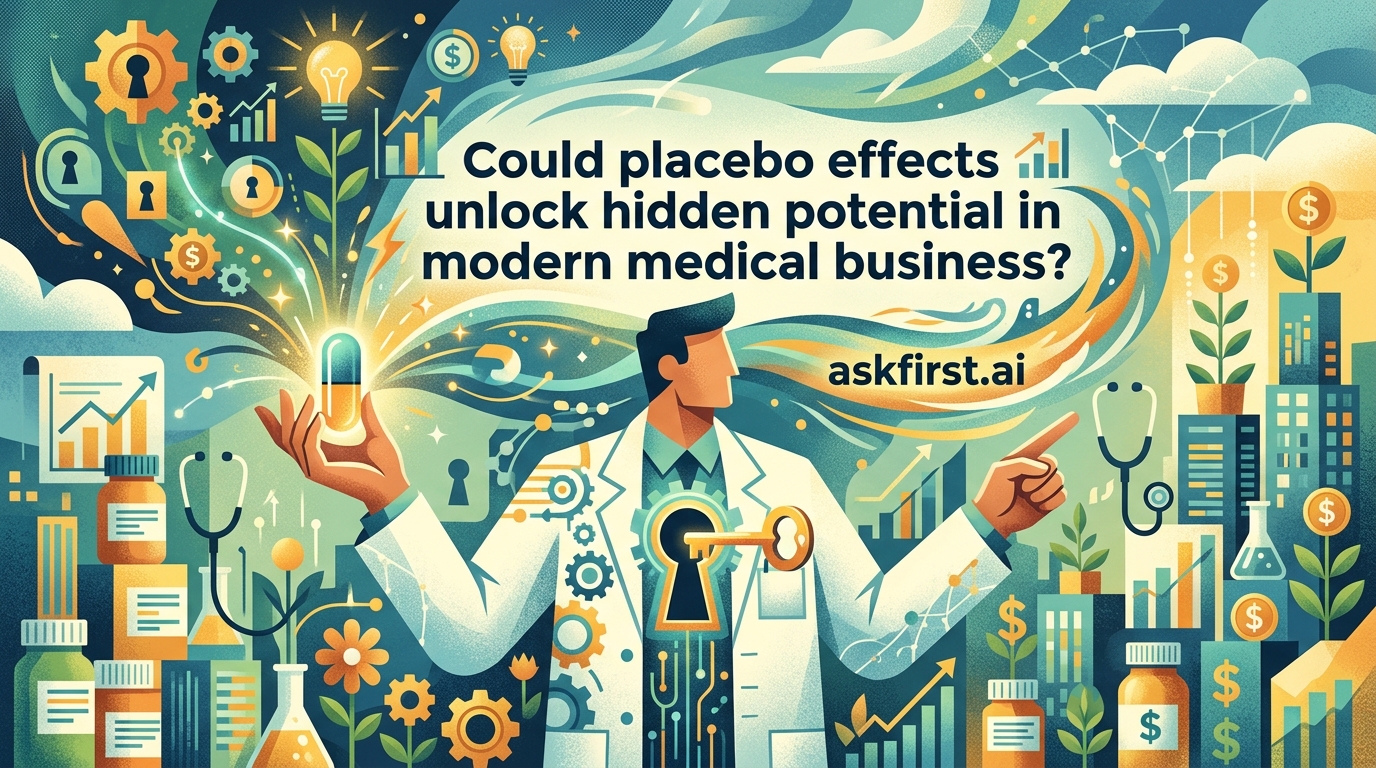
Modern medicine is often defined by the pharmacological potency of drugs, yet the mind-body connection remains one of the most underrated assets in healthcare. The placebo effect, traditionally viewed as a nuisance in clinical trials, is increasingly recognized as a powerful, measurable, and marketable phenomenon. By systematically integrating expectation-based healing into medical practice, the business of healthcare can unlock significant value while improving patient outcomes.
The Science of Expectations
At its core, the placebo effect is the brain's anticipation of relief triggering the release of endogenous opioids, dopamine, and endocannabinoids. Research, such as studies led by Harvard professor Ted Kaptchuk, indicates that patients often experience genuine physiological improvements simply through the ritual of care, the appearance of the practitioner, and the context of the clinical environment. This is not "all in the head"; it is a tangible neurobiological response that can modulate pain, anxiety, and even motor function in conditions like Parkinson’s disease.
Rethinking Medical Business Models
To leverage this, the medical business sector must shift from a "pill-first" mentality to a "context-first" framework. This evolution offers several strategic pathways:
Optimizing the Therapeutic Encounter: Clinical environments should be designed to foster trust and confidence. Studies have shown that a warm, empathetic physician, combined with professional clinic aesthetics, can amplify the effectiveness of any pharmacological treatment. Businesses that invest in staff communication training and patient experience design see higher adherence rates and better symptom management.
Augmenting Efficacy with "Open-Label" Placebos: Emerging evidence supports the use of "open-label" placebos—where patients are informed that they are receiving a sugar pill but are educated on the body's natural healing potential. This practice has shown remarkable efficacy in chronic pain and irritable bowel syndrome management, providing a low-cost, side-effect-free tool for practitioners to use alongside standard therapy.
Digital Therapeutics and Branding: The "brand" of a medical intervention carries weight. High-quality packaging, sophisticated digital interfaces, and robust patient education portals act as modern placebos. By framing treatments as cutting-edge, businesses can leverage cognitive biases that maximize the perceived and actual benefit of the intervention.
Ethical Integration and Future Outlook
Integrating the placebo effect into business strategy requires strict adherence to ethical transparency. The goal is not to deceive, but to enhance the patient's internal healing resources. As artificial intelligence and personalized medicine evolve, the ability to tailor the "clinical ritual" to an individual's psychological profile could become a competitive advantage. The future of medical business lies in mastering the intersection of biochemistry and psychology, transforming the placebo effect from an experimental variable into a cornerstone of clinical success.