The Strategic Impact of Automated Lead Follow-Up Systems
In the modern digital economy, the speed of response is the primary determinant of conversion success. Research from the Harvard Business Review suggests that firms that contact potential customers within an hour of receiving an inquiry are nearly seven times more likely to have meaningful conversations with key decision-makers than those who wait even sixty minutes. Automated lead follow-up transforms this imperative from a manual burden into a scalable, high-performance machine.
The Mechanics of Automated Follow-Up
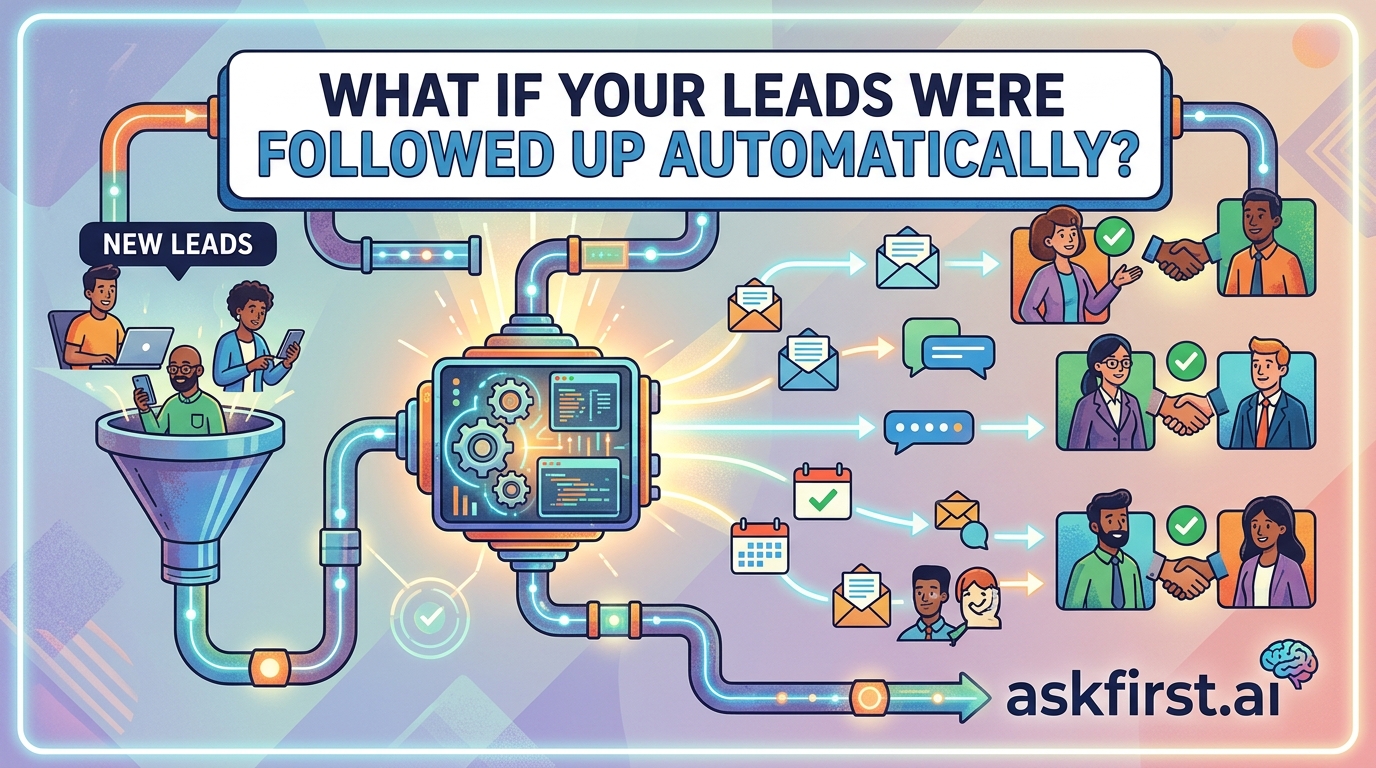
Automated follow-up utilizes Marketing Automation Platforms (MAPs) and Customer Relationship Management (CRM) systems to trigger personalized communications based on predefined user actions. When a lead interacts with your digital ecosystem—such as downloading a whitepaper, requesting a demo, or abandoning a shopping cart—the system instantly executes a pre-written sequence.
Core Components of an Automated Workflow:
- Immediate Acknowledgement: An automated email or SMS sent within seconds of lead capture to confirm receipt and set expectations.
- Lead Scoring: Assigning numerical values to prospects based on engagement levels (e.g., website visits, email opens), which dictates the intensity of the follow-up.
- Drip Campaigns: A series of sequential, value-driven messages designed to nurture the lead through the marketing funnel.
- Sales Notification: Real-time alerts sent to human sales representatives when a lead reaches a "sales-ready" threshold.
The Advantages and Challenges
Pros of Automation
- Consistency: Every lead receives the same high-quality, branded touchpoint, eliminating the "human error" of forgetting to follow up.
- Scalability: Automation allows a lean team to manage thousands of leads simultaneously without increasing headcount.
- Segmentation: Advanced systems tailor messages based on behavioral data, ensuring the content is relevant to the specific pain points of the prospect.
- Increased Conversion Rates: By keeping the brand "top of mind," businesses significantly reduce lead leakage.
Cons and Risks
- Impersonality: If not carefully crafted, automated messages can feel robotic or spammy.
- Over-Automation: Bombarding leads with too many touchpoints can result in high unsubscribe rates and brand fatigue.
- Technical Complexity: Setting up robust workflows requires a sophisticated understanding of CRM integration and data hygiene.
Strategic Implementation Guide
To implement an effective automated system, follow these steps:
- Audit Your Funnel: Identify where leads currently drop off and prioritize those stages for automation.
- Select the Right Stack: Choose tools that integrate seamlessly. Hubspot, Salesforce, and Marketo are industry standards.
- Create Value-Added Content: Do not just send sales pitches. Provide case studies, educational guides, and problem-solving content.
- Test and Optimize: Utilize A/B testing on subject lines and call-to-action (CTA) buttons to improve conversion rates over time.
Future Trends: The Role of AI
The future of lead follow-up lies in Generative AI. Unlike traditional static drip campaigns, AI-driven agents can now analyze a lead's specific interaction history to write bespoke responses in real-time. By 2026, we are seeing the shift toward "conversational automation," where leads are engaged in natural-language chats that mimic human sales assistants, drastically shortening the sales cycle and refining lead qualification processes for global enterprises.