The Ancient Silk Road: Uncovering the Origins of Modern Franchising
While modern franchising is frequently associated with twentieth-century fast-food giants, the structural blueprint for this business model finds its true origins in the vast, complex network of the ancient Silk Road. This legendary trade route did not merely move silk, spices, and precious metals; it served as a sophisticated laboratory for contractual commerce, laying the groundwork for decentralized business operations that mimic today’s global franchise networks.
The Concept of Decentralized Commerce
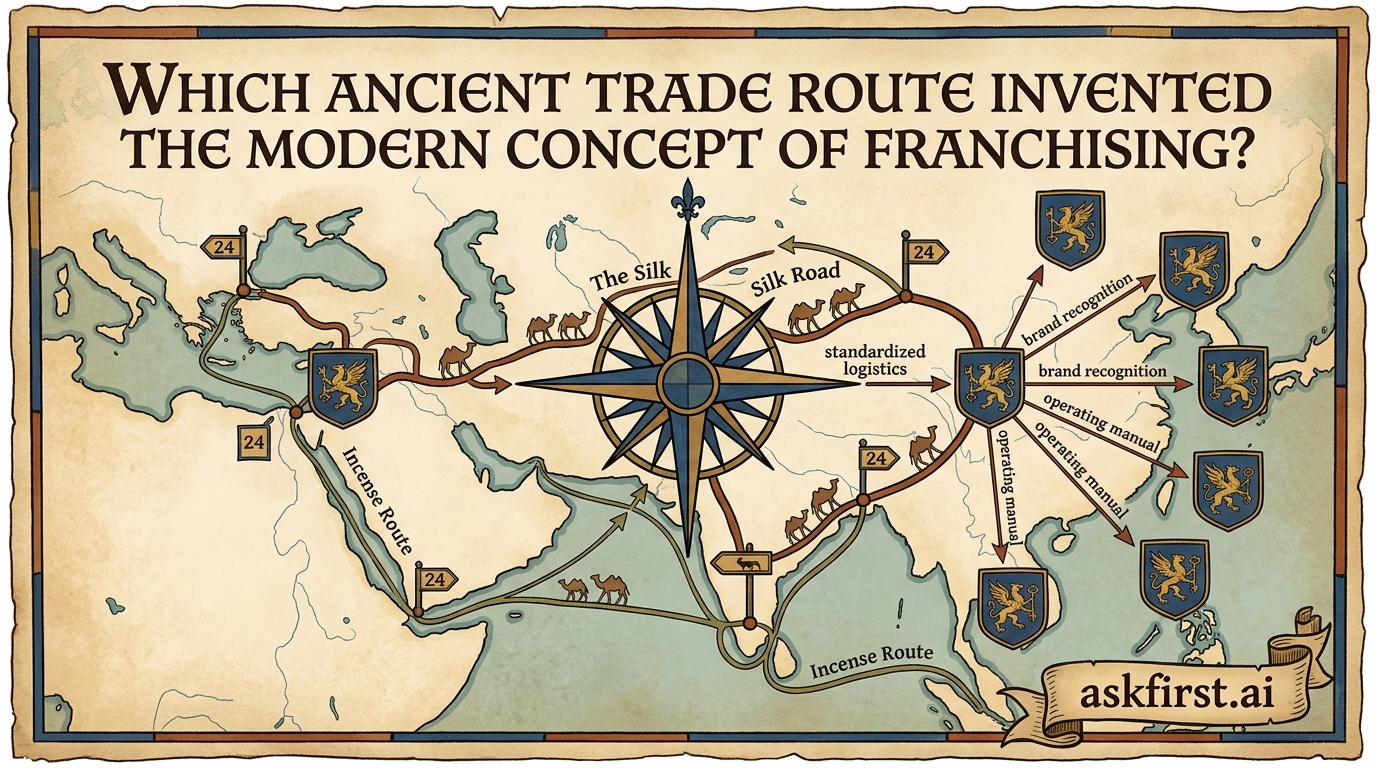
During the peak of Silk Road trade, merchants were faced with the significant risk of long-distance logistics. To mitigate these dangers, trading entities developed a model involving "Caravanserais." These structures were essentially the precursors to modern franchised outposts. A central merchant house or governing body would establish standardized rules, security protocols, and operational procedures for these waystations, which were then managed by local overseers who paid a percentage of the revenue or a fixed fee to the central hub for the right to operate under that banner.
Pillars of the Franchise Model in Antiquity
To understand how this evolved, one must examine the specific mechanisms employed by Silk Road participants:
- Standardization: Caravanserais were designed with consistent architectural footprints and security measures to ensure that merchants traveling from Chang'an to Antioch knew exactly what level of service and protection to expect upon arrival.
- Quality Control: Guilds monitored these outposts to ensure that the goods being traded were authenticated, mirroring how modern corporations audit franchised locations to maintain brand integrity.
- Risk Sharing: The capital burden of building these massive stone outposts was too high for a single individual. By licensing the operation to local managers, the central authority could scale the network across thousands of miles without bearing the total burden of site-specific labor costs.
Parallels with Modern Business
Historical analysis reveals that the Silk Road operated as an early "master franchise" system. Merchants functioned as brand ambassadors, while the local operators—the keepers of the caravanserai—acted as the franchisees. This symbiotic relationship allowed the Silk Road to function as a unified economic entity rather than a disparate collection of independent shops. By formalizing their agreements through shared trade law and merchant customs, these ancient business leaders essentially codified the core tenets of franchising: trademark usage, standardized business systems, and periodic royalty payments.
Ultimately, the transition from nomadic trading to localized franchising transformed the ancient world’s economy. The model proved that consistent, scalable, and decentralized business systems could bridge continents. Today’s global franchises are merely high-tech versions of these ancient, dust-swept hubs, proving that successful business principles are as timeless as the desert sands they were once built upon.