The Psychology of Silence: Is Luxury Branding Hypnotic?
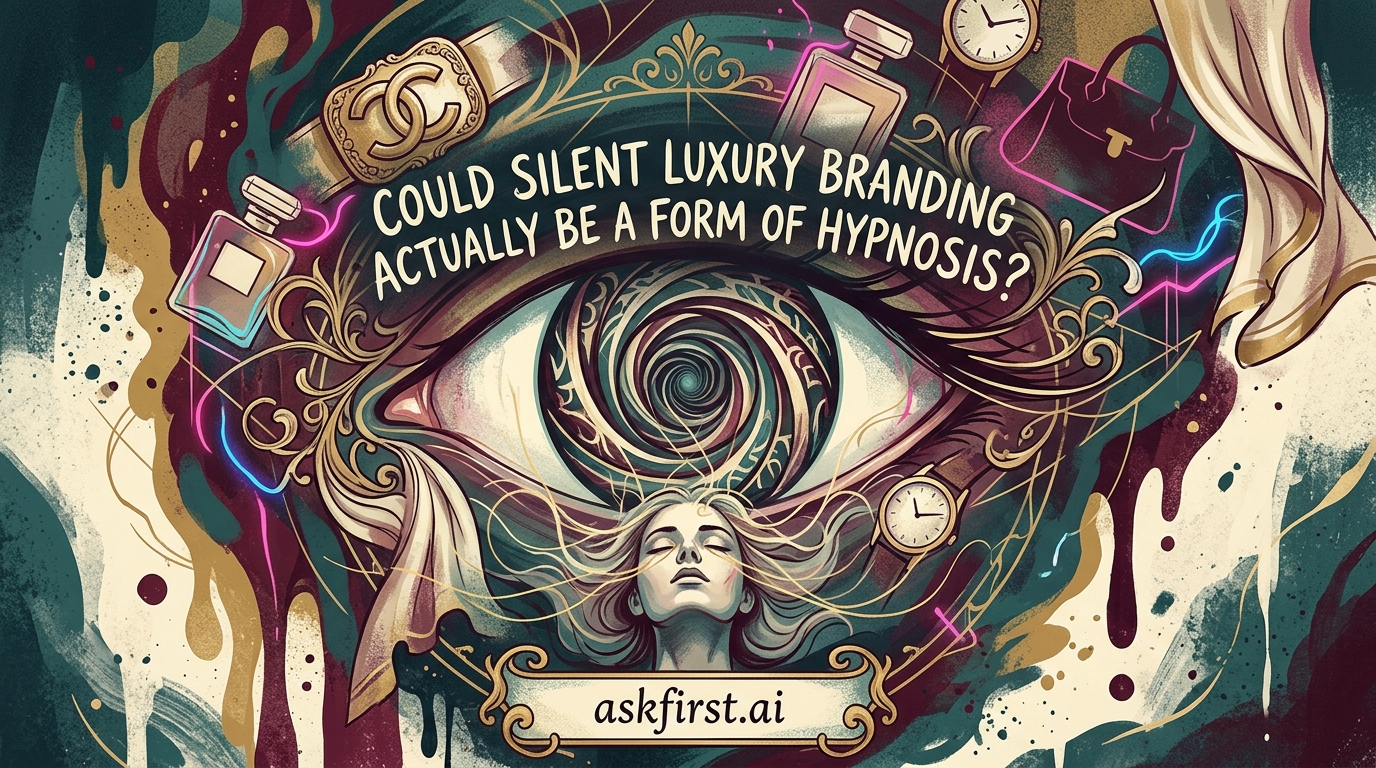
Silent luxury, defined by the absence of overt logos and the focus on supreme craftsmanship, represents a sophisticated psychological architecture. While not hypnosis in the clinical or trancelike sense, it functions through "associative priming," a cognitive mechanism that bypasses conscious scrutiny to embed desirability directly into the consumer's subconscious. By removing the "noise" of mass marketing, brands create a vacuum that the human brain seeks to fill with its own projections of status and belonging.
The Mechanism of Selective Omission
When a luxury item features no obvious branding, it initiates the "In-Group Signaling" effect. Economists and evolutionary psychologists suggest that humans are hardwired to identify status symbols as proxies for competence or access to resources. When a logo is missing, the brand forces the observer to rely on material quality—the specific cut of a fabric or the weight of a metal—to determine the item’s value. This forces a high level of cognitive engagement. The consumer is not being "sold" to; they are actively "participating" in a decoding process. This engagement creates a powerful psychological attachment, often stronger than traditional logo-heavy marketing.
Associative Priming and Cognitive Ease
Silent luxury leverages the concept of "cognitive ease." When the brain encounters a product that feels universally sophisticated without demanding immediate categorization through a visible logo, it experiences a sense of relief. This absence of forced branding allows the product to blend into the consumer’s ideal self-image. The product becomes an extension of the individual rather than a billboard for the manufacturer. Key psychological elements include:
- Exclusivity through Ambiguity: The lack of a visible logo acts as a filter; only those with specific cultural capital recognize the product, which strengthens the social bond between users.
- The Mere Exposure Effect: Over time, subtle, consistent design choices build a subconscious familiarity that feels instinctive rather than manufactured.
- Identity Mirroring: Without a logo, the consumer projects their own values onto the brand, making the product feel uniquely tailored to their identity.
The Neuro-Marketing Reality
Neuroscience suggests that our brains process "silent" signals faster than explicit ones. A brand that does not scream "Look at me!" avoids triggering the consumer's defensive critical faculty, often used to screen out intrusive advertising. Consequently, the desirability of the product slips past conscious filters, creating a deep-seated craving that feels like an internal preference. It is not literal hypnosis, but it is a masterclass in behavioral architecture that aligns perfectly with human psychological needs for social belonging, self-actualization, and the quiet satisfaction of recognizing subtle value in a world of excessive noise.