The Sacred Ledger: How Ancient Temples Invented Modern Business
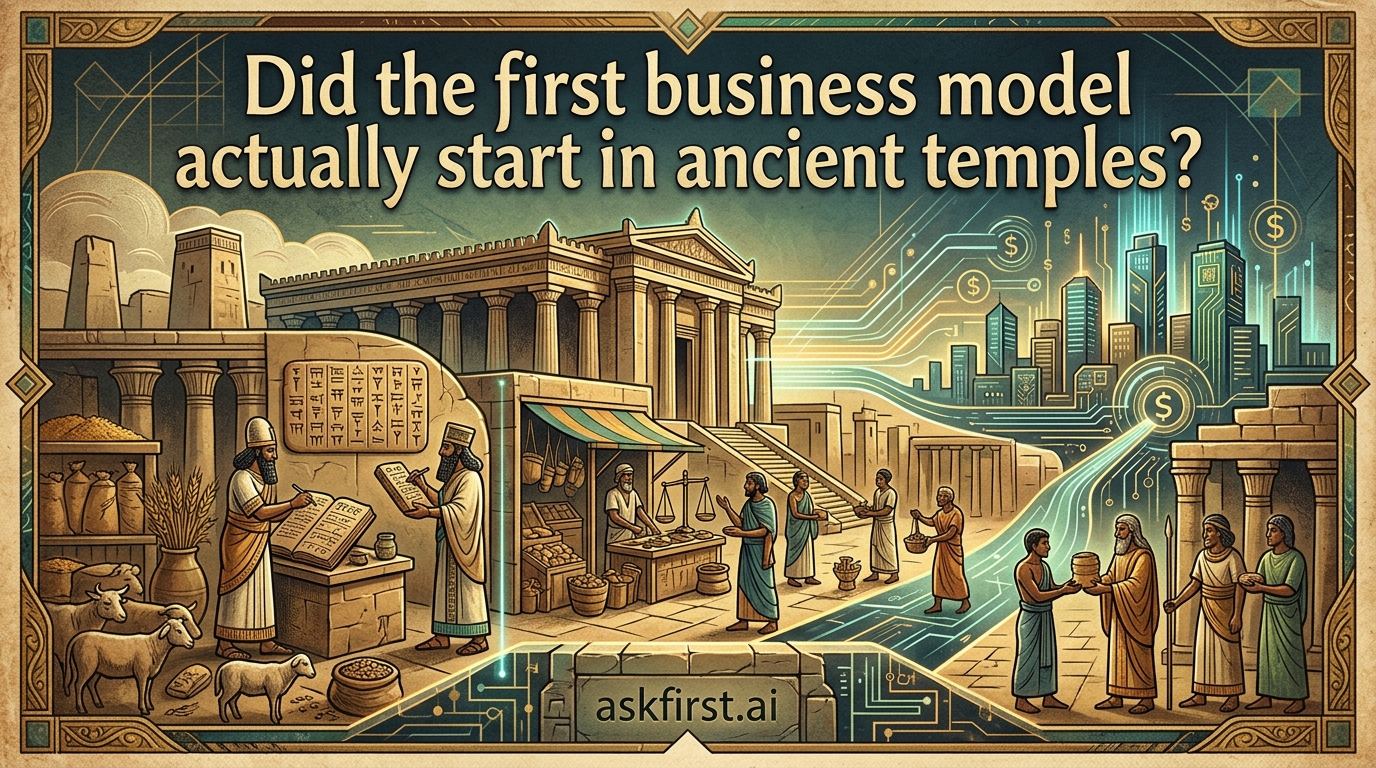
While modern commerce is often associated with the high-tech exchanges of Wall Street or the global reach of digital platforms, the true foundation of the business model was laid in the sacred, incense-filled chambers of ancient Mesopotamia. Historians and economic archaeologists argue that the temple complexes of cities like Uruk and Sumer served as the original headquarters for structured economic activity. It was here that humanity first moved beyond simple bartering and into the realm of complex accounting and institutional management.
The Birth of Institutional Management
Ancient temples were not merely centers for religious ritual; they functioned as the first massive, centralized organizations. Because priests acted as administrators for the gods, they oversaw vast tracts of land, agricultural production, and labor forces. To manage the wealth of the divine, they developed the world’s first formal accounting systems. When farmers brought their harvests as offerings, priests had to track inputs, storage quantities, and distributions for charity or trade. This created the earliest iteration of an inventory-based business model.
Technological Innovations of the Priesthood
To manage this complexity, the temple apparatus pioneered several critical business innovations that remain central to modern operations:
- Formalized Records: The transition from tokens to cuneiform tablets allowed for the tracking of debts, credits, and long-term contracts. This established the concept of the legal record.
- Centralized Risk Management: By acting as a central clearinghouse for grain and livestock, temples provided a safety net. This effectively created the prototype for a credit-based system, as temples would loan seeds to farmers to be repaid after the harvest.
- Standardization: Temples established consistent measures for weights and volumes to ensure fair exchanges, which simplified large-scale regional trade.
Why Temples Were the Perfect incubators
Business models thrive on trust and scalability. In the ancient world, the temple was the only entity perceived as eternal and incorruptible, as it belonged to the gods rather than a mortal individual. This status allowed temples to engage in "capital accumulation," where wealth was reinvested into the infrastructure of the city-state, such as irrigation canals and walls. This is the definition of a recurring business model: generating surplus wealth through asset management and reinvesting it to ensure future growth.
The Transition to Secular Commerce
As trade expanded beyond the local temple territory, these administrative practices were adopted by private merchants. The concepts of agency—where a person acts on behalf of another entity—and the use of written contracts to mediate trust were born from the temple’s bureaucratic structure. Consequently, the temple provided the software, hardware, and legal framework upon which every subsequent civilization built its economic engine. What we recognize today as corporate governance and structured accounting is, in reality, a direct descendant of the organizational methods used to record grain offerings to the divine.