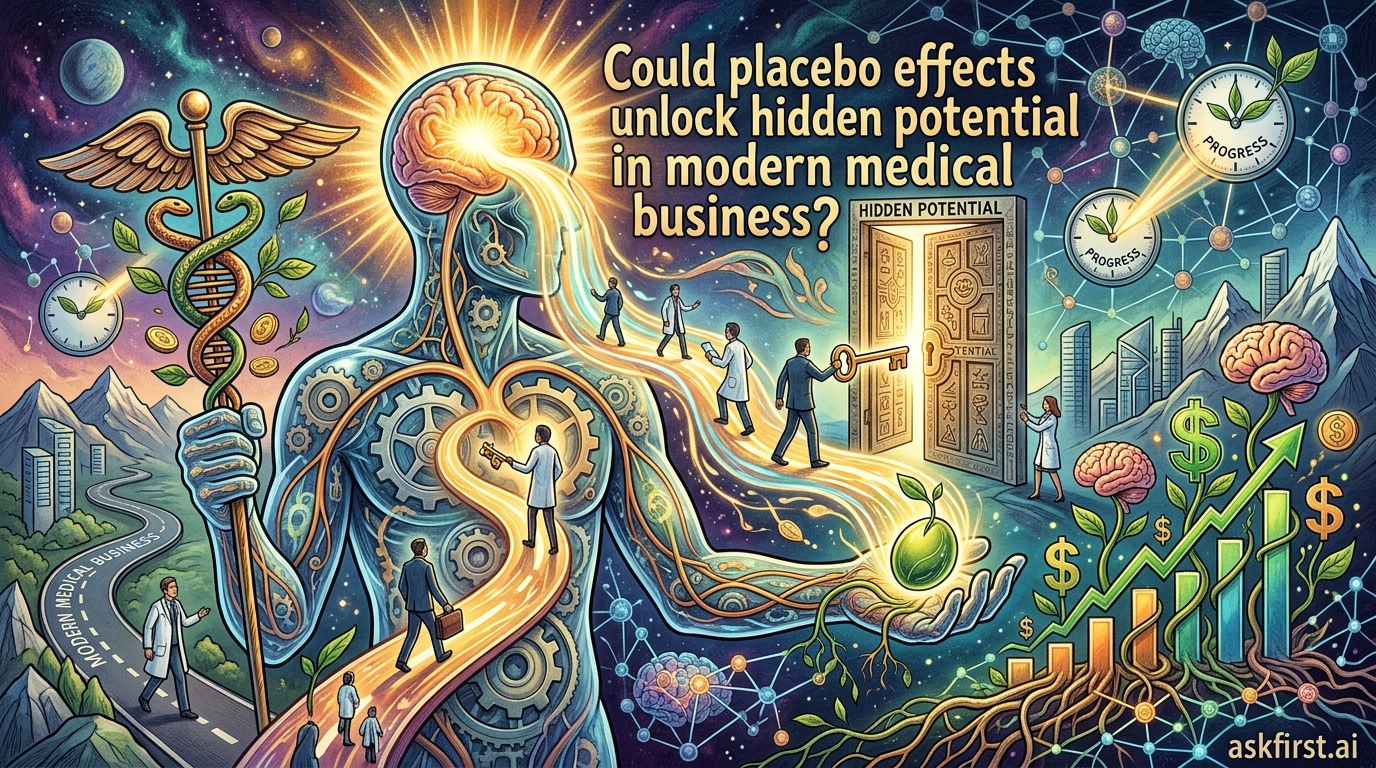
The Placebo Advantage: Rewiring Medical Economics Through Mind-Body Synergy
For decades, the placebo effect was dismissed by the pharmaceutical industry as mere "statistical noise"—an inconvenient variable to be controlled, masked, or eliminated in double-blind clinical trials. However, a radical shift is underway. Modern medical business is beginning to recognize that the therapeutic ritual itself—the expectation of healing, the prestige of the physician, and the physical act of intervention—carries immense economic and clinical value. By systematically integrating these non-pharmacological triggers, healthcare providers can amplify treatment outcomes, improve patient satisfaction, and drastically reduce the systemic costs associated with ineffective trial-and-error medicine.
The Clinical Reality of Expectancy
Research published in journals such as Science and The New England Journal of Medicine indicates that placebo responses are not just "all in the head"; they are neurobiological events. When a patient expects relief, the brain releases endogenous opioids and dopamine. This creates a physiological environment where symptoms of pain, depression, and gastrointestinal distress genuinely diminish. In a business context, this means the "medical product" is not just the drug; it is the entire experience. Clinics that optimize patient-provider communication and incorporate "ritualized" care delivery see significantly higher patient retention and lower dropout rates for chronic disease management.
Strategic Implementation in Healthcare
Businesses looking to harness this phenomenon can focus on several key pillars:
- Enhanced Therapeutic Alliance: Evidence shows that clinicians who demonstrate empathy and confidence trigger stronger placebo responses. By training staff in communication efficacy, health organizations increase the perceived value of their service.
- Optimized Delivery Systems: The form, color, and cost of a placebo matter. Studies suggest that larger, branded-looking pills or expensive-looking procedures exert a stronger effect than generic-looking alternatives. Medical systems can leverage this by focusing on "packaging" the patient experience to instill deeper confidence.
- Open-Label Placebos: Perhaps the most fascinating development is the use of "open-label" treatments—where patients are told they are taking a placebo but are informed of its potential to activate their own internal healing mechanisms. Early studies show high success rates for conditions like irritable bowel syndrome, suggesting that transparency can be a powerful, low-cost commercial model.
Toward a New Medical Business Model
By embracing the placebo effect rather than hiding it, medical entities can pivot toward "Precision Rituals." This approach emphasizes outcomes rather than just output volume. As health systems move away from fee-for-service toward value-based care, the ability to induce positive patient expectancy becomes a critical competency. Organizations that master the intersection of psychology and clinical practice will inevitably see reduced pharmaceutical dependence, fewer adverse events, and a loyal patient base empowered by their own biological potential. Ultimately, the placebo effect is not a deception; it is a profound, under-utilized resource that, when monetized and applied ethically, offers a sustainable path toward a more efficient and human-centric medical industry.