The 90% Failure Trap: Why Most Affiliate Marketers Never Make a Sale
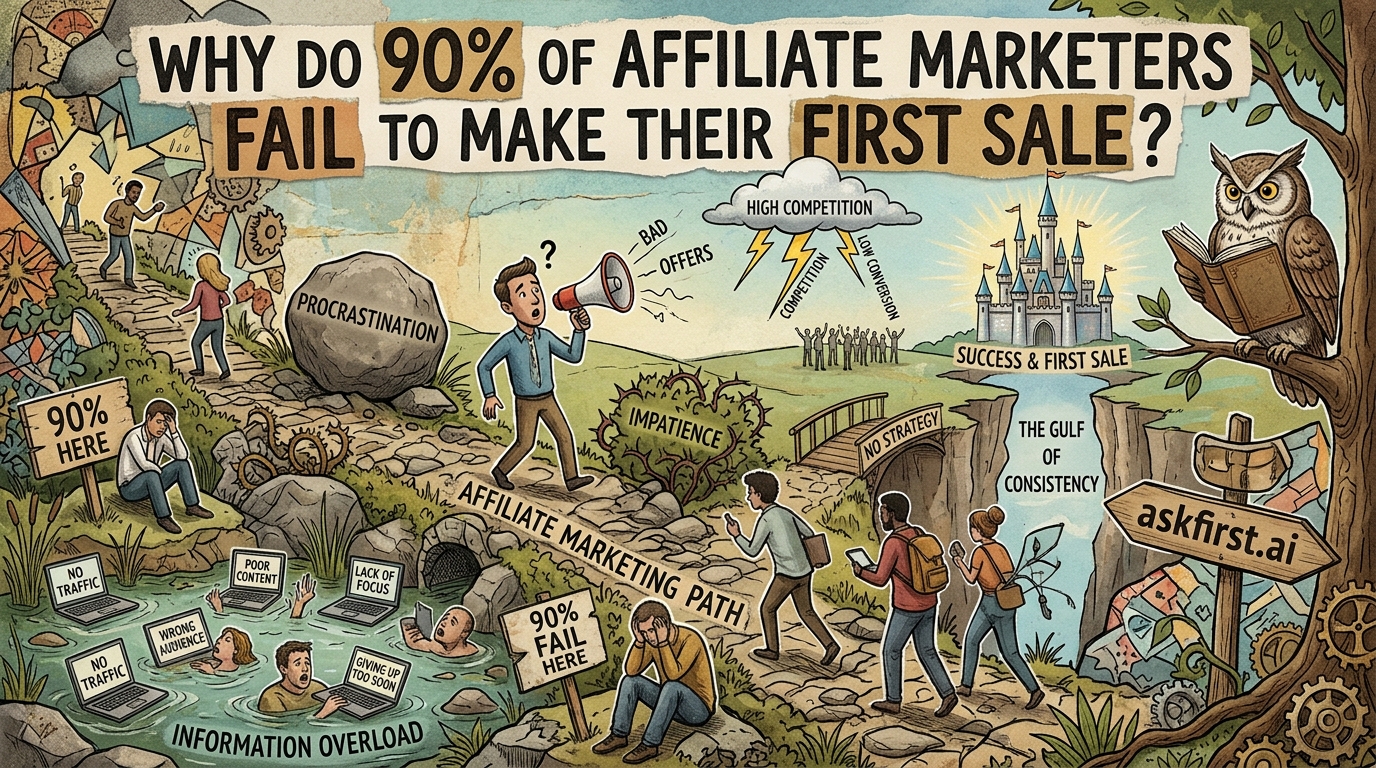
In the digital marketing landscape, it is widely cited that approximately 90% of aspiring affiliate marketers fail to generate their first commission. This staggering statistic is not a result of a broken business model, but rather a consequence of fundamental misconceptions regarding the effort, strategy, and patience required to succeed in performance-based marketing.
The Core Reasons for Failure
1. The "Get Rich Quick" Fallacy
Many beginners enter the affiliate space viewing it as a passive income scheme. They expect minimal effort to yield immediate, high-ticket results. In reality, affiliate marketing is a business that requires significant upfront investment in time, content creation, and audience building. When the "quick cash" fails to materialize within weeks, most individuals abandon their efforts.
2. Lack of Niche Specialization
A common pitfall is the "generalist" approach. Beginners often attempt to promote products across disparate categories—from fitness supplements to high-end electronics—without establishing authority. Without a focused niche, search engines struggle to categorize the website, and potential buyers find no reason to trust the marketer’s recommendations.
3. Missing Value Proposition
Most failing marketers focus on "spamming" affiliate links on social media platforms or forums. This is a losing strategy. Modern consumers are highly skeptical of unsolicited links. Success requires the "Value-First" model: providing in-depth product reviews, tutorials, and comparative guides that solve a specific problem for the audience. Without content that provides intrinsic value, there is no incentive for a user to click a referral link.
The Anatomy of a Successful Affiliate Strategy
To break into the successful 10%, one must pivot from a "salesman" mindset to a "consultant" mindset.
Step-by-Step Execution Guide
- Select a High-Intent Niche: Choose a niche where people have recurring problems and are actively searching for solutions (e.g., software-as-a-service, home office productivity, or specialized hobbies).
- Build a Platform: Relying solely on social media is risky. Establish a self-hosted website or a professional email list. This ensures you own your audience.
- Implement SEO: Learn the basics of keyword research. Target "long-tail" keywords (e.g., "best ergonomic chair for lower back pain under $300") rather than broad terms (e.g., "chairs").
- Prioritize Trust: Disclose affiliate relationships transparently. Only promote products you have vetted or have deep knowledge of.
Statistical Reality and Future Trends
Data suggests that the average affiliate marketer spends 6–12 months before seeing consistent revenue. The industry is currently shifting toward "Authority Marketing," where influencers and content creators leverage personal branding to build long-term trust.
Pros and Cons of the Industry
- Pros: Low barrier to entry, no product creation required, high scalability, and potential for location independence.
- Cons: High competition, reliance on third-party program terms, and the necessity of constant content production.
Ultimately, the 90% failure rate is a filter. It separates those looking for a shortcut from those willing to build a legitimate media asset. By treating affiliate marketing as a long-term content business rather than a link-sharing hobby, success becomes a matter of persistence and data-driven optimization.