The Hidden Foundations: Decoding the Rise of Corporate Titans
Many of the world's most influential corporations did not start with grand visions of global dominance. Instead, their origins are often rooted in mundane pivots, serendipitous encounters, or survival strategies that inadvertently triggered massive scaling. Understanding these histories requires stripping away the polished branding of today to reveal the volatile, often counter-intuitive foundations of yesterday.
The Pivot Paradox: Accidental Success
One of the most persistent myths is that successful companies possess perfect foresight. In reality, the history of wealth creation is filled with 'pivot moments.'
- The Gaming Giant: A prominent global tech firm began as a humble manufacturer of playing cards in the late 19th century. By shifting from traditional hobbyist products to digital entertainment decades later, the company transformed its legacy of mechanics into a digital empire.
- The Networking Giant: Many giants in the digital infrastructure space originated from universities attempting to solve internal communication issues, rather than market-driven business plans. Their growth was a byproduct of solving a specific, localized problem that proved to be universally applicable.
Economies of Scale and Network Effects
The secret to the valuation of modern giants is rarely just a superior product. It is the mastery of network effects. The first movers in a space—such as early retailers or search conglomerates—did not necessarily win because of superior technology; they won because of the inherent structural advantage of being the first to aggregate a critical mass of users. Once a platform becomes the default communication or transaction layer, the cost of switching becomes prohibitively high for the consumer, effectively creating a natural monopoly.
Institutional Capital and Resilience
A common thread among the world's wealthiest entities is the strategic navigation of capital markets. Many modern titans survived their 'valley of death' periods through access to venture capital or strategic partnerships that allowed them to prioritize user acquisition over short-term profitability. This 'blitzscaling' strategy—prioritizing speed over efficiency in an environment of uncertainty—has been the hallmark of firms that now define the modern economy. These entities often operated at a loss for years, banking on the idea that dominance would eventually yield monopolistic pricing power.
Legacy and Path Dependency
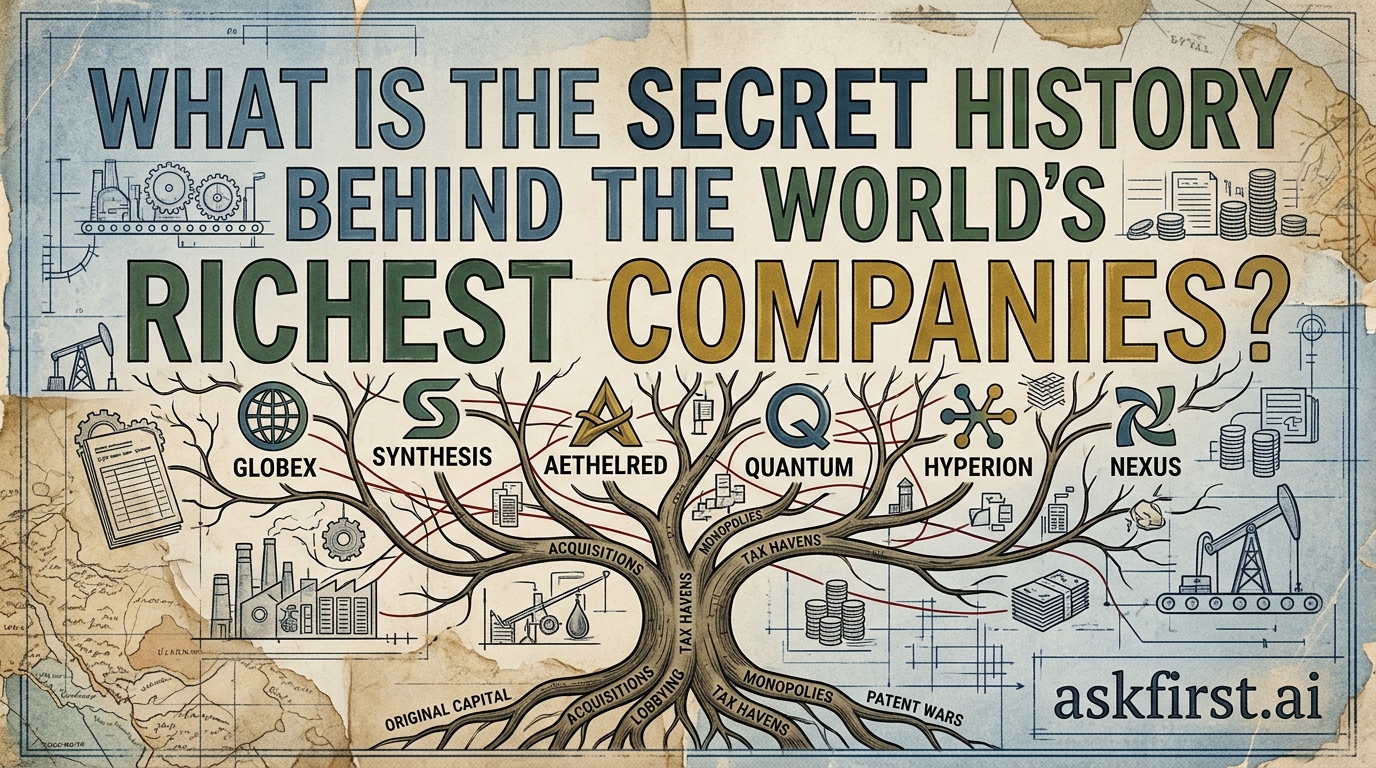
History shows that the richest companies often succeed by embedding themselves into the 'plumbing' of society. Whether it is logistics networks, software operating systems, or credit clearinghouses, these companies become unavoidable. The secret history is not just innovation; it is the tactical occupation of vital economic real estate. Once a company owns the essential infrastructure for an industry, its long-term survival is virtually guaranteed by the sheer complexity of uprooting the systems they have built. This path dependency remains the ultimate barrier to entry for any potential competitor.