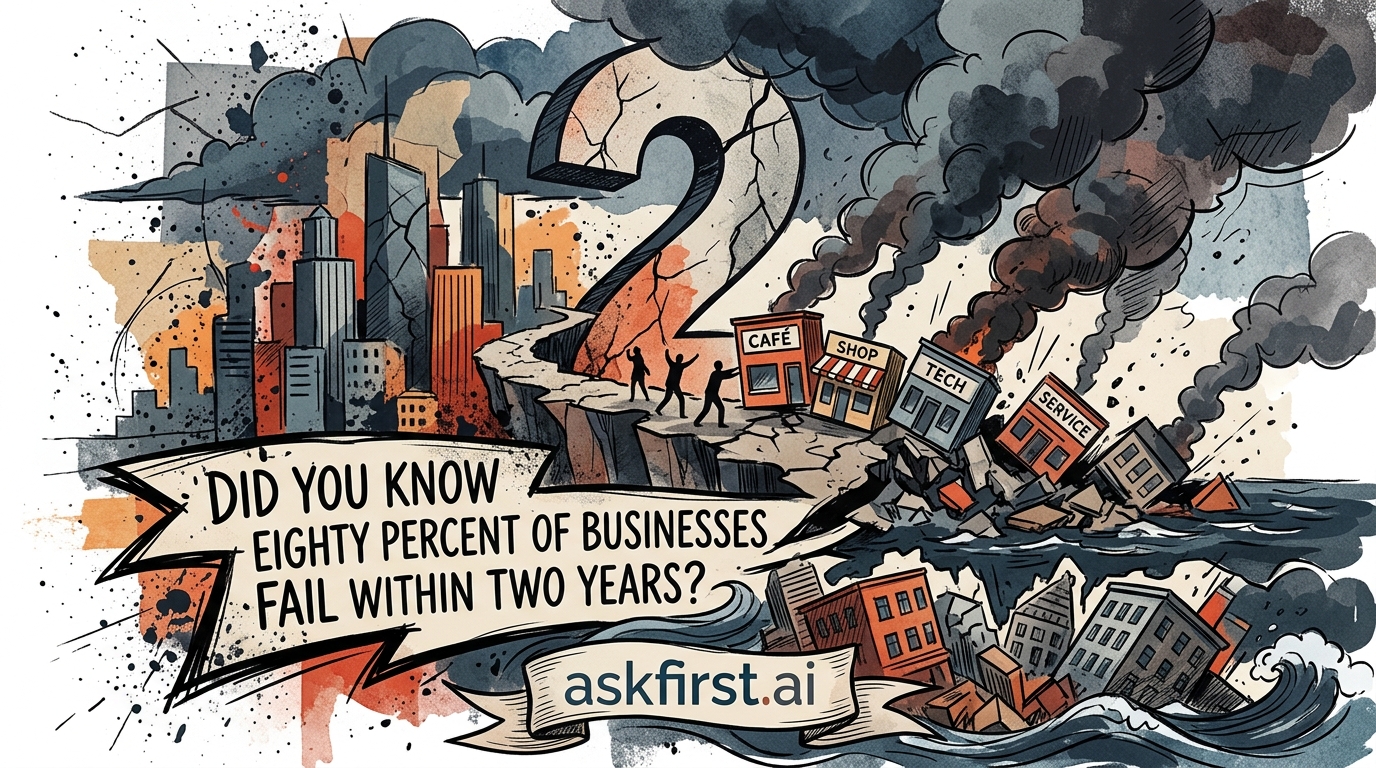
The Startup Reality Check: Navigating the Odds of Success
The claim that eighty percent of businesses fail within their first two years is a widely cited statistic that serves as a sobering reminder of the volatility inherent in entrepreneurship. While various studies from organizations like the U.S. Bureau of Labor Statistics offer nuanced data—often suggesting a more graduated failure rate rather than an overnight collapse—the core lesson remains: starting a business is an endeavor of extreme risk that requires strategic foresight, capital efficiency, and adaptability.
Why Most Businesses Struggle
Business failure is rarely the result of a single catastrophic error. Instead, it is usually a compounding effect of several common pitfalls that new entrepreneurs overlook:
- Lack of Market Need: Many founders create solutions for problems that do not exist or for which customers are unwilling to pay. Without deep market research and a validated value proposition, businesses operate in a vacuum.
- Poor Cash Flow Management: Even profitable businesses can fail if they run out of liquid capital. Cash flow is the oxygen of any enterprise, and poor management of receivables, payables, and overhead can lead to insolvency despite steady sales.
- Inadequate Marketing: A superior product is useless if the target audience remains unaware of its existence. Successful enterprises invest significantly in branding and customer acquisition channels that scale.
- The Scaling Trap: Premature scaling is a leading cause of death for startups. Hiring too fast, spending too much on vanity projects, or expanding into markets before internal processes are robust can drain resources rapidly.
Shifting the Odds in Your Favor
To transcend these statistics, aspiring founders should focus on the principles of lean methodology. This approach emphasizes building a Minimum Viable Product (MVP), measuring consumer feedback, and iterating rapidly. Rather than betting everything on a single launch, successful entrepreneurs treat their business model as a series of experiments.
- Financial Discipline: Maintain a lean burn rate. Keep fixed costs low during the initial phases to ensure the business survives long enough to find its "product-market fit."
- Customer Obsession: Pivot based on data, not ego. If customers are not using a feature, remove it. If they are asking for something specific, prioritize it.
- Resilience and Adaptation: The ability to pivot is critical. If market conditions change or data suggests a path forward is non-viable, a strategic shift is often the difference between closure and long-term sustainability.
Ultimately, the path of the entrepreneur is not about avoiding failure, but about building systems that make success statistically more likely. By focusing on fundamental business health, rigorous fiscal management, and genuine value creation, founders can move from the risky "first two years" into a phase of stable, long-term growth.