The Wealth Paradox: Decoding Happiness in Executive Life
For decades, the relationship between capital accumulation and emotional well-being has remained one of the most debated topics in psychology and economics. While the common adage suggests that money cannot buy happiness, modern research on high-net-worth individuals reveals a much more nuanced reality. For business leaders, the correlation between financial success and life satisfaction is not a simple linear progression but rather a complex threshold-based phenomenon.
The Threshold Effect
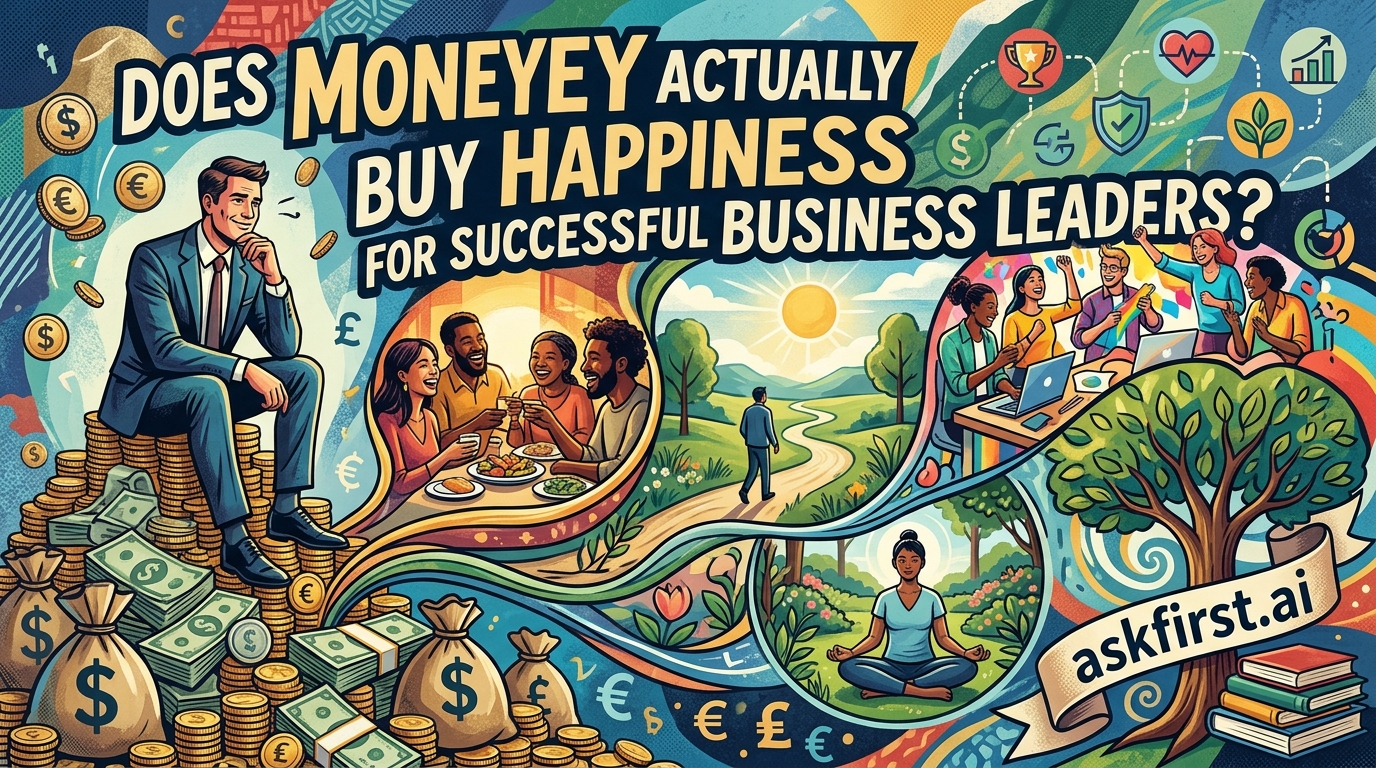
Psychological studies, such as those famously conducted by Nobel laureates Daniel Kahneman and Angus Deaton, have demonstrated that emotional well-being rises with income until a certain point of satiation. For the average individual, this typically covers the cost of necessities and a degree of financial security. However, for business leaders and high-earners, the dynamic shifts. Once basic needs and lifestyle luxuries are met, money transforms from a tool for survival into a tool for agency. Wealth provides the leverage to optimize time, remove logistical friction, and pursue purposeful endeavors, all of which are significant contributors to long-term contentment.
The Psychology of Purpose
Success in business is rarely just about the balance sheet; it is about self-efficacy. High-achieving individuals derive profound happiness from the mastery of complex problems and the realization of professional goals. In this context, capital functions as a "scorecard" that validates competence. The psychological satisfaction arises not from the acquisition of material goods, but from the process of wealth creation and the freedom it affords to engage in high-impact philanthropy, mentorship, or new creative ventures.
The Risks of Hedonic Adaptation
Despite the advantages, wealth does not grant immunity to the "hedonic treadmill." This phenomenon suggests that humans quickly adapt to new levels of luxury, meaning that a private jet or a luxury estate provides a diminishing return on joy over time. Business leaders who rely solely on material acquisitions to feel satisfied often encounter a plateau, leading to feelings of emptiness despite having achieved objective success. To bypass this, the most successful leaders often shift their focus toward:
- Experiential Wealth: Investing in travel, education, and unique memories rather than stagnant assets.
- Altruism: Leveraging wealth to solve systemic problems, which provides a deeper sense of social connection.
- Time Affluence: Using money to reclaim autonomy, specifically the freedom to spend time on intrinsically motivated activities.
The Conclusion on Executive Fulfillment
Ultimately, money does not buy happiness for business leaders in the traditional sense, but it does buy "options." It provides the structural foundation required to curate a life of purpose. Happiness for the elite is less about the net worth itself and more about the alignment between the resources held and the values practiced. Wealth is a multiplier of one's existing disposition; it amplifies the character of the individual, making the cultivation of an internal life just as vital as the management of external assets.