The Ancient Origins of Trust: Why Credit Changed History
Long before the invention of digital banking or centralized fiat currency, ancient merchants in civilizations like Mesopotamia, Sumer, and Phoenicia faced a fundamental problem: the physical limitations of barter and precious metals. Credit was not merely an accounting trick; it was a revolutionary technology of trust that allowed humanity to transcend the 'double coincidence of wants.'
The Necessity of Economic Fluidity
Barter systems were notoriously inefficient because they required two parties to simultaneously possess exactly what the other wanted. If a weaver needed grain but the farmer did not need cloth, commerce ground to a halt. Credit solved this by introducing the concept of deferred payment. Merchants realized that if they could record a debt, the transaction could conclude immediately, with the settlement occurring at a later date, often tied to the harvest cycle.
Cuneiform and the First Ledger Books
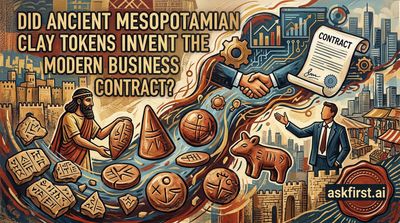
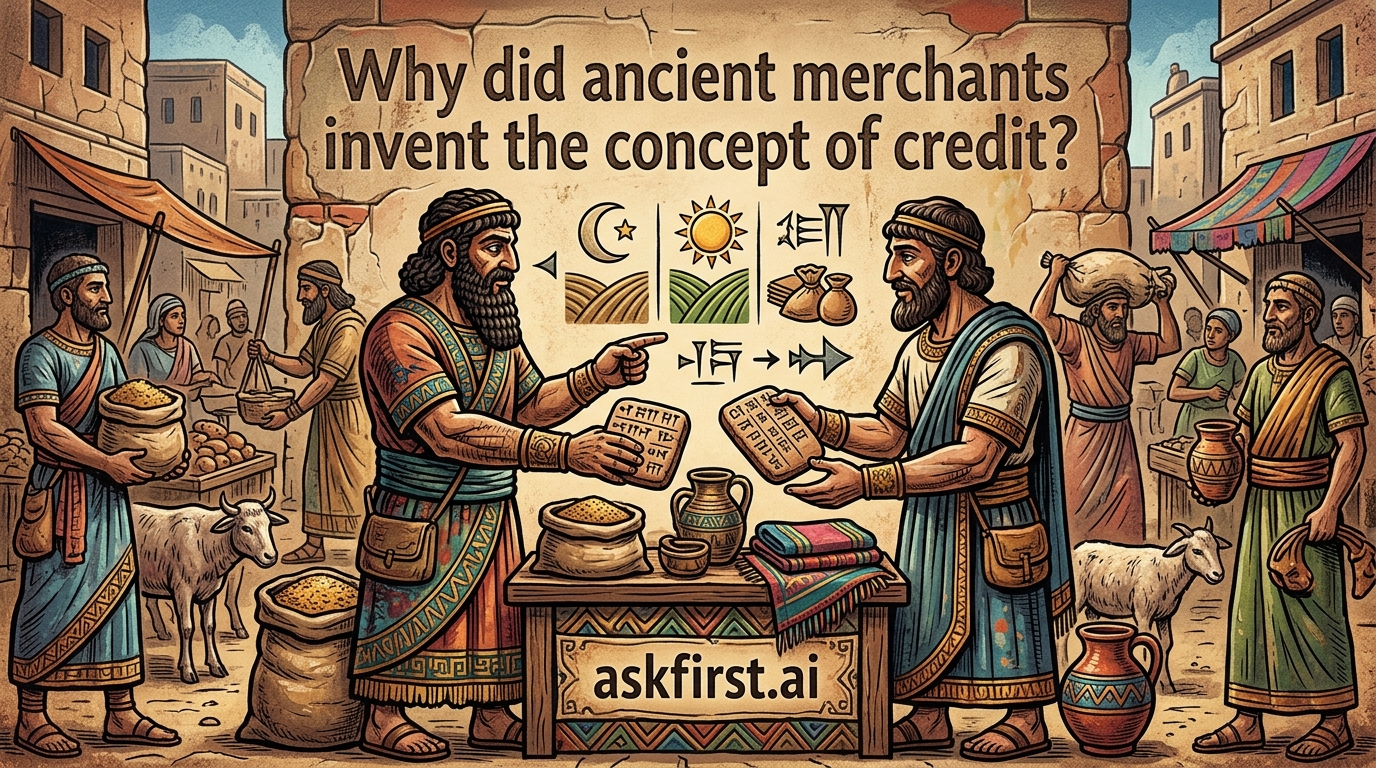
Archaeological evidence from the Sumerian city-state of Uruk (c. 3000 BCE) shows that credit existed long before coinage. Merchants used clay tokens and later, cuneiform tablets, to record debts. These tablets acted as primitive promissory notes. If a merchant delivered goods to a distant port, the recipient would 'sign' the tablet, acknowledging the obligation to pay in the future. This provided two key advantages:
- Scalability: Transactions could occur without moving heavy, insecure quantities of silver or gold.
- Risk Management: Credit systems allowed for the expansion of trade routes that were otherwise too dangerous or logistically difficult to fund with immediate cash.
Beyond Simple Transactions: The Birth of Finance
Credit also enabled the development of interest, as lenders realized that deferring consumption and assuming the risk of non-payment required compensation. The Code of Hammurabi provides detailed laws regarding interest rates, demonstrating that credit had become a regulated, sophisticated pillar of society. By treating time as a resource that held value, ancient societies effectively unlocked future labor and production, allowing for the massive infrastructure projects that defined the ancient world.
The Psychological Hook of Deferred Obligation
Credit turned trade into a social contract. By institutionalizing trust, merchants created a system where an individual’s reputation—their word—became a liquid asset. This meant that an honest merchant with no initial capital could still facilitate massive trade deals simply because their credit score, etched into clay, was trusted by their peers. This early innovation provided the bedrock for modern civilization, as it demonstrated that the future, when correctly managed through credit, is a vast, untapped source of current wealth.